Sukhothai Historical Park protects the ruins of Sukhothai, the capital of the first Thai kingdom in the 13th and 14th centuries, about 12 km west of the modern town of Sukhothai in north-central Thailand. It is part of a UNESCO World Heritage Site, with nearly 200 ruins, lotus ponds and huge Buddha images spread over about 70 square kilometres. Despite that, it gets a fraction of the visitors of Ayutthaya, which makes it one of the best cultural hidden gems in Thailand. Foreigners pay 200 baht for the central zone and 120 baht each for the north and west zones, and the best way to see it is by bicycle.
Sukhothai Historical Park at a glance
| Location | Old Sukhothai (Mueang Kao), 12 km west of New Sukhothai; about 430 km north of Bangkok |
| UNESCO status | Part of the “Historic Town of Sukhothai and Associated Historic Towns”, with Si Satchanalai and Kamphaeng Phet (inscribed 1991) |
| Entrance fee (foreigners) | Central zone 200 THB; north zone 120 THB; west zone 120 THB; south and east zones free |
| Bicycle fee | 10 THB per zone, on top of the entrance fee |
| Opening hours | Central zone about 06:30–19:30 (to 21:00 on Saturdays); north and west zones close earlier |
| Time needed | Half a day for the central zone; a full day for central and north; add the west zone if you have more time |
| Best time to visit | November to February; early morning or late afternoon for light and cooler temperatures |
Where is Sukhothai?
Sukhothai is in the lower north of Thailand, roughly halfway between Bangkok and Chiang Mai. There are two towns with the same name: New Sukhothai (Sukhothai Thani), the modern provincial capital where most hotels, the bus station and the night market are, and Old Sukhothai (Mueang Kao), the village next to the historical park, about 12 km to the west. You can stay in either; the old town is quieter and closer to the ruins, while the new town has more restaurants and transport.
A short history: Thailand’s first kingdom
Sukhothai means “dawn of happiness”. The kingdom is traditionally dated to 1238, when Thai rulers led by Si Inthrathit, its first king, broke away from Khmer control. Under his son Ramkhamhaeng, in the late 13th century, Sukhothai became a regional power, and Thai tradition credits him with creating the Thai alphabet. The period produced the graceful “Sukhothai style” of Buddhist art, including the walking Buddha and the lotus-bud chedi. Sukhothai declined in the 15th century and was absorbed by Ayutthaya, which became the new centre of Siam.
What is the entrance fee for Sukhothai Historical Park?
The park is divided into zones, and each zone has its own ticket booth. Foreigners pay:
- Central zone (inside the old city walls): 200 THB.
- North zone (Wat Si Chum and Wat Phra Phai Luang): 120 THB.
- West zone (Aranyik, including Wat Saphan Hin): 120 THB.
- South and east zones: free.
- Bicycles: 10 THB per zone; cars and motorbikes pay a vehicle fee in the outer zones, and cars are not allowed in the central zone.
These rates replaced the older flat fee of 100 THB per zone, so older blogs often quote lower prices. Some guides also mention a combined ticket for several zones at around 400 THB, while others say it is no longer sold; ask at the central zone booth. Keep your tickets, as staff may check them at the temples. The Ramkhamhaeng National Museum, next to the central zone entrance, has a separate ticket. Our Thailand currency guide explains how to pay in baht; bring cash, as small booths may not take cards.
Opening hours
The central zone is open from about 06:30 to 19:30, and later on Saturday evenings, when the main ruins are lit up. Recent guides list the north zone as open from about 07:30 to 17:30 and the west zone from about 08:00 to 16:30, so visit those during the day. Arrive at opening time if you can: the light is soft, the heat is lower, and you will have the ponds and chedis almost to yourself.
Top temples in Sukhothai Historical Park
Central zone
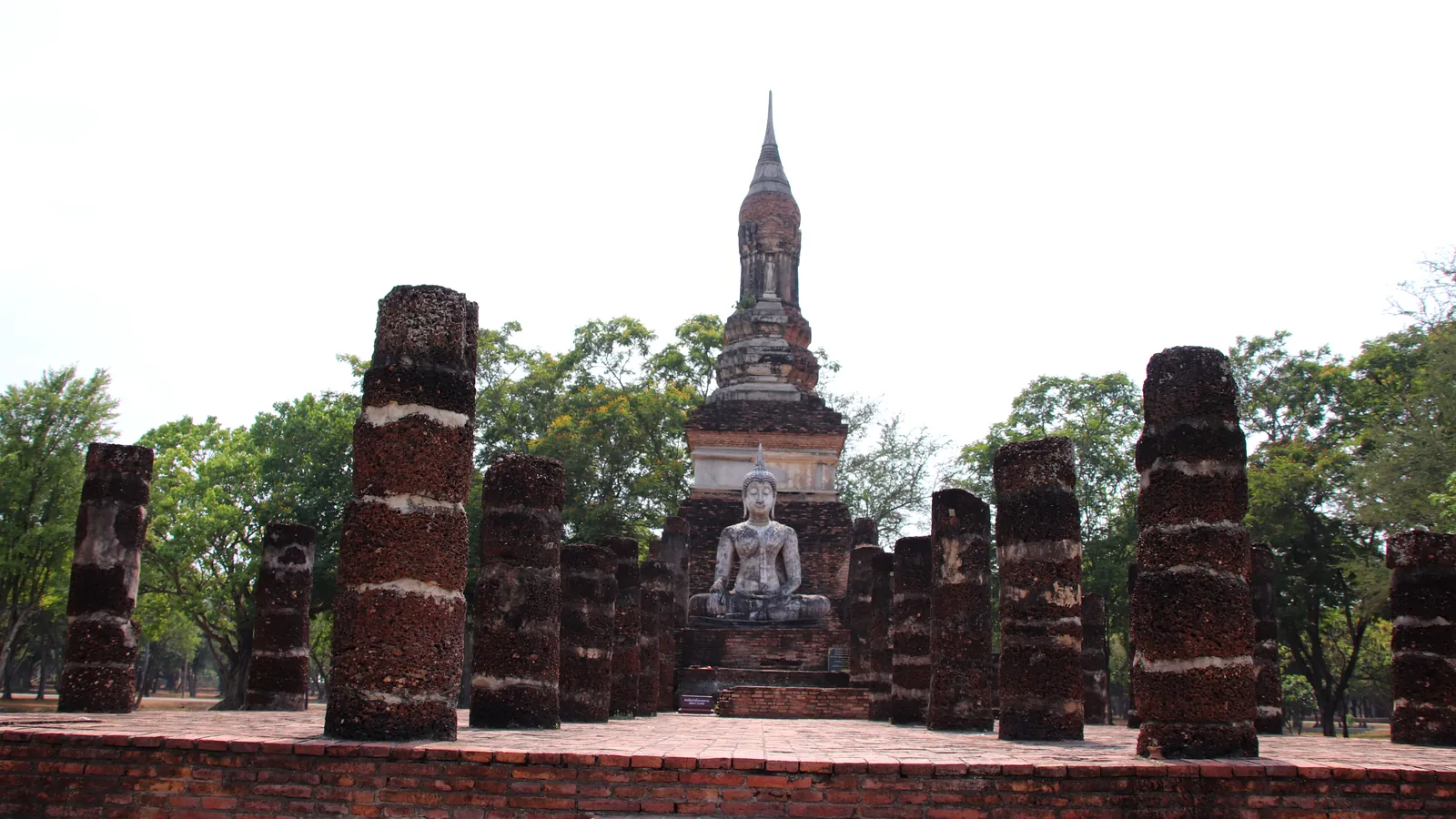
- Wat Mahathat: the most important temple of the kingdom, with a large lotus-bud chedi, rows of columns and seated Buddha images, surrounded by many smaller chedis.
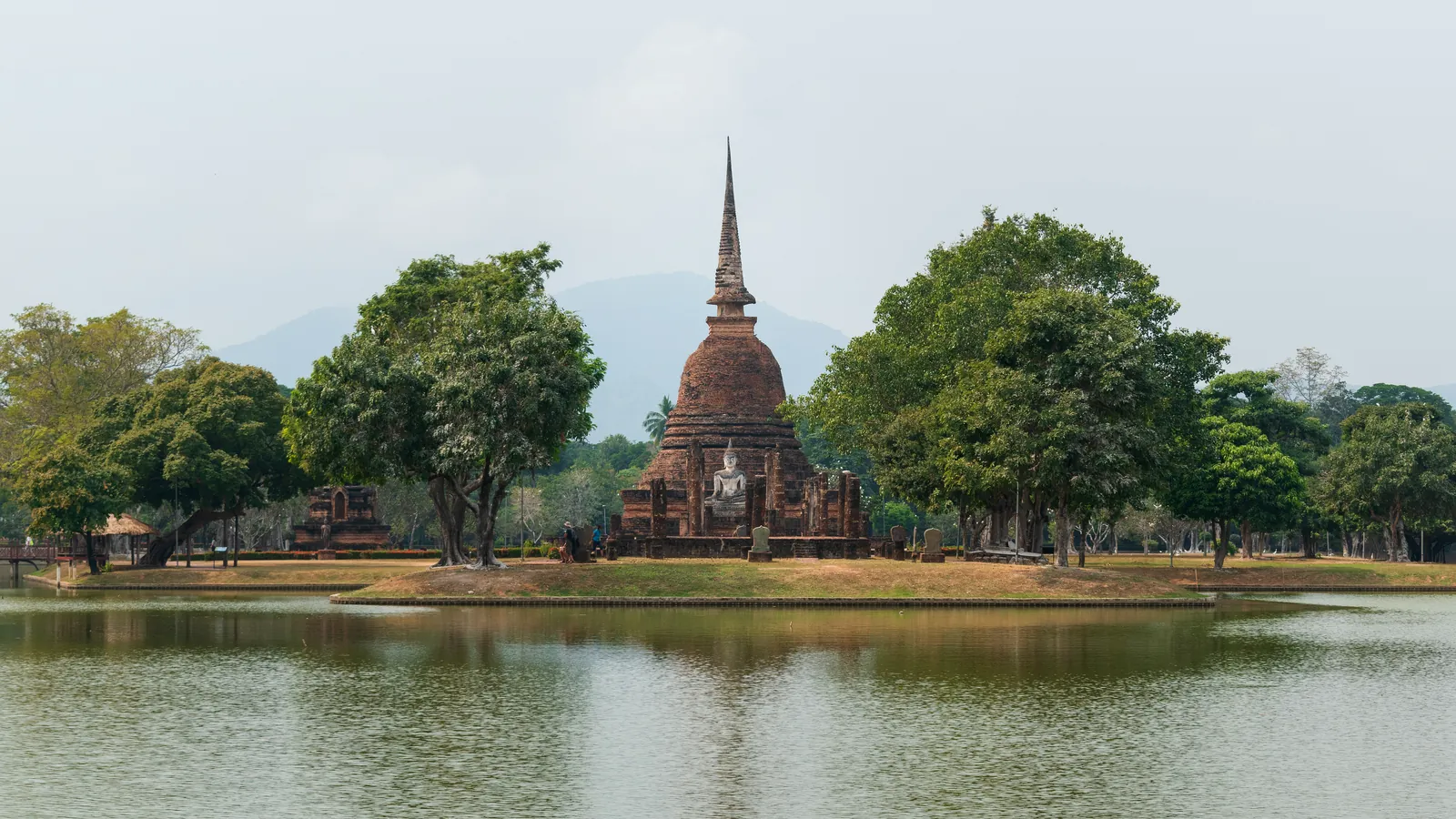
- Wat Sa Si: a bell-shaped chedi in Sri Lankan style and a seated Buddha on an island in a lotus pond; the classic photo spot.
- Wat Si Sawai: three Khmer-style prangs, from a Hindu sanctuary later adapted for Buddhist use.
- Wat Trapang Ngoen: a lotus-bud chedi reflected in the “silver pond”.
- King Ramkhamhaeng Monument: a statue of the king, where Thai visitors leave offerings.
North zone
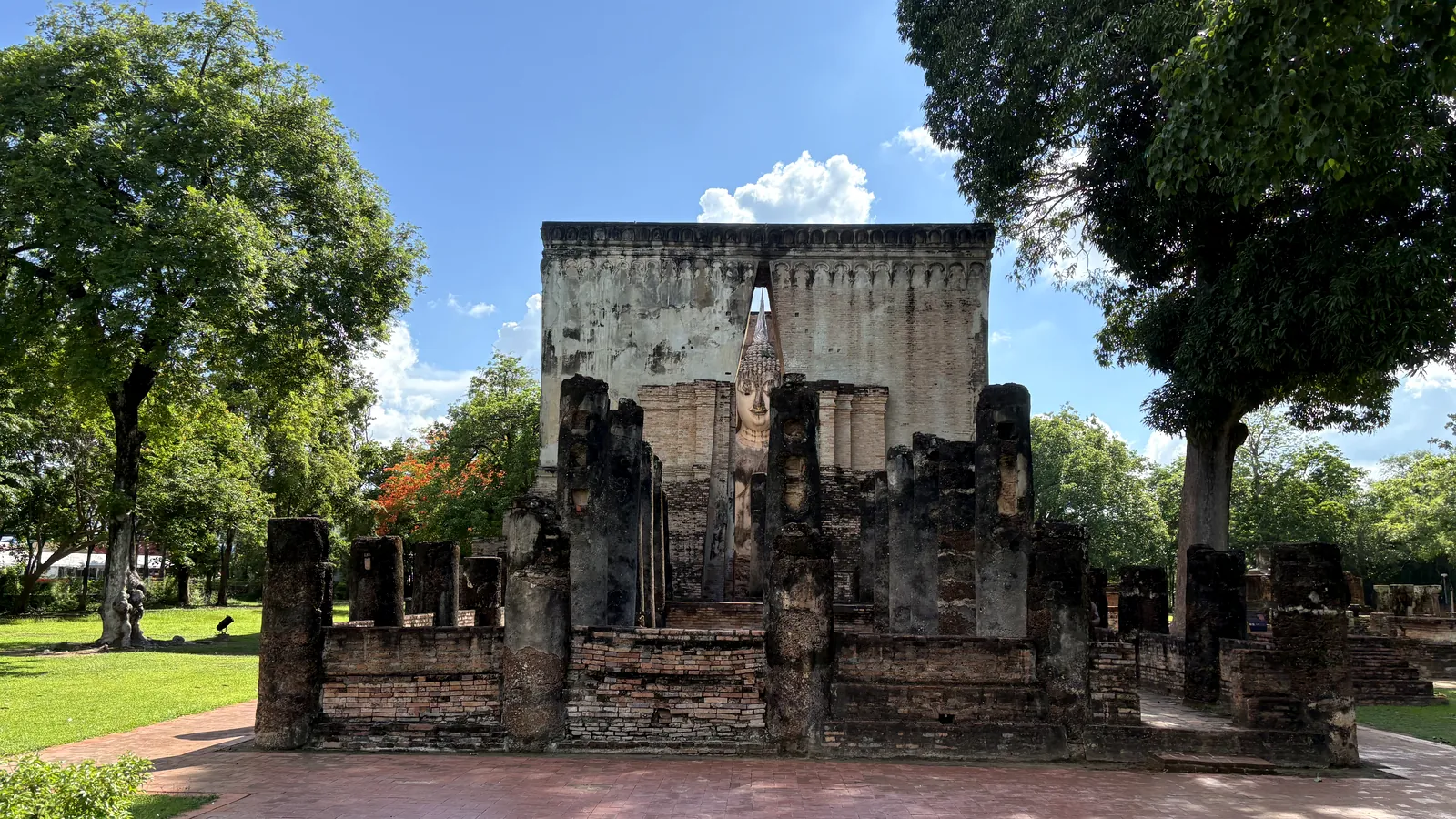
- Wat Si Chum: home to Phra Achana, a seated Buddha about 15 metres tall, filling a roofless mondop and seen through a narrow opening. It is the most striking sight in Sukhothai; do not miss it.
- Wat Phra Phai Luang: three Khmer-style prangs (one still largely standing), from before the Sukhothai kingdom.
West zone and outside the walls
- Wat Saphan Hin: a 12.5-metre standing Buddha on a hilltop, reached by a slate path; the view over the forest is worth the short climb.
- Wat Chang Lom (east): a chedi on a base of elephant sculptures.
- Wat Chetuphon (south): Buddha images in walking, standing, seated and reclining postures.
How long does it take to see Sukhothai?
Allow half a day for the central zone by bicycle, and a full day to add the north zone and Wat Si Chum. If you want to see the west zone, the museum and the outlying temples without rushing, plan two days. Most visitors spend one or two nights in Sukhothai, which also lets you see the park at sunrise and sunset. Add another day if you want to visit Si Satchanalai.
How to get around the park
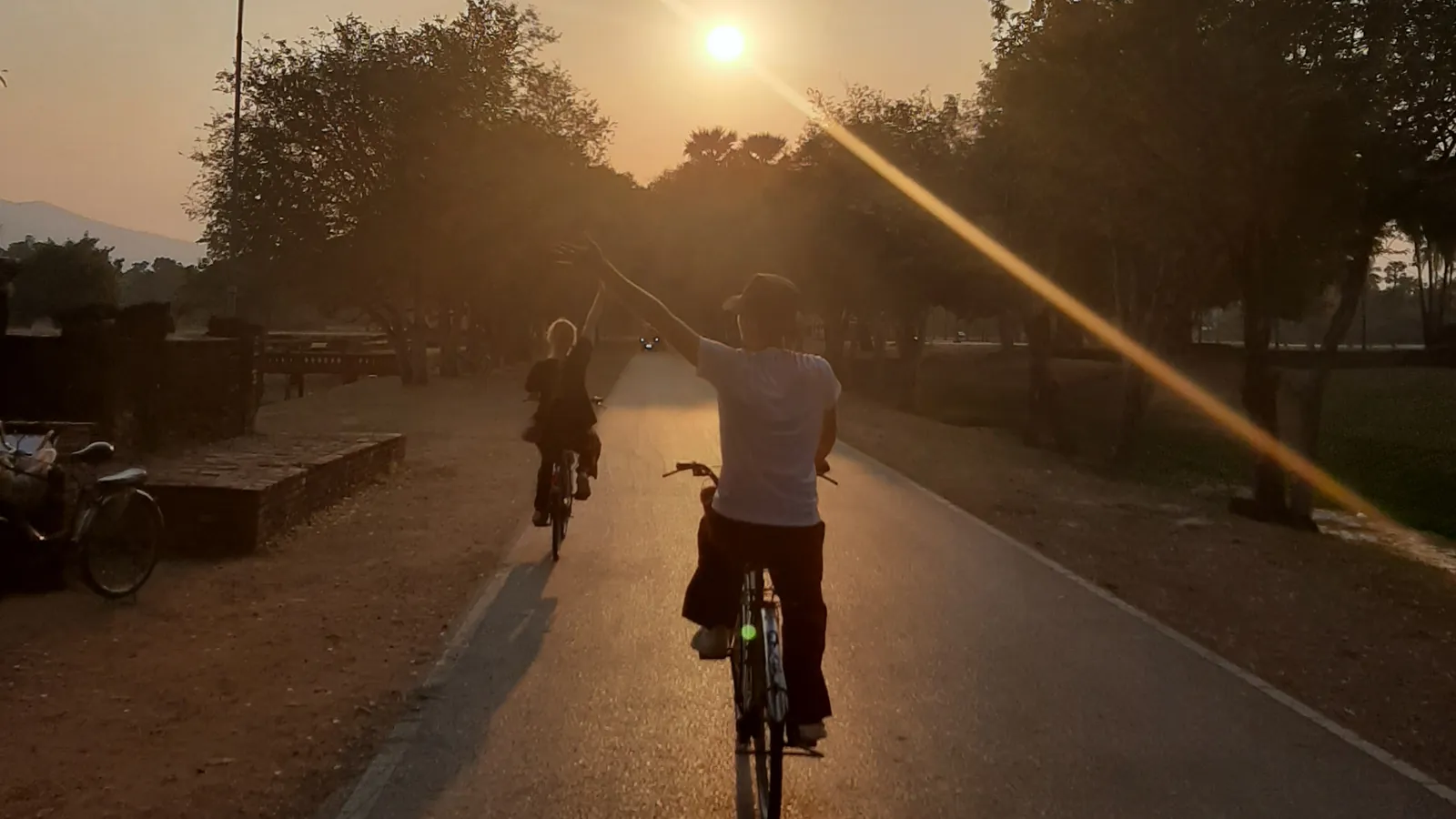
The park is flat, the roads are quiet and shaded in places, and the zones are several kilometres apart, so a bicycle is ideal. Rental shops opposite the central zone entrance charge about 30–50 THB a day. Electric bikes and scooters are also available, and there are tram tours of the central zone. Guided cycling tours are a good option if you want the history explained. Carry water and a hat: there is little shade between the zones, and the midday heat can be intense, especially from March to May.
How to get to Sukhothai
- From Bangkok by bus: buses leave from Mo Chit (the Northern Bus Terminal) and take about 6–9 hours; Win Tour fares were around 380–440 THB in 2026. Some services continue to the old city.
- From Bangkok by train: there is no railway to Sukhothai. Take the train from Krung Thep Aphiwat to Phitsanulok (about 5–7 hours), then a bus to Sukhothai (about 1 hour, 57 km).
- By air: Bangkok Airways flies from Suvarnabhumi to Sukhothai Airport in about 1 hour 20 minutes. The airport is 25–30 km north of New Sukhothai; a minivan transfer costs a few hundred baht.
- From Chiang Mai: buses take about 5–6 hours from the Arcade bus station.
- New Sukhothai to the park: blue songthaews (shared pick-up trucks) run from the bus station and the town centre to the old city from about 06:00 to 18:00, for around 30 THB per person (20–25 minutes).
Sukhothai fits neatly into a route between Bangkok and Chiang Mai: see our Bangkok to Chiang Mai guide and our Thailand itinerary for how to build it in.
What is the dress code for Sukhothai Historical Park?
The ruins are still sacred sites, so dress respectfully: cover your shoulders and knees, especially if you go inside active shrines such as Wat Si Chum. Do not climb on the ruins or Buddha images, and do not pose in ways that disrespect them, such as sitting on or pointing your feet at a Buddha. Remove shoes where signs ask you to. Light, loose clothing that covers you also protects against the sun.
Loy Krathong in Sukhothai
Sukhothai is considered the birthplace of Loy Krathong, the festival in which people float candle-lit baskets on water. The Sukhothai Loy Krathong and Candle Festival is held in the historical park, with light and sound shows, processions and fireworks; in 2026 it runs from 15 to 24 November, with ticketed shows at 19:00 (500–1,200 THB). Hotels fill up quickly and prices rise, so book early. See the best time to visit Thailand for other festivals.
Sukhothai vs Ayutthaya: which should you visit?
Ayutthaya is the easy day trip from Bangkok, with bigger crowds and ruins scattered through a modern city. Sukhothai is older, greener and calmer: its ruins sit in a park of ponds and trees, and it has a stronger sense of a lost city. If you are travelling between Bangkok and Chiang Mai and can spare one or two nights, Sukhothai is the more memorable stop. If you only have a day from Bangkok, choose Ayutthaya.
Si Satchanalai and Kamphaeng Phet
The other two towns of the UNESCO site are even less visited. Si Satchanalai, the kingdom’s second city, lies about 50 km north of Sukhothai on the Yom River, with temples such as Wat Chang Lom, ringed by elephant statues, set in quiet forest. Kamphaeng Phet, to the south-west, was a fortified frontier town with laterite temples and large Buddha images. Each has its own entrance fees and is best visited by car, by tour or by bus from Sukhothai.
Tips for visiting
- Go early or late. Sunrise at Wat Sa Si or Wat Mahathat is the highlight for most photographers.
- Stay in Old Sukhothai if you want to cycle to the ruins at dawn.
- Visit on a Saturday evening to see the ruins lit up.
- Carry cash for tickets, bike rental and food stalls.
- Use repellent, as the ponds attract mosquitoes at dawn and dusk.
- Try Sukhothai noodles (kuay teow Sukhothai), the local speciality.
Planning the rest of your trip? See how much a trip to Thailand costs, whether Thailand is safe, and our guide to solo travel in Thailand. If you love ancient temples, Cambodia’s Angkor is the next step: see our things to do in Siem Reap.
Compare hotels in Sukhothai on Booking.com
FAQ
Who was the first king of Sukhothai?
Si Inthrathit, who founded the kingdom around 1238. His son Ramkhamhaeng is the most famous Sukhothai king.
Is Sukhothai worth visiting?
Yes, especially if you are interested in history, temples or photography. It is quieter than Ayutthaya and an easy stop between Bangkok and Chiang Mai.
Can you visit Sukhothai as a day trip from Bangkok?
Not comfortably. It is 6–9 hours by bus each way. Fly, or plan at least one night in Sukhothai.