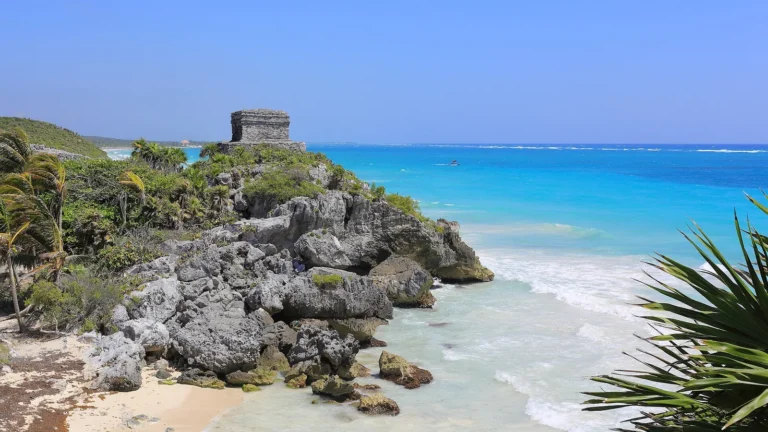
The Tulum ruins are the remains of a walled Maya city built on 12-metre limestone cliffs above the Caribbean, just north of Tulum town in Quintana Roo, about 130 km south of Cancún. Most of the buildings date from the 13th to 15th centuries, and the site was still in use when the Spanish arrived. Its highlights are El Castillo, a temple on the cliff edge, and the Temple of the Frescoes, with traces of painted murals. The site is open daily from 8:00 to 17:00 (last entry 15:30). Foreign visitors pay a combined fee of 265 pesos, which local reports break down into 165 pesos for the archaeological zone and national park plus 100 pesos for the Parque del Jaguar, the national park around the ruins. Arrive at opening time to beat the heat and the tour groups.
Tulum ruins at a glance
| Location | Inside Tulum National Park (Parque del Jaguar), about 3–4 km north of Tulum town |
| Opening hours | Daily 8:00–17:00, last entry 15:30 |
| Entry fee | Foreigners 265 MXN in total; Mexican nationals 80 MXN (free on Sundays) |
| Time needed | 1½–2 hours, plus time on the beach |
| Highlights | El Castillo, Temple of the Frescoes, Temple of the Descending God, the city wall, the beach below the cliffs |
| Rules | No drones without permits; tripods need INAH permission |
Are the Tulum ruins worth visiting?
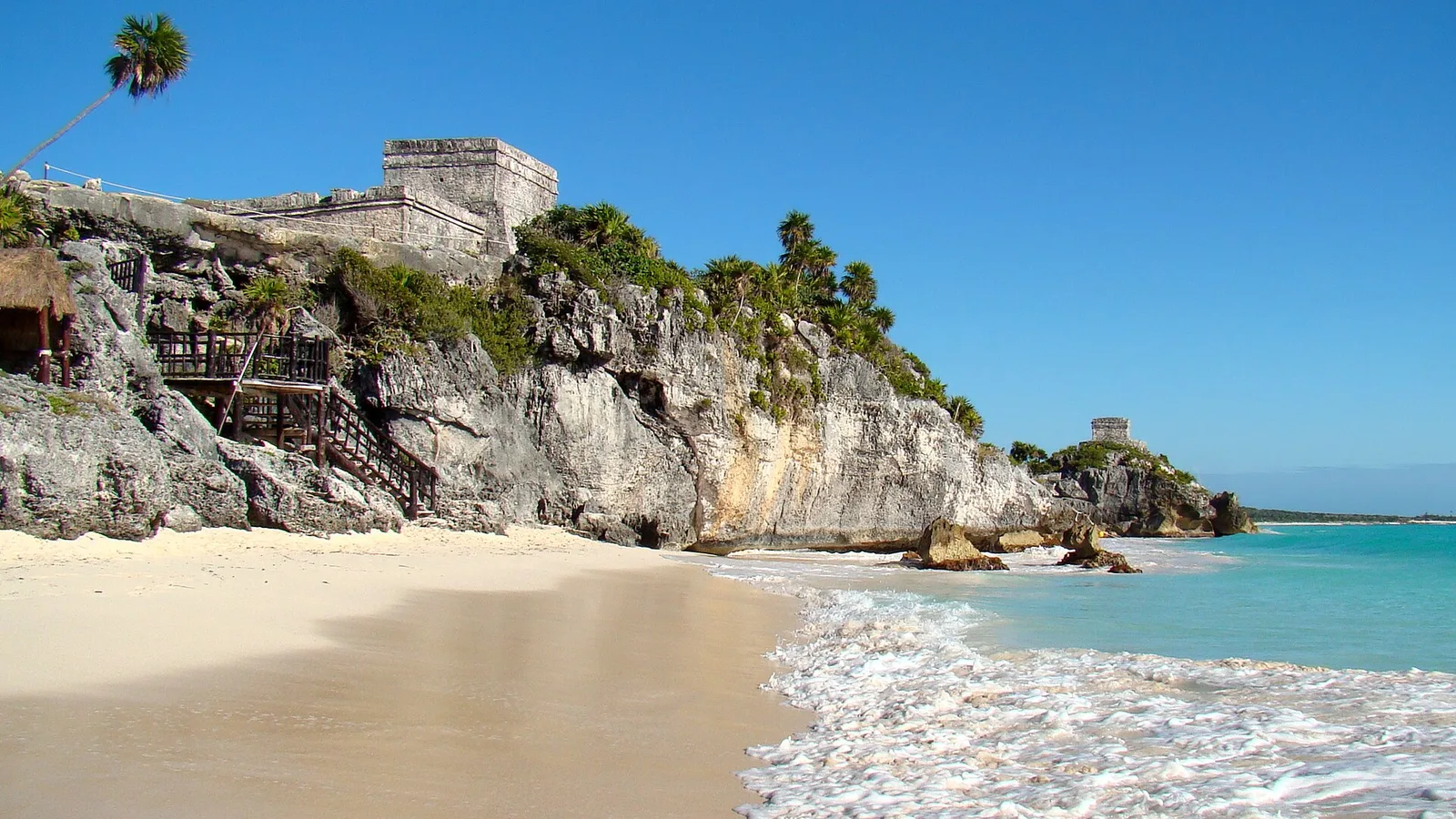
Yes, mainly for the setting. The buildings are smaller and simpler than those at Chichén Itzá or Cobá, but no other major Maya site sits on a cliff above turquoise sea, and the view of El Castillo from the beach is one of the most photographed in Mexico. It is one of the most visited archaeological sites in the country, so it is busy: go at 8:00, when it opens, or late in the afternoon before last entry, and allow time for a swim afterwards.
How much does it cost to enter the Tulum ruins?
INAH, the Mexican institute that manages archaeological sites, lists a unified fee of 265 pesos for foreign visitors and 80 pesos for Mexican nationals. Following new rates from July 2026, local media report that the 265 pesos for foreigners combines 165 pesos for the archaeological zone and Tulum National Park with 100 pesos for the Parque del Jaguar, the protected area around the ruins; Mexican nationals do not pay the Jaguar park fee and enter the ruins free on Sundays. Electric carts inside the park cost an extra 20 pesos. Bring pesos in cash in case card payment is unavailable; see our Mexico currency guide.
How much time do you need at the Tulum ruins?
About 1½–2 hours to walk the main path, see El Castillo, the Temple of the Frescoes and the viewpoints, and read the signs. Add an hour or more if you plan to swim at the beach below the ruins. There is little shade, so bring water, sunscreen and a hat.
What to see at the Tulum ruins
- El Castillo: the largest building, a temple on top of the cliff that may also have helped guide canoes through a gap in the reef.
- Temple of the Frescoes: a two-storey building with carved figures and remains of painted murals inside.
- Temple of the Descending God: named after the upside-down figure carved above its doorway.
- The wall: Tulum is one of the few walled Maya cities, protected by a stone wall on three sides and the sea on the fourth.
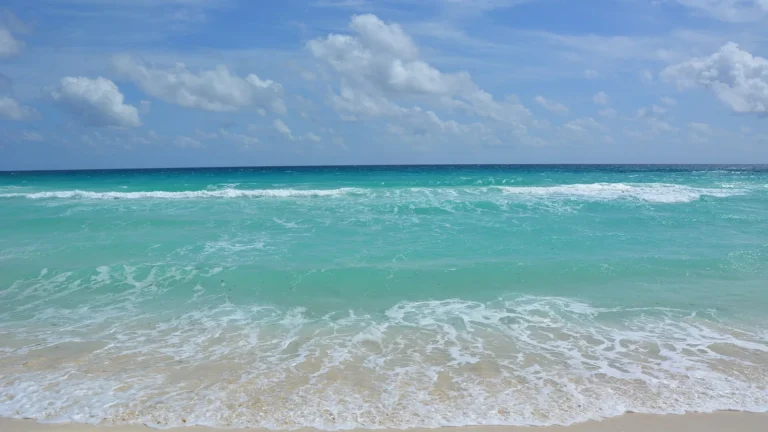
- Playa Ruinas: the small beach below the cliffs. Swimming is usually allowed when the stairway is open, but access can close for turtle nesting, rough sea or sargassum.
Are the Tulum ruins Mayan or Aztec?
Mayan. Tulum was a Maya port city on the Caribbean coast of the Yucatán Peninsula, trading by sea and land. The Aztecs lived in central Mexico, around today’s Mexico City, more than 1,000 km away.
Is Chichén Itzá or the Tulum ruins better?
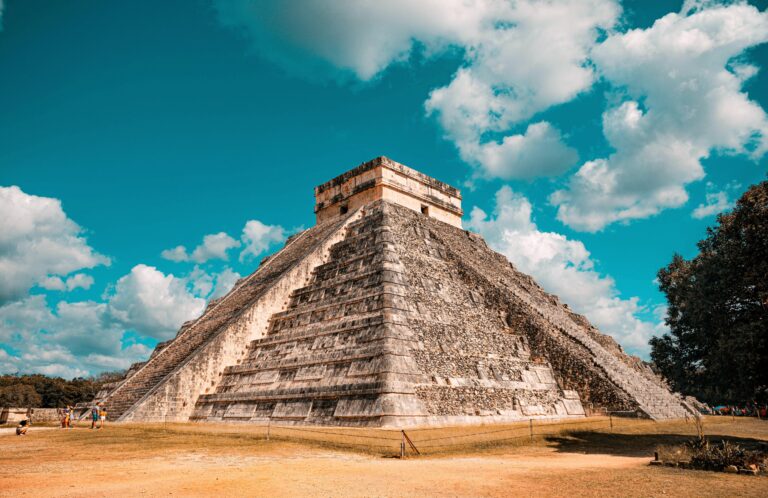
Chichén Itzá is the bigger and more impressive archaeological site, with the famous pyramid of El Castillo (Kukulcán), the great ball court and much more to see; it is a New Seven Wonders of the World site. Tulum is smaller but has the sea views and the beach. If you have time for only one, choose Chichén Itzá for history and architecture, Tulum for scenery and an easy half-day. See Cancún to Chichén Itzá.
How to get to the Tulum ruins
- From Tulum town: about 3–4 km by bicycle, taxi or colectivo along the highway, then walk or take the electric cart from the park entrance.
- From Cancún or Playa del Carmen: take the ADO bus or Tren Maya to Tulum, or join a day tour that combines the ruins with cenotes. See Cancún to Tulum and Cancún to Playa del Carmen.
- By car: use the official parking areas near the park entrance.
👉 Compare Tulum ruins tours on GetYourGuide
Is Tulum under cartel control?
No single group controls Tulum, but criminal groups operate in the Riviera Maya, mostly around the local drug trade, and there have been shootings in bars and nightlife areas. Tulum is in Quintana Roo, rated Level 2, “Exercise increased caution”, by the U.S. State Department. Visiting the ruins in daylight is not affected. See is Tulum safe.
Best time to visit the Tulum ruins
Go at 8:00 or after about 14:00 to avoid the midday heat and the busiest tour-bus hours. December to April has the driest weather; summer is hotter and sargassum can affect the beach. See the best time to visit Tulum.
FAQ
Can you swim at the Tulum ruins?
Usually, at the small beach below El Castillo, when the access stairway is open. Bring a swimsuit and reef-safe habits: no sunscreen in the water is the safest choice.
Can you fly a drone at the Tulum ruins?
No, not without written permission from the authorities. Tripods and professional camera equipment also need permission from INAH.
Do you need a guide?
No. Signs explain the main buildings, but a licensed guide at the entrance adds history and context.
Are the ruins open on Mondays?
INAH lists the site as open daily from 8:00 to 17:00.