Modern budget travelers often choose an ultra-minimalist approach because it cuts baggage fees, speeds up airport transit, and forces smart buying decisions on the road. Travel has become about experiences over possessions, and an optimized packing list reflects that shift. Minimizing clutter also reduces the risk of losing items or paying to store excess luggage.
Traveling with everything under 7kg isn’t just about convenience — it’s one of the most effective ways to keep travel costs low. I’ve tested this exact setup on flights with Ryanair, Wizz Air, and LATAM to ensure it passes every gate check.
For official airline baggage size and weight restrictions, check the International Air Transport Association’s guidance on carry-on and checked luggage standards.
Avoiding checked baggage fees saves money on every flight. Packing light also makes buses, trains, and budget accommodation easier, especially in destinations where infrastructure isn’t built around heavy luggage.
The ultra-minimalist budget packing list is designed for budget travelers, carry-on-only flyers, and anyone who wants to travel cheaper, faster, and with less stress.
If you’re packing for cost reasons across an entire trip, check out our budget travel hacks guide for ways to save on accommodation, transport, and food that complement smart packing.
The ultra-minimalist budget packing list breakdown
Essentials — things you must have: passport, money, phone, chargers, basic meds.
Travel tools — items that add value without bulk: universal adapter, reusable water bottle, lightweight towel.
Optional minimal gear — only if space allows: flip-flops, hat, travel laundry kit.
Why packing under 7kg saves money
| Category | Items | Est. Weight |
| The Bag | 35L Lightweight Backpack | 0.8 kg |
| Clothing | 3 Shirts, 2 Pants, Underwear, Socks | 3.2 kg |
| Outerwear | Rain Jacket & Fleece | 0.9 kg |
| Electronics | Phone, Power bank, Cables | 0.6 kg |
| Toiletries | Solid bars & Travel sizes | 0.5 kg |
| Misc | Documents, Wallet, Water Bottle | 0.5 kg |
| TOTAL | 6.5 kg |
Packing light directly reduces travel costs in several ways:
- no checked baggage fees on budget airlines
- easier use of public transport instead of taxis
- less temptation to overpack “just in case” items
- faster airport exits (no baggage claim waits)
For travelers trying to keep costs down — especially on budget trips in Europe or long-haul routes where baggage fees add up — traveling under 7kg is a real financial advantage.
The ultra-minimalist budget packing list pairs well with destinations where budgets stretch further. For ideas on affordable places to put your travel packing to use, see our guides on best budget-friendly European vacations and best places to visit in Southeast Asia.
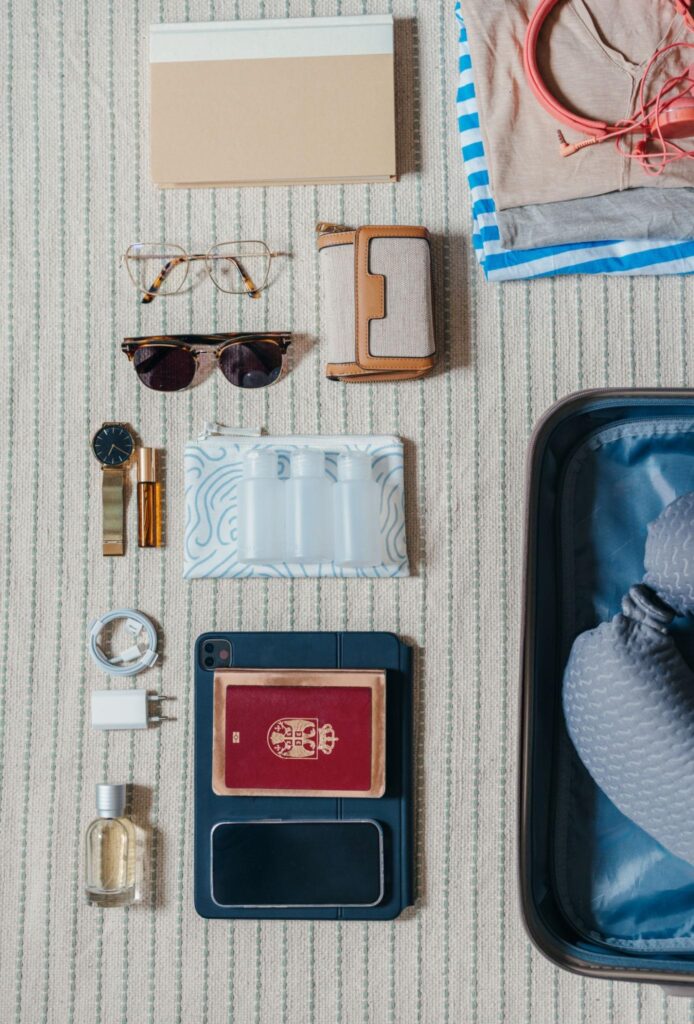
The 7kg rule: what actually fits
A typical airline 7kg allowance gives you roughly:
- 1 backpack (30–40L max)
- total weight: 6.5–7kg including bag
That’s enough for indefinite travel if you pack intentionally.
The goal is multi-use items, neutral colors, and fast-drying fabrics.
Clothing (mix-and-match, no extras)
This clothing setup works across climates and cities if you plan layers properly. This layer system worked perfectly for the chilly nights in the Albanian Alps and the high altitude in Cusco, Peru.
Core clothing
- 3 lightweight t-shirts or tops
- 1 long-sleeve layer (merino or synthetic)
- 1 warm layer (light fleece or packable sweater)
- 1 compact rain jacket
- 2 pairs of pants (1 worn, 1 packed)
- 1 pair of shorts or skirt
- 4 pairs of underwear
- 3–4 pairs of socks
Shoes
- 1 pair worn (comfortable walking shoes)
- 1 lightweight secondary option (sandals or flats)
Rule: If an item can’t be worn at least 3 different ways, it doesn’t come.
When choosing what clothing to bring, aim for pieces that can mix and match. Neutral-colored shirts and quick-dry fabrics help reduce the number of shirts and pants you need. Bring socks and underwear for each day you expect to be traveling; everything else can be washed on the road. Packing one lightweight sweater that doubles as a rain layer or pillow on overnight transport trips adds value without bulk.
Toiletries (carry-on compliant)
Keep everything under airline liquid limits and refill on the road.
- toothbrush + small toothpaste
- solid deodorant
- travel-size shampoo or shampoo bar
- travel-size soap or soap bar
- razor
- small microfiber towel (optional)
Solid toiletries are life-savers in humid climates like Southeast Asia because they don’t leak in your bag.
Instead of full-size bottles, transfer essential liquids into 30 ml travel containers that meet airline requirements. Many budget travelers skip full toiletries entirely and pick up basic items like shampoo and toothpaste at their destination to avoid weight and waste. If you must bring soap or body wash, a small bar instead of a bottle is lighter and lasts longer.
Electronics (only essentials)
- smartphone
- charging cable
- compact wall adapter
- power bank (10,000 mAh max)
- earbuds or lightweight headphones
Skip laptops unless absolutely necessary. Phones handle booking, navigation, and payments well enough for most travelers.
Rather than multiple chargers and cables, bring only your main phone charger plus one multi-port adapter. A small portable battery is useful for long travel days but avoid anything too heavy. If you’re bringing a laptop, consider whether a tablet or e-reader could save space and weight instead. The goal is to balance usefulness against how much each piece adds to your bag’s bulk.
Documents & money
- passport
- debit card + backup card
- small amount of local currency
- digital copies of documents (cloud + phone)
A slim document pouch is lighter than a full travel wallet.
Packing tricks that make 7kg possible
- wear your heaviest clothes on travel days
- roll clothing instead of folding
- use compression packing cubes sparingly
- avoid “what if” items — buy later if needed
Packing under 7kg is mostly a mindset shift, not a gear problem.
What NOT to pack (this is where weight creeps in)
- full-size toiletries
- multiple jackets
- books (use e-readers or apps)
- “just in case” outfits
- heavy jeans unless worn
If something isn’t used in the first 3 days, you probably don’t need it.
Does this work for long trips?
Yes — especially for long trips.
Minimal packing works best for:
- extended travel
- multi-country itineraries
- destinations with laundry access
For long-distance budget travel — including places like South America or Peru — packing light makes frequent transport and accommodation changes much easier.
Choosing destinations with warm climates and casual dress codes allows you to pack lighter. Tropical destinations like Southeast Asia or Latin America often let you skip heavy layers entirely, saving both space and cost. Planning a capsule wardrobe for each climate you’ll encounter helps avoid overpacking and keeps your suitcase manageable.
Final takeaway
Packing under 7kg isn’t about sacrifice — it’s about efficiency.
With the right items, you move faster, spend less, and adapt more easily to different destinations. For budget travelers especially, ultra-minimalist packing is one of the simplest ways to lower costs before the trip even starts.
This checklist works across regions, seasons, and trip lengths — and once you travel this way, it’s hard to go back.
For context on overall trip expenses and how packing impacts cost, read how much does a trip to Peru cost? and is Thailand expensive to visit? for examples of cost variation by destination.
