Quick answer
- Vietnam’s currency is the Vietnamese dong (VND). Carry small notes for everyday purchases.
- Pay in dong. A hotel or tour website may show US dollars, but that does not make dollars an everyday payment currency.
- ATM fees depend on the machine, your card network and where the card was issued. Read the charge before accepting.
- Visa and Mastercard are useful at larger hotels, malls and chains. Keep cash for markets, street food and small guesthouses.
- Set aside around 250,000–400,000 VND ($10–16) per day for budget cash spending, excluding prepaid accommodation and tours.
- Tipping is optional. It is more common for guides and spa staff than at street stalls.
The Vietnamese dong explained
The dong is written as VND, ₫ or đ. Most day-to-day spending uses cotton-paper notes of 1,000, 2,000 and 5,000 VND and polymer notes from 10,000 to 500,000 VND. Vietnam’s tourism authority says coins are not used in practice, so expect change in notes.
On November 9, 2026, Vietcombank’s cash-buying rates were 25,290 VND per US dollar and 27,769.76 VND per euro. That is about 25,300 VND per US$1 and 27,800 VND per €1. The table uses the dollar rate for rough mental conversions; a card or exchange counter can quote a different rate.
| Denomination | Colour (main tones) | Approx. USD value |
|---|---|---|
| 1,000 VND | Purple | $0.04 |
| 2,000 VND | Dark brown | $0.08 |
| 5,000 VND | Blue | $0.20 |
| 10,000 VND | Brown and greenish yellow | $0.40 |
| 20,000 VND | Deep blue | $0.79 |
| 50,000 VND | Reddish purple and brown | $1.98 |
| 100,000 VND | Dark green | $3.95 |
| 200,000 VND | Reddish brown | $7.91 |
| 500,000 VND | Dark bluish purple | $19.77 |
Read the printed number rather than trusting colour. A 10,000 note has one fewer zero than a 100,000 note. A 20,000 and a 500,000 note can both look blue in low light, despite the 480,000 VND difference.
Can you use US dollars in Vietnam?
Use dong for ordinary payments. The State Bank of Vietnam’s foreign exchange rules generally restrict payments and price quotations in foreign currency inside Vietnam, with specific exceptions. A hotel or tour booked through an international platform may display prices in dollars. Check the currency of the actual charge and pay local bills in VND.
Keeping dong also avoids an informal conversion rate and makes it easier to check change. If carrying dollars or euros as backup, exchange them at an authorised counter when needed.
ATMs in Vietnam: fees and which banks to use
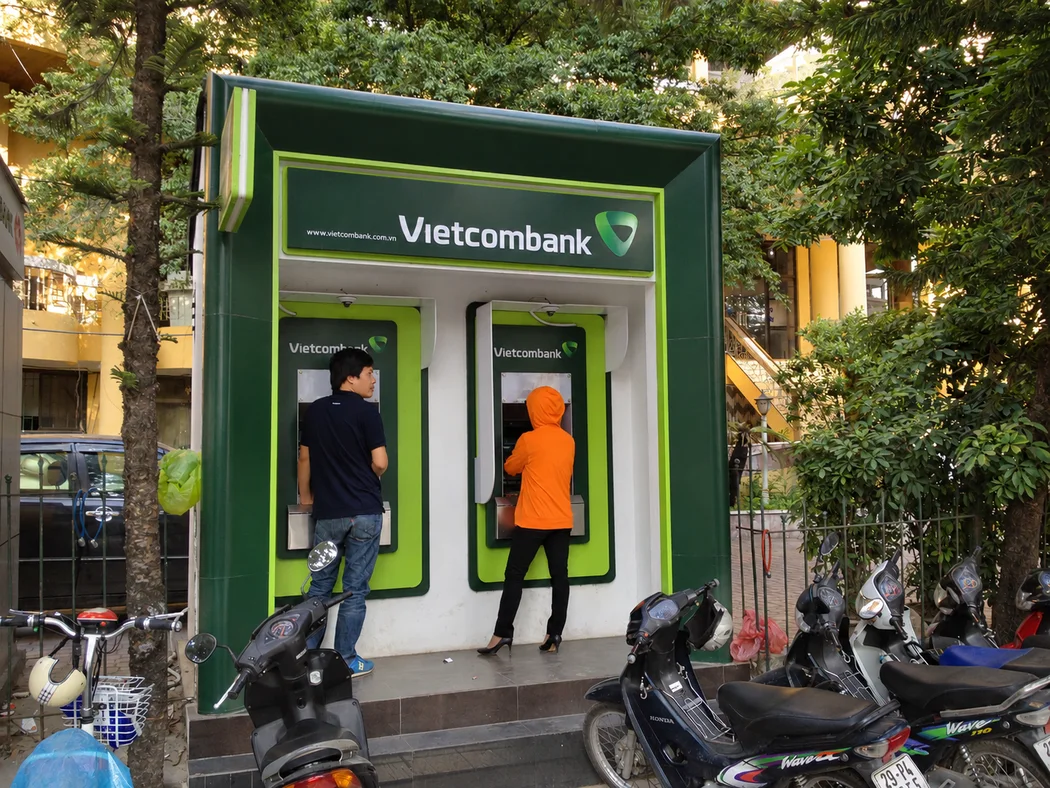
Two charges can apply: the Vietnamese ATM operator’s fee and the card issuer’s fee. The published examples below apply to the stated card groups. Your bank can set a lower withdrawal limit, and an exemption at the ATM does not waive your own card fees.
| Bank | Fee per withdrawal | Max per withdrawal |
|---|---|---|
| BIDV | Foreign-issued Visa and Mastercard: 4.5–5% by area, minimum 90,000 VND ($3.56), before VAT | 5,000,000 VND ($198) for Visa and Mastercard |
| ACB | 4.4%, minimum 100,000 VND ($3.95), VAT included; European-issued Visa and JCB are exempt under the notice | Check the machine |
| Shinhan Bank Vietnam | No operator surcharge for eligible Visa cards issued in Europe, the Middle East or Africa, or for Shinhan Korea SOL Travel Check cards | Check the machine |
If your card qualifies for a published exemption, try that bank first. For other cards, compare the fee shown before accepting. An ATM outside a bank branch can be convenient if the machine retains a card or fails to dispense cash.
Always choose dong (VND), not your home currency
If an ATM or card terminal offers to convert the charge into dollars, euros or pounds, select VND and decline the machine’s conversion. This is dynamic currency conversion: the terminal sets the exchange rate if you accept. Declining it leaves conversion to your card provider under its terms.
The local ATM surcharge is separate from conversion. You can decline the conversion and still see a withdrawal fee; cancel the transaction if the total is too high.
How to withdraw cash with the lowest fees
Compare the fee against the amount you intend to withdraw. One larger withdrawal can cost less than several small ones when a flat minimum applies. A percentage fee still rises with the amount, so check the screen and avoid carrying more cash than you need.
A multi-currency card avoids most of the bank’s foreign transaction fees: you can get a Wise card for fee-free spending in VND, which converts your balance to dong at the mid-market rate with a small, transparent conversion fee. Wise allows a limited number of free ATM withdrawals per month, after which a fee applies, and the Vietnamese ATM operator’s own charge is separate. This guide contains affiliate links.
Exchanging money: banks, gold shops and airports
Use a bank or a licensed foreign exchange agent. A gold shop or jeweller can exchange currency legally only if authorised for that service. A shop’s location in a well-known exchange district does not establish its licence. Ask for the total in dong and a receipt before handing over your cash.
A licensed airport counter is useful for enough cash to cover the first ride and meal. To compare airport and city counters, ask how many dong you will receive after any charges. Bring identification, count the notes at the counter and keep the receipt.
Cards and mobile payments: where they work and where you need cash
Visa and Mastercard are useful at larger hotels, shopping malls and chain businesses. Ask first at small homestays and family-run restaurants. Keep cash for street food, traditional markets and local buses, where card terminals are less common.
Grab supports adding a credit or debit card in Vietnam. Check the payment options in the app and review the total before booking, especially with a card issued abroad. The guide to the best eSIM for Vietnam covers mobile data for booking rides and checking pickup details.
A VietQR sign does not mean any foreign banking app can pay. NAPAS supports cross-border QR payments through participating banks and wallets. Check whether your app and the merchant support the same service; carry a card or cash as backup.
How much cash do you need per day in Vietnam?
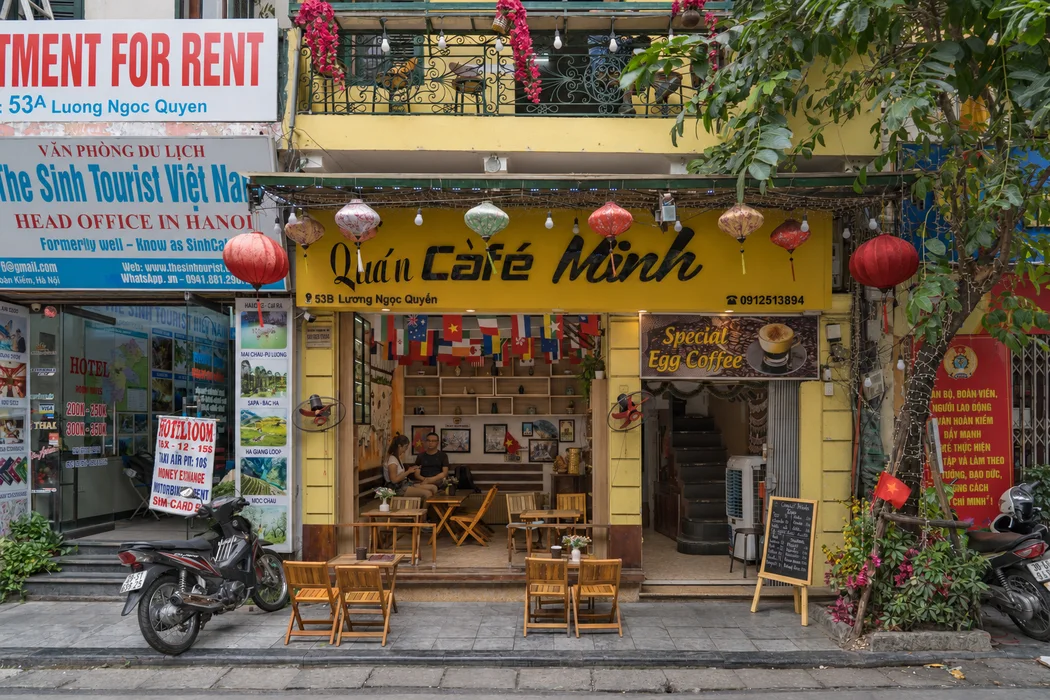
These are cash envelopes for a city day, excluding hotels and tours paid by card or booked in advance. You may need more if accommodation is cash-only or you are travelling somewhere with few ATMs.
| Travel style | Cash per person, per day | What it can cover |
|---|---|---|
| Budget | 250,000–400,000 VND ($10–16) | Street food, coffee, a short ride and a simple sight |
| Mid-range | 400,000–700,000 VND ($16–28) | Small purchases, local rides, admissions and a buffer for cash-only meals |
Vietnam’s tourism authority lists a street meal at about 45,000 VND ($1.78), coffee at 25,000 VND ($0.99) and a short city taxi ride at 35,000–100,000 VND ($1.38–3.95). The Temple of Literature lists adult admission at 70,000 VND ($2.77). Two street meals, one coffee, one short ride and that admission add up to about 220,000–285,000 VND ($8.70–11.27). Grab fares depend on the route and are shown in the app.
For transport, hotels and activities beyond this cash envelope, see how much a trip to Vietnam costs. If the question is is Vietnam expensive, compare the cost of a day using local transport with a day of private rides and paid tours.
👉 Compare hotels in Hanoi on Booking.com
Tipping in Vietnam
Tipping is optional. At a restaurant, check whether service is included before leaving anything extra. At a street stall or café there is usually no need to tip. For a driver, rounding up a small cash fare is an easy gesture if you are happy with the ride.
Tipping is more common for guides and massage therapists. For a full-day guided outing, operator Khiri Travel suggests about US$5–10 for the guide (roughly 126,000–253,000 VND) and half that for the driver. Treat it as a reference, and ask the operator whether gratuities are already included.
Money scams to avoid
- Say the note value when handing it over for a cash taxi fare. Keep the note in sight until the driver acknowledges it.
- Count change before leaving the counter. Read each denomination, especially 20,000 versus 500,000 VND.
- Agree on a taxi fare or check the meter before setting off. In a ride app, check which payment method was selected before paying cash.
- At an exchange counter, confirm the amount you will get and count the notes before leaving. Keep large and small notes in separate pockets.
See common Southeast Asia scams for more examples to watch for while travelling.
FAQ
What is the currency of Vietnam?
The official currency is the Vietnamese dong (VND). Carry smaller notes for everyday purchases and check the printed denomination before paying.
Can I use US dollars in Vietnam?
Use Vietnamese dong for everyday purchases. Some international hotel or tour booking sites quote dollars, but a quoted price is separate from how a local bill is settled.
Which ATM has no fee in Vietnam?
Some cards qualify for an operator fee exemption at ACB or Shinhan Bank Vietnam. Eligibility depends on the card network and issuing region, and your own bank may still charge.
Is it better to exchange money before going?
Compare how much VND you would actually receive after fees. If your arrival plans are simple, a small amount of dong for the first ride is enough until you reach a licensed counter or ATM.
How much is $100 in Vietnam?
At Vietcombank’s cash-buying rate on November 9, 2026, US$100 was worth approximately 2,529,000 VND before any fees. The amount at another counter or on a card can differ.
Rates, fees and prices checked on November 9, 2026.