The Mae Hong Son Loop is a circular road trip of about 600 km through the mountains of northern Thailand, starting and ending in Chiang Mai. It is famous for its roughly 1,800 bends, and passes through Pai, the caves of Pang Mapha, the border town of Mae Hong Son, Khun Yuam and Mae Sariang, with an optional detour to Doi Inthanon, Thailand’s highest mountain. Most people ride it by motorbike in five to seven days, but you can also do it by car, with a driver, or by public minivan. The best time is from November to February.
Mae Hong Son Loop at a glance
| Distance | About 600 km; 700–800 km with common detours |
| Route | Chiang Mai – Pai – Pang Mapha (Soppong) – Mae Hong Son – Khun Yuam – Mae Sariang – Chom Thong – Chiang Mai |
| Main roads | Routes 107 and 1095 (Chiang Mai to Mae Hong Son via Pai), Route 108 (Mae Hong Son to Chiang Mai via Mae Sariang) |
| Bends | About 1,800 in total; about 760 between Chiang Mai and Pai alone |
| Time needed | 5–7 days recommended; 3–4 days is possible but rushed |
| Best season | November to February (cool and dry) |
| Avoid | February/March to April, the burning season, when smoke can be heavy |
| Licence | A motorcycle licence plus an International Driving Permit valid for motorcycles |
Mae Hong Son Loop route and map
The loop follows two main roads. Going clockwise, you leave Chiang Mai north on Route 107, then turn onto Route 1095, the famously winding mountain road to Pai and on to Pang Mapha and Mae Hong Son. From Mae Hong Son, Route 108 runs south through Khun Yuam and Mae Sariang, then east back towards Chiang Mai, passing the turn-off for Doi Inthanon near Chom Thong. Approximate legs:
| Leg | Distance | Riding time |
|---|---|---|
| Chiang Mai – Pai | about 135 km | 3–4 hours |
| Pai – Pang Mapha (Soppong) | about 40 km | about 1 hour |
| Pang Mapha – Mae Hong Son | about 70 km | 1.5–2 hours |
| Mae Hong Son – Khun Yuam | about 65 km | about 1.5 hours |
| Khun Yuam – Mae Sariang | about 100 km | 2–2.5 hours |
| Mae Sariang – Chiang Mai (via Hot and Chom Thong) | about 190 km | 3.5–4 hours |
There is also a shorter return from Mae Hong Son or Khun Yuam via Mae Chaem, which joins the road to Doi Inthanon and skips Mae Sariang.
Clockwise or anticlockwise?
Either direction works. Clockwise (via Pai first) is the most popular: you tackle the famous bends while you are fresh and reach the most social stop, Pai, on the first night. Anticlockwise puts the easier, straighter roads first, which some riders prefer to warm up, and lets you finish with a few relaxed days in Pai. If you are new to mountain riding, start with the shorter leg to Pai and decide from there whether to continue.
How many days do you need for the Mae Hong Son Loop?
Five to seven days is ideal. Experienced riders can do the loop in three or four days, but that means four to six hours of riding most days, with little time to stop. A relaxed plan rides two to four hours a day and leaves time for caves, waterfalls and viewpoints.
Mae Hong Son Loop itinerary (7 days)
- Day 1: Chiang Mai to Pai. Ride the bends of Route 1095, with stops at the Mok Fa or Mor Paeng waterfalls. Watch the sunset at Pai Canyon.
- Day 2: Pai. Hot springs, the Land Split, the bamboo bridge at Pam Bok and the night market.
- Day 3: Pai to Pang Mapha. Viewpoints at Doi Kiew Lom, then Tham Lod cave, with its bamboo-raft trip and swifts flying home at dusk.
- Day 4: Pang Mapha to Mae Hong Son. Detour to Ban Rak Thai, a Chinese tea village by the Myanmar border, and Pang Ung lake; or visit the Su Tong Pae bamboo bridge near Mae Hong Son.
- Day 5: Mae Hong Son to Khun Yuam or Mae Sariang. See Wat Chong Kham and Wat Chong Klang on the lake in Mae Hong Son, then ride south. From November, look out for the yellow Bua Tong (Mexican sunflower) fields at Doi Mae U Kho near Khun Yuam.
- Day 6: Mae Sariang to Doi Inthanon. A long riding day with forest and river views; stay near Doi Inthanon or in Mae Chaem.
- Day 7: Doi Inthanon and back to Chiang Mai. Ride to the summit (2,565 m), see the twin royal pagodas and the Wachirathan waterfall, then return to Chiang Mai.
Best stops on the loop
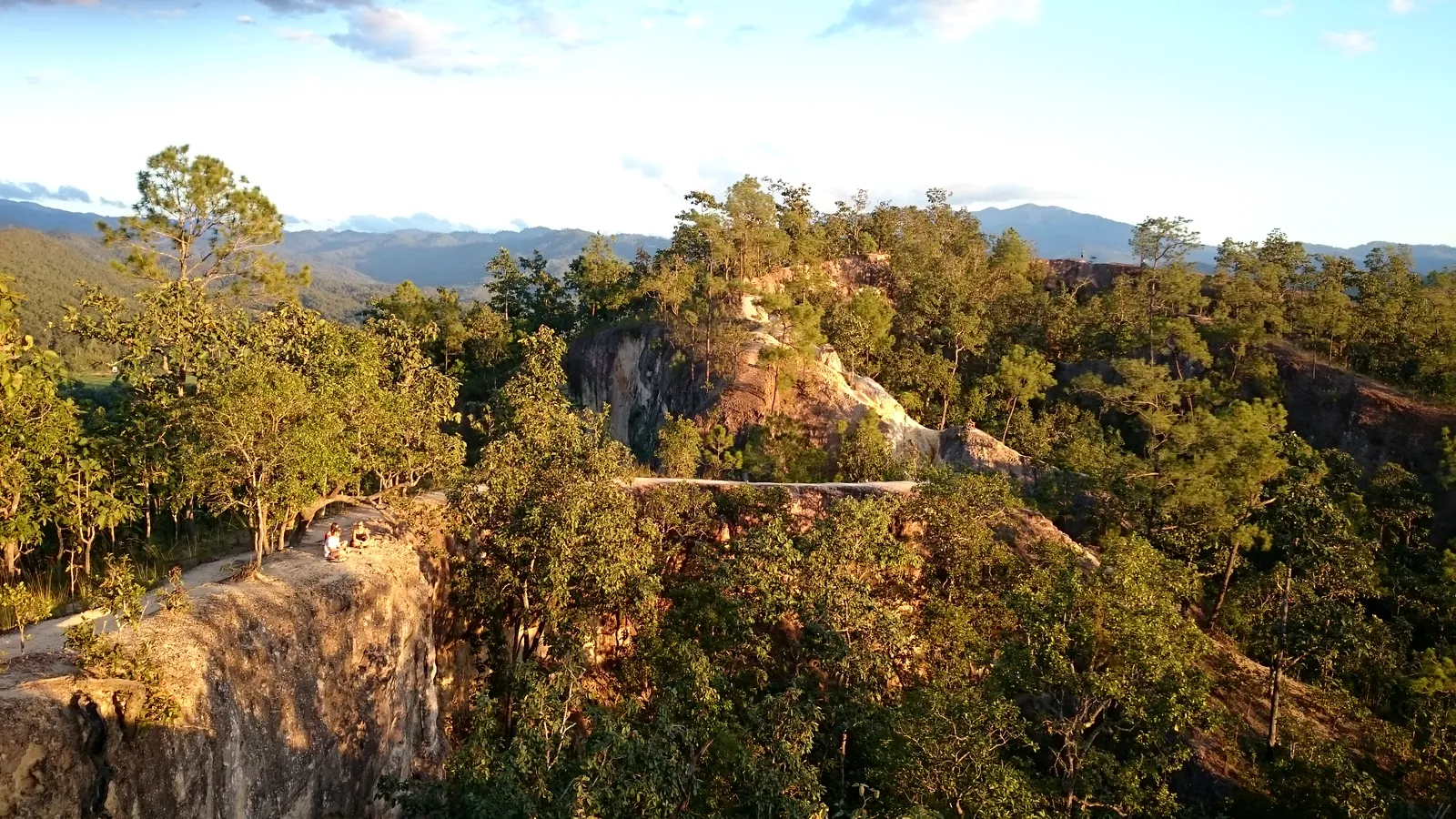
- Pai Canyon: narrow sandstone ridges with steep drops, free to enter and busiest at sunset. Wear good shoes; there are no railings.
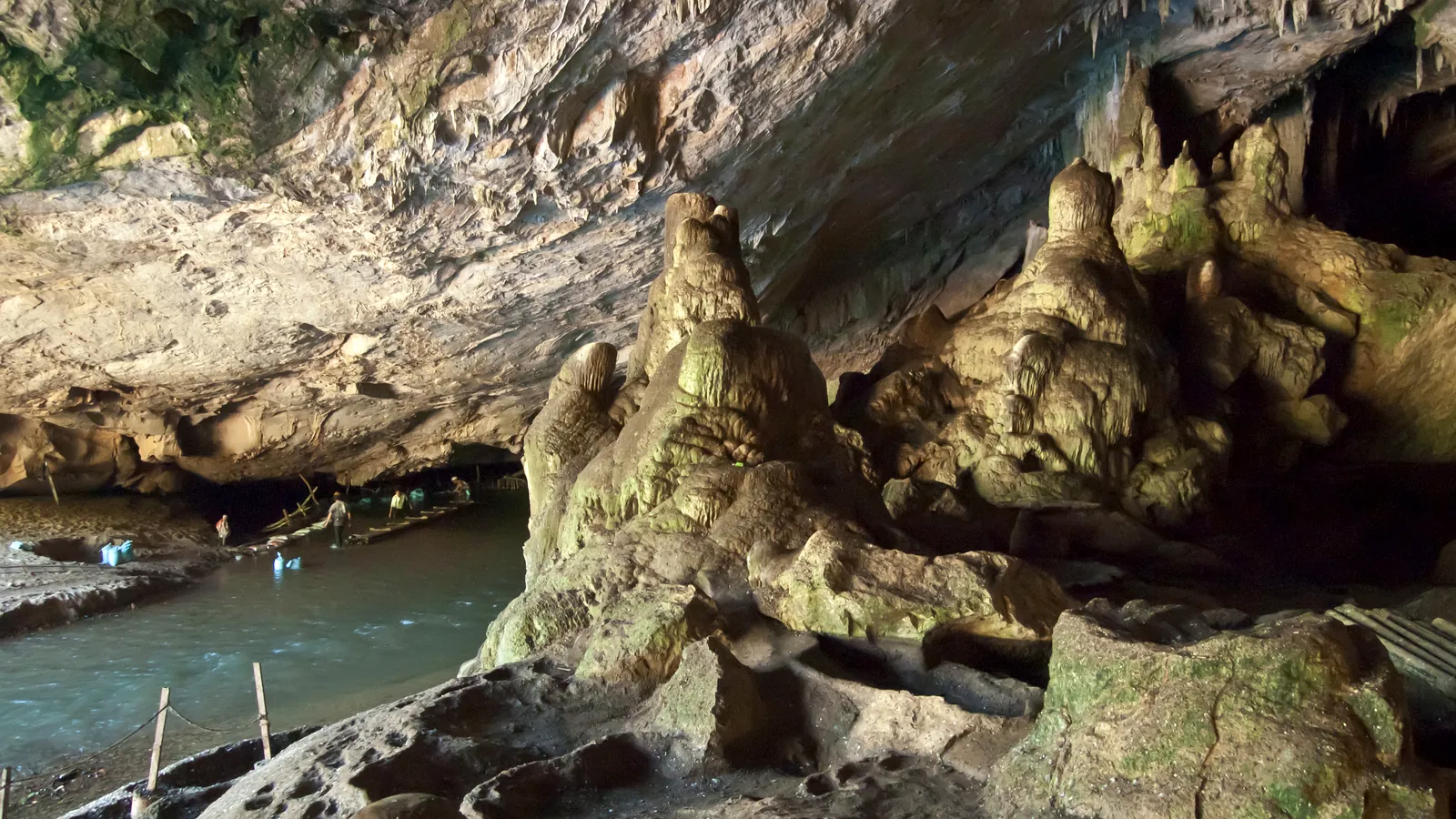
- Tham Lod (Tham Lot): a large river cave near Soppong, visited with a local guide and bamboo raft.
- Ban Rak Thai: a village founded by Chinese Kuomintang soldiers, with tea plantations around a lake, close to the Myanmar border.
- Pang Ung: a misty reservoir surrounded by pine forest, best at sunrise.
- Su Tong Pae bamboo bridge: a long bamboo walkway across rice fields to a forest temple, used by monks on their alms round.
- Mae Hong Son town: a quiet provincial capital with Burmese-style temples reflected in Chong Kham lake.
- Bua Tong fields at Doi Mae U Kho: hillsides of wild Mexican sunflowers, usually in November and early December.
- Mae Surin waterfall: one of Thailand’s tallest waterfalls, in a national park near Khun Yuam.
- Doi Inthanon: Thailand’s highest point, with cloud forest, waterfalls and Hmong and Karen villages.
Doing the Mae Hong Son Loop by motorcycle
Most people rent a bike in Chiang Mai, where many shops cater for the loop. A 125 cc automatic or semi-automatic scooter can manage the route for one rider with light luggage; for two people, or for more comfort on the climbs, a 150 cc or larger bike is better. Scooters are usually rented for a few hundred baht a day and bigger bikes for considerably more; weekly rates are cheaper. Choose a shop that offers breakdown support and insurance, check the brakes and tyres, and photograph the bike before you leave. Do not leave your passport as a deposit.
Fuel stations are common on the main roads, and villages often sell petrol from small pumps or bottles, but fill up before long mountain sections. Carry a rain jacket, warm layers (mornings in the mountains can be cold from December to February), sunscreen and a phone mount for navigation.
Is the Mae Hong Son Loop dangerous?
It is not dangerous for confident, experienced riders who take it slowly, but it is not a place to learn to ride. The roads are generally well paved, but they are steep, with hairpin bends, gravel on corners, trucks and minivans cutting corners, and slippery surfaces after rain. Thailand has one of the highest road death rates in the world, and most tourist accidents involve scooters. To ride legally you need a motorcycle licence from home and an International Driving Permit that covers motorcycles; without them, the police can fine you and your travel insurance will almost certainly refuse a claim. Always wear a good helmet, ride in daylight, use engine braking on descents and keep left on blind corners. Read our guide to whether Thailand is safe for more on road safety.
Mae Hong Son Loop by car or with a driver
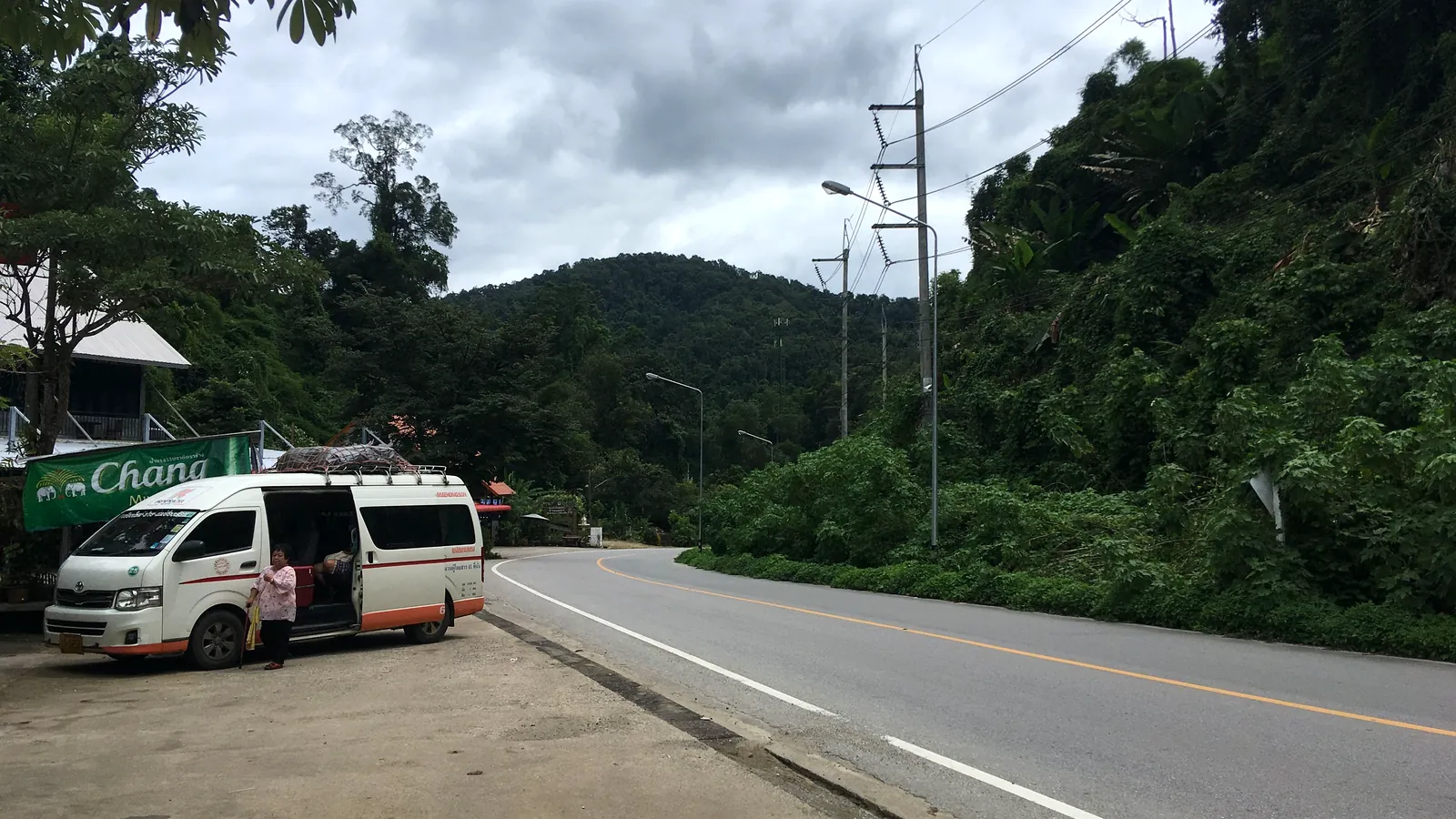
A rental car is safer and more comfortable, especially for families or in the rainy season, and you can stop wherever you like. You need an International Driving Permit and should be comfortable driving on the left on steep roads; an automatic with a decent engine makes the climbs easier. Hiring a car with a driver costs more, but takes away the stress of the bends and lets everyone enjoy the views; it is easy to arrange through hotels and agencies in Chiang Mai.
Mae Hong Son Loop tours
Guided tours from Chiang Mai range from three-day minivan trips covering the highlights to guided motorcycle tours with a support vehicle carrying luggage. A guided motorbike tour is a good compromise if you want to ride but are unsure about mountain roads or navigation. Compare what is included: the number of days, accommodation, fuel, entrance fees and insurance.
Can you do the loop by public transport?
Yes, partly. Minivans run from Chiang Mai Arcade bus station to Pai (about 3–4 hours), and local buses and minivans connect Pai, Soppong and Mae Hong Son. From Mae Hong Son, buses run back to Chiang Mai via Mae Sariang, a long day. Public transport does not reach many of the best stops, such as Pang Ung or Ban Rak Thai, so you would need local taxis, tours or a rented scooter for short trips from each town. The minivan to Pai is notorious for motion sickness, so take travel-sickness tablets.
Best time to ride the Mae Hong Son Loop
November to February is the best time: the weather is dry and cool, the hills are green after the rains, and the sunflower fields bloom in November. It is also the busiest time, especially around New Year and Thai holidays, when hotels in Pai and Pang Ung fill up. From late February to April, farmers burn fields and the north can be covered in smoke, with poor air quality and hazy views. The rainy season, from about May to October, brings green landscapes and fewer tourists, but also slippery roads and occasional landslides. See our guide to the best time to visit Thailand for more.
How much does the Mae Hong Son Loop cost?
The loop can be done on a backpacker budget. Guesthouses in Pai, Soppong and Mae Hong Son start at a few hundred baht a night, local meals cost 50–100 baht, and fuel for a scooter for the whole loop usually costs less than a single night in a mid-range hotel. Add bike rental, entrance fees for national parks and caves, and insurance. For daily budgets across the country, see how much a trip to Thailand costs, and our Thailand currency guide on cash and ATMs; take enough cash, as ATMs are scarce between towns.
Where to stay on the loop
- Pai: the most choice, from hostels to resorts; stay outside the walking street if you want quiet nights.
- Soppong (Pang Mapha): riverside bungalows and lodges near Tham Lod.
- Ban Rak Thai or Pang Ung: simple guesthouses and tents; book ahead in the cool season.
- Mae Hong Son: guesthouses and hotels around Chong Kham lake.
- Mae Sariang: riverside guesthouses on the Yuam River.
- Doi Inthanon or Mae Chaem: homestays and national park accommodation.
Compare guesthouses and hotels in Pai on Booking.com
Tips for the Mae Hong Son Loop
- Download offline maps; mobile signal drops in the mountains. An eSIM is useful in the towns; see the best eSIM for Thailand.
- Ride only in daylight. Roads are unlit and animals and pedestrians use them at night.
- Leave luggage in Chiang Mai and travel light; most guesthouses will store bags.
- Respect the border areas. Carry your passport, as there are police and army checkpoints near Myanmar.
- Respect local villages: ask before photographing people, and dress modestly at temples.
Combine the loop with the rest of your trip using our Thailand itinerary and our guide to getting from Bangkok to Chiang Mai. If you like history as much as the open road, break the journey north at Sukhothai Historical Park. For more solo-friendly ideas, see solo travel in Thailand.
FAQ
Is the Mae Hong Son Loop worth it?
Yes, if you enjoy road trips, mountains and quieter corners of Thailand. It shows a side of the country that most visitors miss, with hill-tribe villages, caves and border towns.
Can a beginner ride the Mae Hong Son Loop?
It is not recommended. The road to Pai alone has hundreds of bends and steep descents. Beginners should take a car, a driver, a guided tour or the minivan.
Can you do the Mae Hong Son Loop in 3 days?
Yes, but it means long days of riding and little time at the stops. Five days or more is far more enjoyable.