Laos is one of the cheapest and most relaxed countries to travel in Southeast Asia. While Thailand and Vietnam attract the majority of visitors, Laos offers a slower pace of travel, beautiful mountains, river towns, waterfalls and small cities that feel far removed from mass tourism.
For travelers focused on budget and slow travel, Laos is one of the best-value destinations in the region. Accommodation, food and activities are extremely affordable, and daily travel costs can be lower than almost anywhere else in Asia.
Before setting aside spending money, compare Wise’s current card and currency-conversion options for the trip.
The biggest difference compared to neighboring countries is not price, but infrastructure. Travel in Laos is slower, distances take longer, and transport options are more limited. This encourages travelers to move slowly, which often reduces daily spending and makes trips feel more relaxed.
If you already read our how much does a trip to Southeast Asia cost guide, this article breaks down Laos specifically so you can build a realistic 2026 travel budget.
Laos is ideal for backpackers, long-term travelers and anyone who wants a peaceful and affordable Southeast Asia trip.
Laos remains one of the cheapest travel destinations in the world according to international tourism statistics.
Quick answer: daily travel budget in Laos
| Travel style | Daily budget per person |
|---|---|
| Backpacker | $25–$35 |
| Budget traveler | $35–$50 |
| Mid-range traveler | $50–$85 |
| Luxury traveler | $130+ |
Backpackers staying in guesthouses and eating local food can travel extremely cheaply. Even mid-range travelers rarely spend more than $80 per day.
Laos is usually cheaper than Thailand and Malaysia and similar to Cambodia or rural Vietnam.
Laos is frequently compared with Cambodia because both offer extremely affordable travel. See our breakdown of how much a trip to Cambodia costs.
Flight cost to Laos
Flights are the biggest expense of a Laos trip.
| Departure region | Typical round-trip price |
|---|---|
| Europe | $750–$1150 |
| UK | $750–$1050 |
| USA West Coast | $850–$1300 |
| USA East Coast | $950–$1450 |
| Australia | $450–$750 |
Because Laos has fewer international flights than neighboring countries, many travelers fly into Bangkok or Hanoi and travel overland to save money.
Visa and travel insurance costs
| Expense | Cost |
|---|---|
| Tourist visa | $40 |
| Travel insurance (2 weeks) | $30–$60 |
Visa on arrival is available for most nationalities and the process is simple.
Accommodation cost breakdown
Accommodation in Laos offers incredible value.
| Accommodation type | Average price per night |
|---|---|
| Hostel dorm | $6–$12 |
| Guesthouse | $12–$22 |
| Budget hotel | $20–$35 |
| Mid-range hotel | $35–$70 |
| Luxury hotel | $100–$180 |
Family-run guesthouses are common and offer excellent value.
Food cost breakdown
Food in Laos is simple, fresh and very affordable.
| Food type | Average price |
|---|---|
| Street food meal | $2–$3 |
| Local restaurant | $3–$5 |
| Western restaurant | $5–$9 |
| Coffee | $2–$3 |
Eating local dishes keeps daily spending low.
Transport cost breakdown
Transport in Laos is cheap but slower than neighboring countries.
| Transport type | Price |
|---|---|
| Bus between cities | $10–$20 |
| Minivan transfers | $10–$18 |
| China–Laos train | $15–$30 |
Train vs bus travel nuance
The China–Laos high-speed railway has transformed travel between major cities. It is faster and more comfortable than buses, and many travelers now prefer it.
However, buses and minivans remain the cheapest option for short distances, and they still make sense if you are traveling slowly and keeping costs as low as possible.
The train is one of the biggest upgrades to travel in Laos, but it does come with one practical issue: tickets can sell out a few days in advance, especially on popular routes and during busy periods. If you already know your route, it is worth booking early rather than assuming seats will still be available at the last minute.
For budget travelers, the train is usually best when it saves a full day of slow overland travel. For short hops or flexible travel days, buses and minivans still work well and often cost less.
The Mekong slow boat experience
One of the most famous travel experiences in Laos is the Mekong slow boat between Thailand and Luang Prabang.
| Activity | Price |
|---|---|
| Mekong slow boat | $25–$40 |
This two-day journey is not just transport but a travel experience and highlight for many visitors.
Travelers often combine Laos with nearby countries during longer Southeast Asia trips. See our detailed guide to how much a trip to Vietnam costs.
Attraction and activity prices
| Activity | Price |
|---|---|
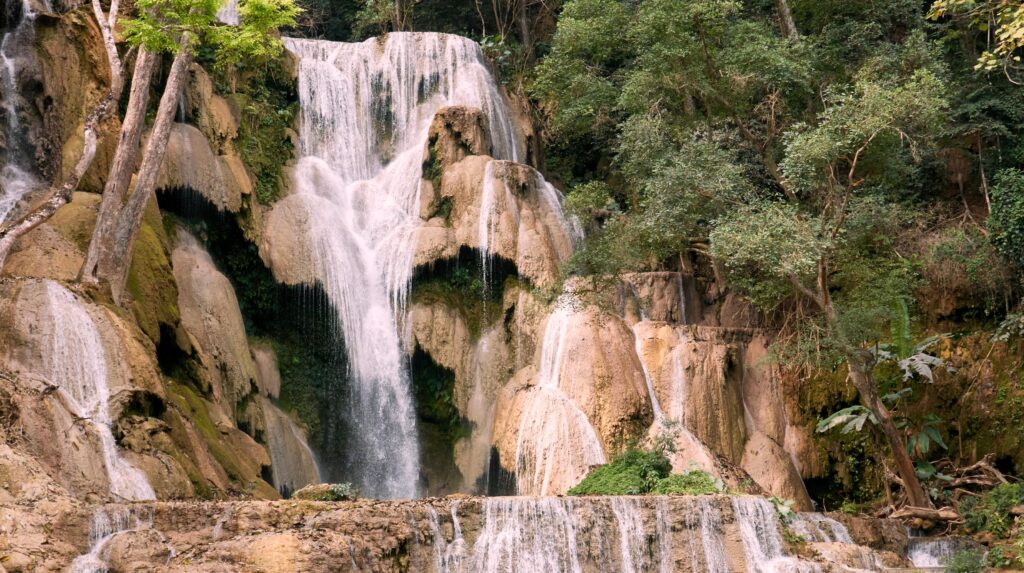
| Kuang Si Waterfalls | $3 |
| Tubing Vang Vieng | $5–$10 |
| Caves and temples | $2–$5 |
Activities in Laos are extremely affordable.
What’s getting more expensive in Laos in 2026
Laos still offers excellent value overall, but a few parts of the trip are more likely to raise your budget than others.
The first is domestic transport. Laos is cheap day to day, but longer bus routes, train tickets between major stops, and repeated transfers can push the total higher than some travelers expect. The second is accommodation in the most tourism-focused places, especially Luang Prabang and Vang Vieng, where better-located stays are often pricier than in smaller towns.
Tours and guided activities can also lift the daily budget faster than the country’s cheap food and guesthouse prices might suggest. Multi-day treks, organized river experiences, and more activity-heavy itineraries usually cost more than simple slow-travel routes based around towns, temples, and waterfalls.
Season also matters. Laos is still affordable in peak season, but the dry months from November to February tend to bring the highest hotel demand and the least room for last-minute budget bargains.
ATM and cash withdrawal tip
ATMs in Laos often have low withdrawal limits. Many machines allow only $100–$200 per transaction, meaning travelers may pay multiple bank fees.
Carrying backup cash helps avoid extra charges.
Currency tip for Laos
Laos is still a cash-heavy destination in many situations, but the bigger issue is not just carrying cash. It is understanding which currency makes sense in different places.
Small shops, local restaurants, and everyday spending usually operate in Lao Kip. But in more tourist-focused settings such as boutique hotels, transport booking points, and some railway-related payments, Thai Baht or US Dollars may also be preferred or easier to use.
Because exchange rates for the Lao Kip can move more than in some neighboring countries, it is smart to avoid exchanging very large amounts of cash at once. A practical approach is to keep enough Kip for everyday spending, carry a small backup amount of USD or Thai Baht, and use ATMs in bigger towns where access is easier and more reliable.
This will not completely change your Laos budget, but it can prevent confusion and help avoid bad-value exchange decisions during the trip.
1-week Laos trip cost breakdown
| Category | Cost |
|---|---|
| Flights | $850 |
| Accommodation | $200 |
| Food | $150 |
| Transport | $150 |
| Activities | $130 |
| Total | $1480 |
2-week Laos trip cost breakdown
| Category | Cost |
|---|---|
| Flights | $850 |
| Accommodation | $400 |
| Food | $300 |
| Transport | $250 |
| Activities | $220 |
| Total | $2020 |
Cost of popular destinations in Laos
| Destination | Daily budget |
|---|---|
| Luang Prabang | $30–$60 |
| Vang Vieng | $30–$55 |
| Vientiane | $35–$65 |
Luang Prabang is usually the priciest stop of the three, not because it is expensive by global standards, but because it has the strongest tourism profile and more boutique accommodation. Vang Vieng can still be cheap, but activity-based spending can rise quickly if you add tubing, kayaking, tours, or scooter days. Vientiane often feels moderate rather than ultra-cheap, especially for travelers using it as a transit stop with more hotel and transport convenience.
This is why Laos works best as a slow-travel destination. The country is cheap on the ground, but the more often you move and the more activities you stack into the route, the less “ultra-budget” it feels.
Backpacking vs mid-range vs luxury budgets
| Style | 2 weeks total |
|---|---|
| Backpacker | $1300–$1600 |
| Budget | $1600–$1900 |
| Mid-range | $2000–$2500 |
| Luxury | $3500+ |
Example cost for a 1-week trip to Laos
A typical one-week trip to Laos can cost between $650 and $1,200 depending on travel style.
Example budget:
| Category | Cost |
|---|---|
| Flights | $850 |
| Accommodation | $200 |
| Food | $150 |
| Transport | $120 |
| Activities | $110 |
| Total | $1,430 |
Travelers already in Southeast Asia may spend significantly less because they do not need long-haul flights.
Sample 10-day itinerary budget
Luang Prabang → Vang Vieng → Vientiane
| Category | Cost |
|---|---|
| Flights | $850 |
| Hotels | $350 |
| Food | $200 |
| Transport | $200 |
| Activities | $160 |
| Total | $1760 |
Sample 2-week backpacker itinerary budget
| Category | Cost |
|---|---|
| Flights | $700 |
| Hostels | $160 |
| Food | $250 |
| Transport | $220 |
| Activities | $180 |
| Total | $1510 |
Two weeks is where Laos starts to feel especially good value, because you have enough time to travel at the country’s natural pace instead of rushing. That matters more in Laos than in many nearby countries. The infrastructure is slower, distances can take longer than they look on a map, and trying to move too fast usually adds both cost and stress.
A 2-week trip also gives you room to combine Luang Prabang, Vang Vieng, and Vientiane without turning the itinerary into a constant sequence of transfers. The total above works best for travelers who want a comfortable budget or lower mid-range trip while still doing a few paid activities.
Best time to visit for cheap travel
Cheapest months
May–June
September–November
Peak season
December–February
Laos vs nearby countries cost comparison
| Country | Daily budget |
|---|---|
| Laos | $30–$60 |
| Cambodia | $35–$65 |
| Vietnam | $40–$75 |
| Thailand | $55–$95 |
For nearby budget comparisons, see how much does a trip to Thailand cost, how much does a trip to Vietnam cost, and how much does a trip to Cambodia cost.
Decision table
| Traveler type | Verdict |
|---|---|
| Backpackers | Excellent value |
| Couples | Great budget destination |
| Families | Affordable slow travel |
| Luxury travelers | Good value luxury |
Expanded money-saving tips
- Travel slowly between destinations. Laos rewards slower itineraries, and rushing from town to town usually increases both transport costs and fatigue.
- Use the train when it saves a long overland day, but do not assume it is always the cheapest option for every route.
- Book train tickets early if your dates are fixed, especially on popular routes and during busy travel periods.
- Eat local food daily. Laos is one of the easiest countries in the region for keeping food costs low if you stick to local restaurants, markets, and simple dishes.
- Carry enough cash for smaller towns and local businesses, but avoid withdrawing tiny amounts repeatedly because bank fees and low withdrawal limits can quietly add up.
- Base your trip around a few key stops instead of trying to see the whole country quickly. Laos is usually cheapest when you travel at its natural slow pace.
FAQ
Is Laos cheap to visit?
Yes. Laos is still one of the cheapest countries in Southeast Asia, especially for travelers who move slowly, stay in guesthouses, and eat local food most of the time.
Is Laos cheaper than Thailand?
Yes, Laos is usually cheaper than Thailand overall, especially for accommodation and day-to-day spending. Thailand often feels easier logistically, but Laos tends to cost less once you are on the ground.
How much spending money per day?
Most travelers spend around $30–$60 per day excluding international flights. Budget travelers can stay lower, while travelers adding more tours, boutique stays, or faster transport will spend more.
Is Laos good for backpacking?
Yes. Laos is very well suited to backpackers who enjoy slower travel, river towns, mountain scenery, and relaxed daily costs rather than fast-moving itineraries.
Do you need cash?
Yes. Cash is still important in Laos, especially outside the biggest towns and in smaller local businesses. ATMs are available, but withdrawal limits and fees can make planning your cash access more important than in some neighboring countries.