Yes, Athens is generally safe for tourists, including first-time visitors and solo travelers. Greece is currently listed at the lowest U.S. travel-advisory level, and serious violence involving visitors is uncommon. The risk you should actively plan for is petty theft: pickpocketing and bag theft on the metro, around busy central squares and at crowded attractions.
You do not need to avoid Athens or treat the city as dangerous. You do need normal big-city awareness. Keep your phone and wallet out of easy-to-reach pockets, choose your accommodation street carefully, and avoid walking through unfamiliar, poorly lit blocks around parts of Omonia, Victoria and Metaxourgeio late at night.
Safety information checked: 22 September 2026. The U.S. State Department describes Greece as generally safe and advises normal precautions. The UK, Canadian and Australian travel advisories identify petty theft in central Athens and on public transport as the main practical crime risk. Conditions can change, especially during demonstrations, transport strikes, heatwaves and wildfires, so check official advice shortly before departure.
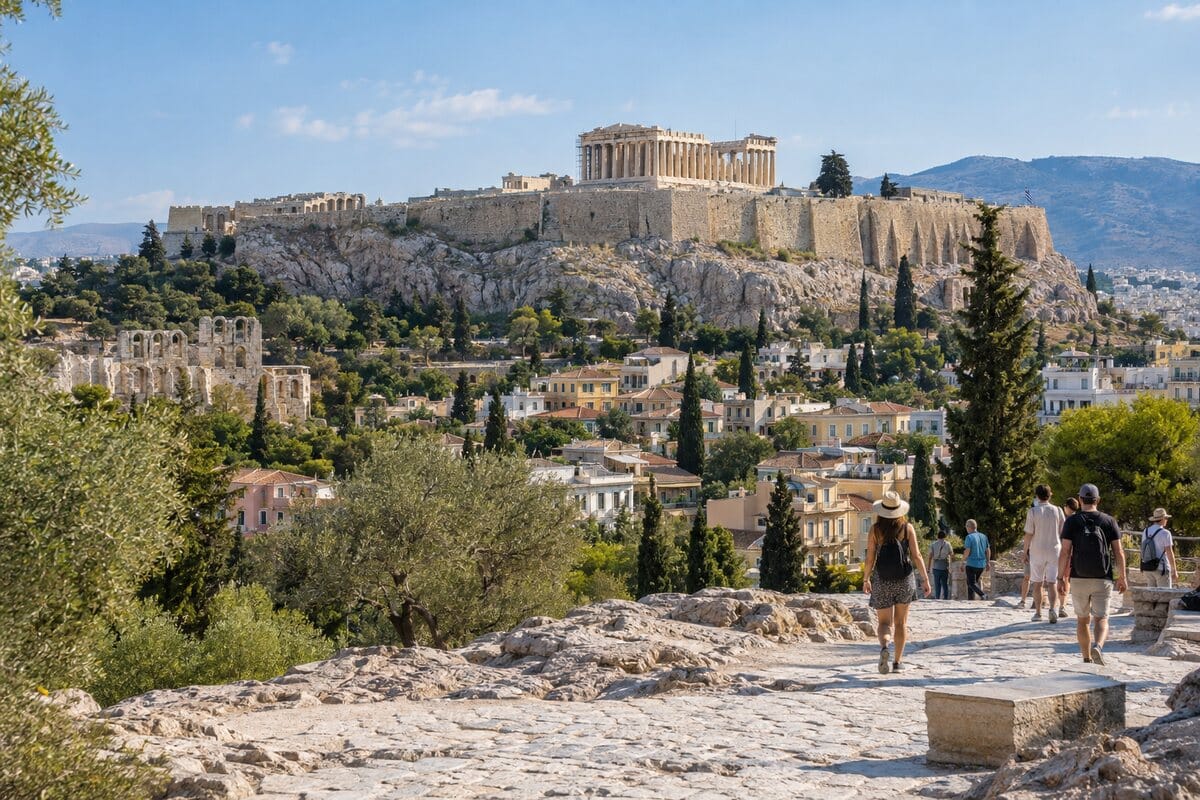
Athens safety at a glance
| Risk | Where it matters | What to do |
|---|---|---|
| Pickpocketing | Metro trains, airport line, Monastiraki, Syntagma and crowded attractions | Keep valuables in a zipped front-facing bag and ignore distractions |
| Uncomfortable streets at night | Some quieter blocks around Omonia, Victoria and Metaxourgeio | Check the exact hotel street and use a licensed taxi or app late at night |
| Demonstrations and strikes | Syntagma, central avenues and transport networks | Avoid gatherings and check transport updates before moving |
| Heat and wildfire disruption | Summer sightseeing and trips outside the center | Carry water, avoid peak heat and follow 112 alerts |
Is Athens safe at night?
Central Athens remains lively well into the evening. Plaka, Koukaki, Monastiraki, Psyrri, Syntagma and Kolonaki normally have restaurants, hotel guests and local foot traffic after dark. Walking back after dinner on a busy, well-lit route is a normal part of visiting the city.
The picture changes block by block rather than neighborhood by neighborhood. A hotel advertised as “near Omonia” can sit on a busy avenue or on a quiet side street that feels very different after midnight. Parts of the area west and north of Omonia, and some streets toward Victoria or Metaxourgeio, can feel rougher because of poor lighting, visible drug use or fewer pedestrians. That does not mean every street is dangerous, but it does mean the exact location matters.
If a route becomes empty, poorly lit or uncomfortable, turn back toward a busy street instead of continuing because the map says it is shorter. Late at night, book a licensed taxi through a recognized app or ask your accommodation to arrange one. Do not accept an unsolicited ride from someone approaching you outside a station or nightlife area.
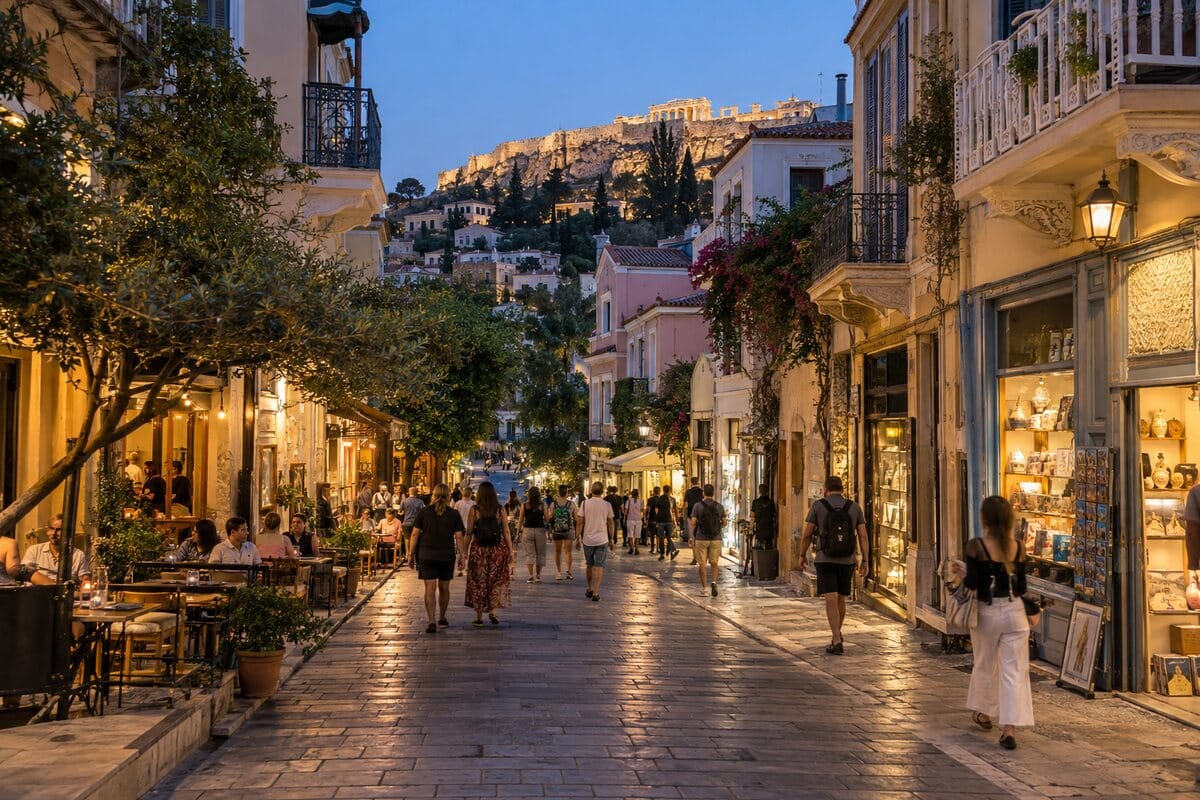
Safest areas to stay in Athens
For a first visit, prioritize a central area that reduces the need for late-night transport. These neighborhoods are not crime-free, but they are convenient, well used by visitors and generally straightforward:
- Plaka: atmospheric, central and close to the Acropolis. It stays busy, although the most tourist-heavy streets require pickpocket awareness.
- Koukaki: one of the best balances of local character, restaurants and access to the Acropolis area.
- Syntagma: excellent transport connections and a practical base for a short visit. Watch belongings on the metro and around demonstrations.
- Kolonaki: polished, central and generally comfortable in the evening, with prices to match.
- Monastiraki and Psyrri: lively and convenient for nightlife, but noisier and among the places where pickpockets look for distracted visitors.
- Pangrati: more residential, with cafés and a local feel, though it is less convenient for travelers who want every major sight on the doorstep.
Do not book on neighborhood name alone. Open the exact property location, examine the surrounding blocks and read recent comments that mention the walk from the metro after dark. If you want to compare central options, you can check current Athens accommodation on Booking.com.
Areas where you should use extra care
Lists of “areas to avoid” often exaggerate and age badly. Omonia, Exarchia, Victoria and Metaxourgeio are real neighborhoods where people live, work and go out; none is a permanent no-go zone. The useful advice is more specific.
Omonia: the square and main roads are busy, but some surrounding side streets become uncomfortable late at night. Budget hotels can look close to major sights while placing you on a poor walking route. Check the exact address.
Victoria and Attiki: these are normal urban districts, but visitors unfamiliar with Athens may prefer not to wander through quiet streets alone very late. Use direct routes and transport when returning after nightlife.
Metaxourgeio: the area mixes restaurants, hotels, vacant buildings and grittier blocks. One street can feel lively and the next deserted. Recent accommodation reviews are more useful than a blanket verdict.
Exarchia: known for alternative culture and political activity, not simply for crime. Visitors go there for cafés, food and street art. However, protests and police operations can occur, so avoid gatherings and do not photograph confrontations.
Pickpocketing in Athens: the main tourist risk
Official travel advisories consistently highlight theft on public transport and in crowded central locations. The most predictable situations are packed metro cars, escalators, station entrances, queues, Monastiraki flea-market streets, Syntagma and the approaches to major attractions.
Thieves often work in groups and use distraction rather than force. Someone may block a train door, ask a confusing question, spill something, crowd you on an escalator or create movement around a ticket machine while another person reaches for an exposed phone or wallet.
- Carry your phone and wallet in a zipped internal compartment, not a back pocket.
- Wear a shoulder bag across your body and move it to the front in crowds.
- Do not hang a bag over a café chair or place a phone at the edge of an outdoor table.
- When somebody creates an unusual distraction, protect your belongings before engaging.
- Keep one payment card and a small backup amount separate from your main wallet.
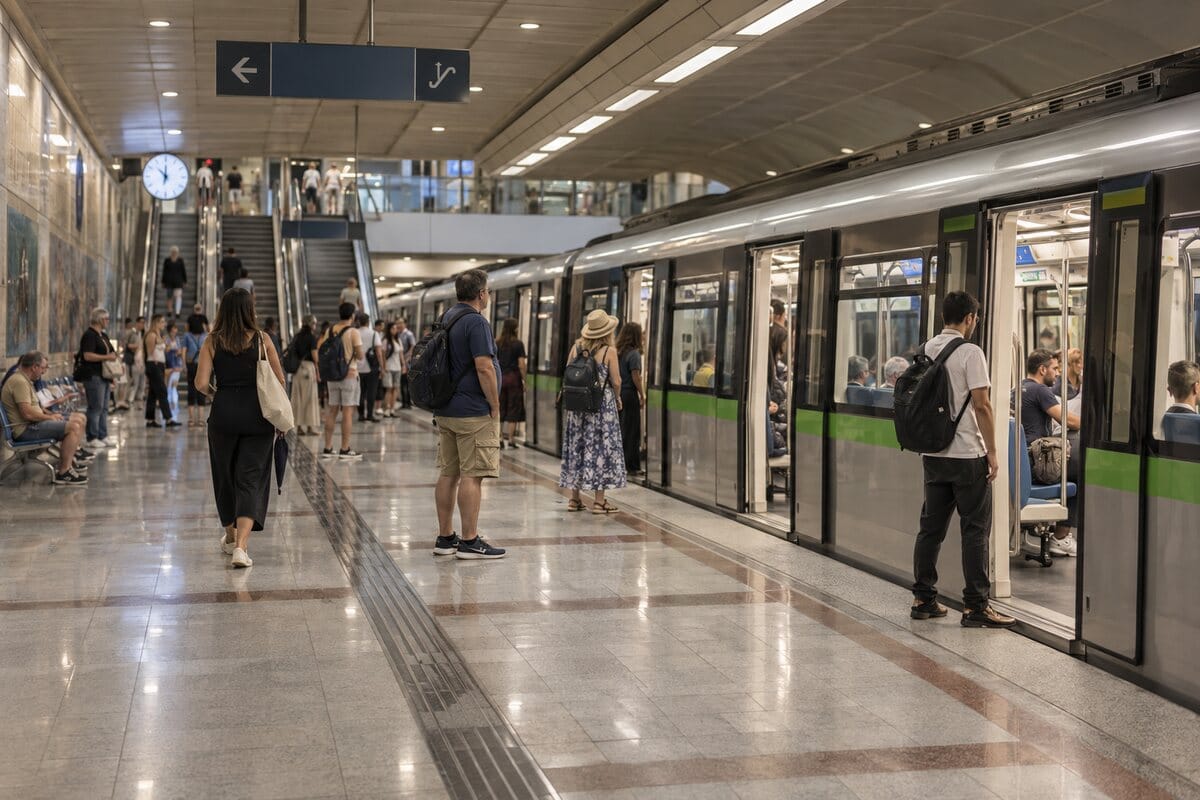
Is the Athens metro safe?
Yes. The metro is the fastest and most useful way to move around Athens, and most journeys are uneventful. The issue is opportunistic theft, particularly when travelers are tired, carrying luggage or focused on station signs. The airport line and central interchanges deserve extra attention because they concentrate visitors and bags.
Stand away from closing doors when possible, because artificial crowding near the exit creates easy cover. Keep luggage between your feet or directly in front of you. If a carriage is extremely packed, waiting a few minutes for the next train can be worth it. Use official ticket machines and ignore strangers offering unsolicited help with your payment card.
Is Athens safe for solo female travelers?
Athens is generally suitable for women traveling alone. Solo visitors routinely use the metro, eat alone and walk through central tourist districts. The precautions are similar to those in other large European cities: choose a well-reviewed central property, stay on active streets after dark, control your drinks and arrange transport if a route feels isolated.
Unwanted attention can happen, but it is not the defining experience of visiting Athens. A firm refusal, moving toward staff or other travelers and leaving the situation are normally the best responses. Do not let politeness keep you in a conversation or vehicle that feels wrong. Share your live location with someone you trust when returning late, and keep your accommodation address saved offline.
Common scams and avoidable problems
Taxi and fare disputes
Use the official taxi queue at the airport, ask for the meter where applicable and request a receipt. For late-night city trips, booking through a recognized app creates a record of the driver and route. Confirm whether the quoted airport fare includes legitimate surcharges before leaving.
Restaurant or bar pressure
Check menus and prices before ordering in heavily touristed areas. Do not follow a stranger to an unknown bar because they promise a special event, free drink or unusually cheap deal. If a bill seems wrong, ask for an itemized receipt and remain calm.
Fake help and distraction
Be cautious when unsolicited “help” involves your wallet, phone, ticket machine or luggage. Genuine assistance does not require a stranger to handle your bank card or watch you enter a PIN.
Demonstrations, strikes and football matches
Demonstrations are common in central Athens and are often peaceful, but they can change direction quickly. Syntagma Square, university areas and major central avenues are frequent gathering points. Keep distance from crowds, police lines and confrontations even when the event looks interesting to photograph.
Strikes can be more disruptive to a trip than crime. Metro, bus, taxi, ferry or airport services may change with limited notice. Recheck transport on the morning of an important transfer and leave extra time. This matters particularly if you are continuing by ferry; our guides explain the practical route from Athens to Santorini, while the broader Greece travel-cost guide helps you budget for backup transport.
Heat, wildfires and earthquakes
Safety in Athens is not only about crime. Summer heat can make long, exposed walks genuinely risky, especially around archaeological sites. Visit early, carry water, use sunscreen and take heat warnings seriously. Access to outdoor sites can change during extreme temperatures.
Wildfires normally affect areas outside the dense center but can disrupt roads, air quality and regional trips. Greece also experiences earthquakes. Follow official instructions rather than social-media rumors and keep emergency alerts enabled. The European emergency number 112 works throughout Greece and can issue location-based public warnings.
What to do if something is stolen
- Move somewhere safe and immediately freeze affected bank cards.
- Use another device to lock or locate your phone, but do not personally confront anyone.
- Call 112 for an emergency, 100 for police assistance or 1571 for Tourist Police.
- Report the theft and obtain documentation for insurance or replacement travel documents.
- Contact your embassy or consulate if your passport is missing.
Save essential numbers and copies of documents before leaving home. Mobile data helps with transport alerts, maps and account security; see our comparison of the best eSIM options for Greece. You can also check current Airalo Greece plans if you want a prepaid option before arrival.
Official sources used
- U.S. State Department: Greece Travel Advisory
- UK FCDO: Greece safety and security
- Australian Smartraveller advice for Greece
- Hellenic Police direct lines
- Greek Civil Protection: 112 emergency service
FAQ
Is Athens safe for tourists right now?
Yes. Official advice describes Greece as generally safe and recommends normal precautions. In Athens, visitors should focus on preventing pickpocketing, avoiding demonstrations and choosing sensible routes at night.
Is Athens safe to walk at night?
Busy parts of Plaka, Koukaki, Syntagma, Monastiraki, Psyrri and Kolonaki are normally comfortable in the evening. Avoid deserted or poorly lit streets, particularly when alone, and use a taxi if the route feels wrong.
What areas should tourists avoid in Athens?
There is no useful blanket ban on an entire central neighborhood. Use extra care on quiet side streets around parts of Omonia, Victoria and Metaxourgeio late at night, and avoid active demonstrations anywhere in the city.
Is the Athens metro safe with luggage?
Yes, but luggage makes travelers easier targets for distraction theft. Keep small valuables secured on your body, place larger bags directly in front of you and pay extra attention on the airport line and at central interchanges.
Is Athens safe for solo female travelers?
Generally, yes. Stay in a well-reviewed central area, use busy streets at night, control your drinks and arrange transport when a walk is isolated or unfamiliar.
Is pickpocketing common in Athens?
It is the most frequently cited crime risk for tourists. Crowded metro trains, Monastiraki, Syntagma and major attractions require more attention than ordinary residential streets.
What number should I call in an emergency?
Call 112 for a general emergency in Greece. Police can be reached on 100, and the multilingual Tourist Police line is 1571.
Final verdict
Athens is safe enough for a normal city break, solo trip or family visit. It is not a place where most travelers need to fear violent crime. The realistic job is to protect valuables in crowded places, understand that central Athens changes street by street and avoid protests or isolated routes late at night.
Choose accommodation for its exact location, keep your bag secured on the metro and save the emergency numbers before arrival. Those simple decisions address the risks that visitors are actually most likely to encounter without turning a rewarding city into something it is not.