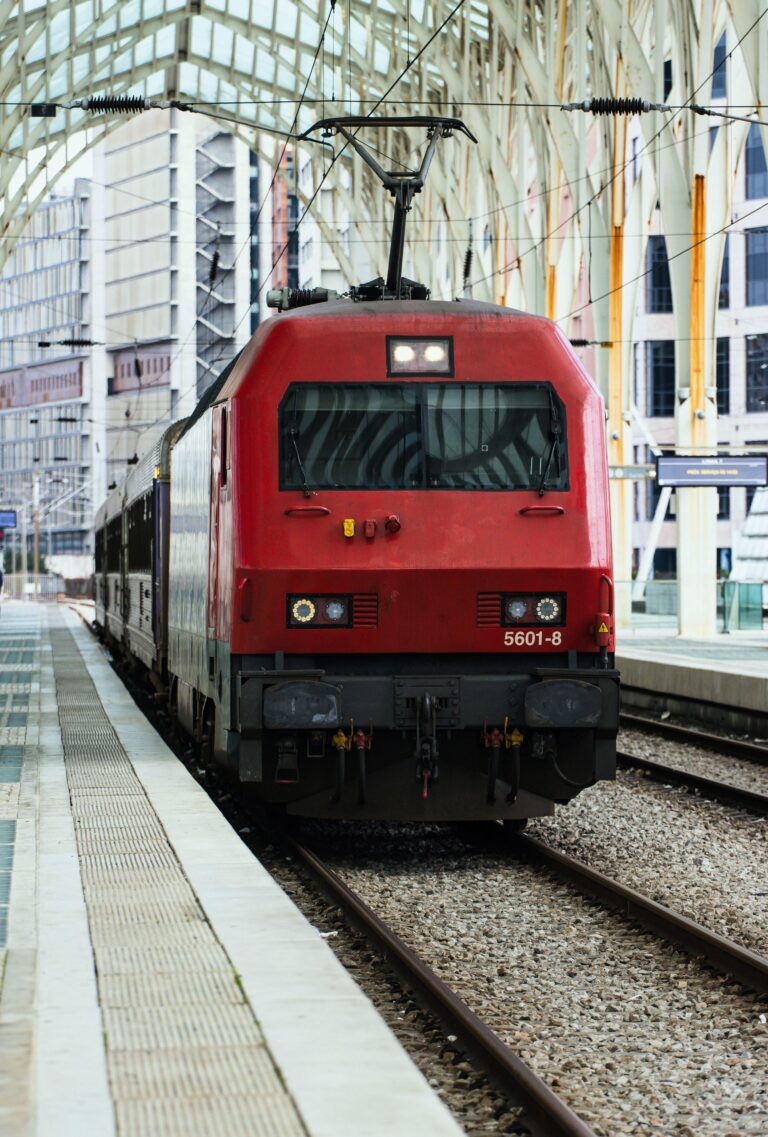
Nazare, Portugal is worth visiting even if you do not care about surfing.
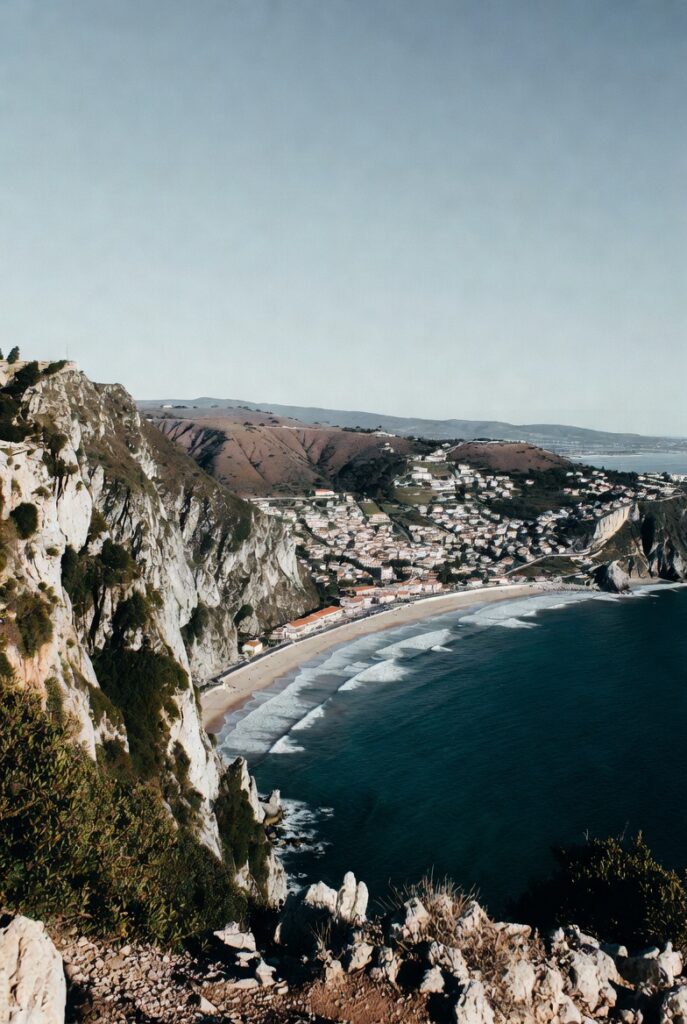
What makes it work is not just the giant-wave fame. It is the combination of a broad beach, dramatic cliffs, easy seafood lunches, a clifftop upper town, and a day-trip-or-overnight format that fits real Portugal itineraries unusually well. It is one of those places that gets better once you stop treating it like a checklist stop between buses. If you are still planning the budget side of the trip, read how much does a trip to Portugal cost. If you want the official tourism overview before you go, Visit Portugal’s Nazaré page is a good starting point.
Quick verdict
| Question | Verdict |
|---|---|
| Is Nazaré worth visiting? | Yes, especially for 1 day or 1 night |
| Is it only for surfers? | No, it still works well without surf interest |
| Day trip or overnight? | Day trip if time is tight, overnight if you want sunsets, seafood, and a slower pace |
| Best base area? | Lower town for beach and restaurants, Sítio for views and wave access |
| Best time for giant waves? | Usually October to March |
| Best time for a normal coastal trip? | Late spring to early autumn |
What Nazaré is actually like
Nazaré feels like two places stacked on top of each other.
Down below, you have the beach, promenade, restaurants, and the easier everyday version of the town. Up above, Sítio gives you the clifftop views, the stronger sense of place, and the easiest access to Praia do Norte and the lighthouse side. The funicular is what makes the whole place click. Without it, Nazaré would feel more fragmented. With it, the town becomes one of the easiest high-impact coastal stops in Portugal.
If you prefer gentler coastal stops with canals and pastries, read Aveiro, Portugal instead. If you want a warmer, beach-and-cliffs Algarve base rather than a shorter central-coast stop, read Lagos, Portugal next.
To get there, see how to get from Lisbon to the Algarve.
The best things to do in Nazaré
Go up to Sítio
If you only do one thing in Nazaré, make it this.
Sítio is where the town becomes visually memorable. The clifftop setting gives you one of the most famous views on the Portuguese coast, and it is the quickest way to understand why Nazaré feels more dramatic than a standard beach town. This is also where the town’s upper-half identity becomes clear: part viewpoint, part religious/historic center, part gateway to the giant-wave side.
Ride the funicular
The funicular is not just transport. It is part of the visit.
It is the easiest way to move between the beach level and Sítio, and it is one of the reasons Nazaré works so well even for short stays. If you are visiting without a car or trying to fit the town into a tight Portugal route, the fact that you can move between the two halves so easily matters a lot.
The funicular runs between the lower town (Avenida da República area) and Sítio. A one-way funicular ticket for an adult costs about €2.50 (checked September 2026), and it runs from roughly 07:15 to 24:00.
See Praia do Norte and the lighthouse area
This is the giant-wave side of Nazaré.
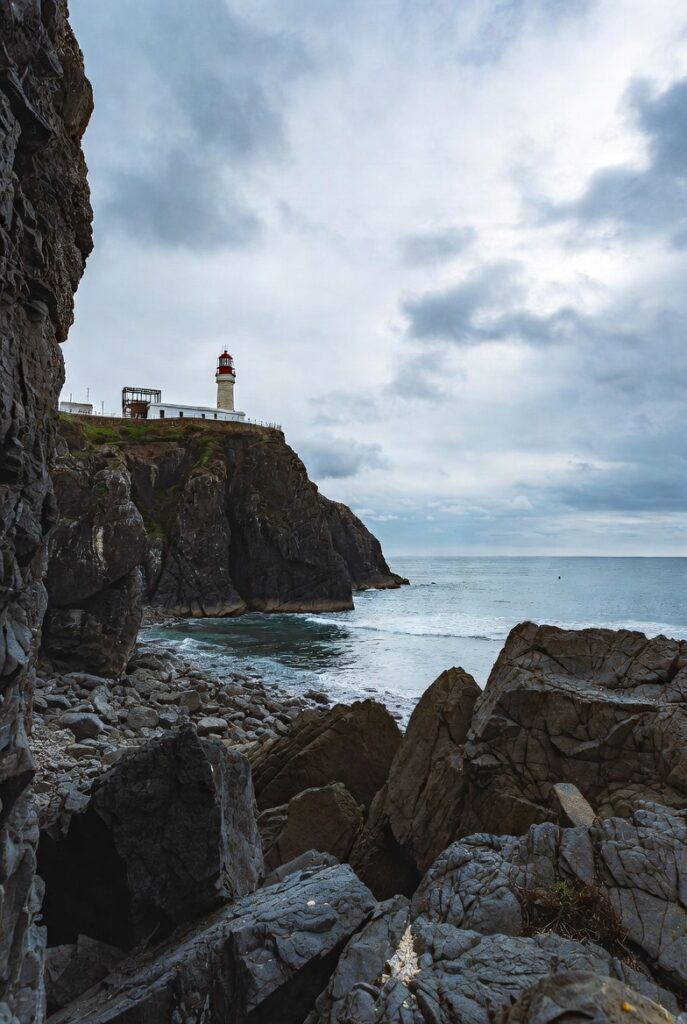
Praia do Norte and the São Miguel Arcanjo fort/lighthouse area are the places most visitors associate with the town’s surf fame. Even when the waves are not huge, the Atlantic exposure and clifftop setting make this one of the most dramatic coastal viewpoints in Portugal.
Walk the lower town and beach promenade
The lower town is what stops Nazaré from feeling like a one-angle destination.
This is where you get the long beach, everyday seaside life, restaurants, and the easiest strolling. It is also the side of Nazaré that works best for travelers who are here for atmosphere and coast rather than surf spectacle.
Visit the Sanctuary of Our Lady of Nazaré
The Santuário de Nossa Senhora da Nazaré stands in Sítio and is one of the town’s main religious landmarks. It was created as a larger place of worship when the nearby Ermida da Memória could no longer hold the many pilgrims devoted to Our Lady of Nazaré. Step inside to understand why faith shapes this upper part of town.
See the Surfer Wall and the big-wave exhibition at the fort
Inside Forte de São Miguel Arcanjo, the Surfer Wall displays boards donated by athletes connected with Nazaré’s giant waves. The fort also houses the Nazaré Canyon Interpretation Centre and exhibitions linking the lighthouse, local history, ocean science and big-wave surfing. Admission is charged, but the official municipal pages currently show conflicting prices, so check locally before entering.
Walk up to the Miradouro do Suberco viewpoint
Miradouro do Suberco is the classic high viewpoint in Sítio, looking over Nazaré’s curved main beach, lower town and Atlantic horizon. It is easy to combine with the sanctuary and funicular, and it gives you the clearest view of how the upper and lower parts of Nazaré fit together.
Look for fish drying on the beach
Nazaré’s peixe seco tradition is still visible on the southern part of the main beach, near the Centro Cultural. Fish are prepared and dried in the sun on wooden frames, preserving a practice tied to the town’s fishing economy. Displays depend on weather and fishing activity, so treat it as living tradition rather than a scheduled attraction.
Learn about Nazaré’s fishing traditions
Look for the colourful traditional boats displayed near the beach and the layered skirts associated with Nazaré’s fisherwomen, often described as seven skirts. For deeper context, visit Museu Dr. Joaquim Manso in Sítio, whose collections cover boats, fishing tools, clothing, photography and local archaeology. The museum reopened on 8 September 2026; current opening hours and admission were not clearly published, so check before visiting.
When to visit Nazaré for giant waves (and when not to bother)
If you want the famous giant-wave version of Nazaré, aim for late autumn or winter.
The usual window is roughly October to March, when Atlantic swell and the Nazaré Canyon create the conditions that made the town globally famous. That does not mean every winter day delivers monster surf. It means this is the season when you have the best chance of seeing Nazaré at its most dramatic.
If you do not care about giant waves, do not force a winter trip just because that is what made Nazaré famous. Late spring, summer, and early autumn are better for the beach, easy walking, seafood lunches, and a more relaxed coastal stop. If your whole Portugal timing is still open, read best time to visit Portugal.
Why Nazaré gets the biggest waves in the world
Nazaré’s giant waves begin offshore, where the Nazaré Canyon helps focus Atlantic swell toward Praia do Norte. This deep underwater valley channels and strengthens incoming wave energy, creating the conditions that made the beach famous for big-wave surfing. Guinness World Records lists Sebastian Steudtner’s 26.21 m (86 ft) wave, surfed at Praia do Norte on 29 October 2020, as the largest wave surfed (unlimited) by a man. The most promising season is roughly October to March, when Atlantic storms are more likely to produce major swell, but giant-wave days are never guaranteed because wind, swell direction and wave period still have to align.
Where to watch the big waves
- Forte de São Miguel Arcanjo (the lighthouse fort) — the classic viewpoint above Praia do Norte.
- The cliffs around the fort — free, but can get crowded on big-swell days.
- Praia do Norte — from the beach itself, at a safe distance from the water.
Stay well back from cliff edges and away from the water on big-wave days; sudden sets and spray can reach farther than expected.
Day trip or overnight?
Choose a day trip if you mainly want Sítio, the funicular, the lighthouse side, the beach, and one good seafood meal.
That works especially well from Lisbon, because direct buses make the trip practical even without a car.
Choose one night if you want Nazaré at a better pace. Overnight makes more sense if you care about sunset, early light on the cliffs, slower meals, beach time, or the possibility that wave conditions shift during the day. Nazaré is compact enough for a day trip, but it is one of those places that feels more convincing once you let it breathe a little.
Getting to Nazaré from Lisbon
This is the practical thing many first-time visitors miss: Nazaré is not a straightforward train stop.
| Option | Travel time | Typical cost | Notes |
|---|---|---|---|
| Express bus (Rede Expressos) from Lisbon Sete Rios | About 1h45–1h50 | Varies by departure and booking date | Confirm the current schedule and frequency on rede-expressos.pt |
| Car via A8 | About 1h20–1h30 | Tolls apply, plus fuel | Usually the fastest option when traffic is normal |
| Train | Not recommended | Varies | Valado dos Frades station is outside town |
Checked September 2026. Book the bus in advance on summer weekends.
Municipal parking includes car parks around the town, including Parque Atlântico in Sítio. Signed central street zones are paid. On big-wave event days, follow temporary traffic controls and park outside the Sítio perimeter, because access and parking near the fort can fill or be restricted.
The normal public-transport move is the direct bus, not the train. The direct Rede Expressos bus from Lisbon Sete Rios takes about 1 hour 45 minutes to 1 hour 50 minutes, and the Nazaré bus station is a short walk from the beach. The one-way ticket price varies by date; check the current fare on rede-expressos.pt before booking. Driving is faster, usually around 1 hour 20 to 1 hour 30 minutes via the A8. There is a railway station in the wider area, but it is not in central Nazaré and is not the sensible option for most short visits.
That is why Nazaré works as a Lisbon add-on in theory, but not always as a lazy improvised one. If you are doing it by public transport, plan the bus first and then build the day around it.
If you are continuing north afterwards, compare the options in our Lisbon to Porto guide.
Where to stay in Nazaré
Stay in the lower town if you want the beach outside your door, flatter walking, and the easiest access to restaurants and the promenade.
For the easiest first stay, choose accommodation near Nazaré Beach and the lower town. Stay in Sítio if you prefer elevated ocean views and easier access to the viewpoints around the lighthouse.
👉 Check current accommodation prices in Nazaré on Booking.com
Stay in Sítio if you care more about views, quieter nights, and being closer to the dramatic clifftop side of Nazaré. Lower town is the more convenient first-time base. Sítio is the better pick if you want the wave-and-viewpoint side to shape the stay itself.
What to eat in Nazaré
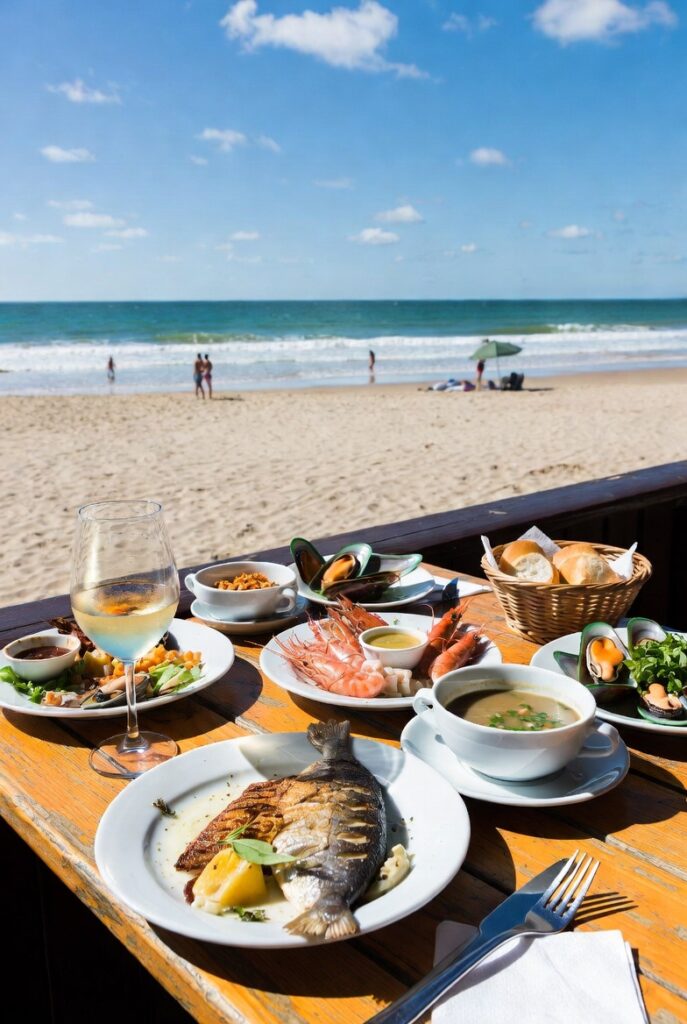
Order fish and seafood first.
That is the obvious answer, but it is also the correct one. Visit Portugal specifically highlights fish dishes, fresh seafood, grilled fish, and even bouillabaisse-style stew as things to look for here, which makes Nazaré one of the easiest places in Portugal to keep the meal simple and still get something that feels properly tied to the place. If food is a priority for your Portugal trip, read Portugal food too.
| What to eat in Nazaré | Why order it |
|---|---|
| grilled fish | the most natural everyday order in a fishing town |
| seafood rice or stew | best when you want a proper sit-down coastal meal |
| bouillabaisse-style fish stew or caldeirada-style dishes | stronger, more specific choice than another generic fish plate |
| shellfish | worth it when you want something heavier than a quick beach lunch |
What Nazaré costs in practice
Nazaré does not need to be an expensive stop, but the seafront can push prices up.
A normal seafood lunch often lands around the low-20-euro range per person once you add a main and drink, and a good beachfront or seafood-focused meal can climb higher. On the stay side, current hotel listings show entry-level nights starting roughly around the equivalent of €50–€60, while broader travel-booking snapshots put many average nightly prices much higher depending on season and day, often well above €100. In plain English: Nazaré can be reasonable, but summer weekends and front-row locations make it noticeably less cheap than the postcard suggests.
FAQ
When is the best time to see the big waves in Nazaré?
Roughly October to March, when Atlantic swells hit the Nazaré Canyon. Big days depend on the forecast, so check a surf forecast a few days before you go.
How much is the Nazaré funicular?
A one-way funicular ticket for an adult costs about €2.50, according to the official operator’s fare sheet checked September 2026.
How do you get from Lisbon to Nazaré without a car?
By express bus from Lisbon Sete Rios. Check the Rede Expressos timetable for your date. The train is not practical because the nearest station is outside town.
Is Nazaré worth visiting if you do not surf?
Yes. The clifftop setting, beach, funicular, seafood, and split between lower town and Sítio are enough to make Nazaré worthwhile even without any interest in surfing.
Is Nazaré an easy day trip from Lisbon?
Yes, but it is easier by direct bus or car than by train. The direct bus is roughly 1 hour 45 minutes to 1 hour 50 minutes, which is why Nazaré works better as a planned day trip than as a completely spontaneous one. The one-way ticket price varies by date; check the current fare on rede-expressos.pt before booking.
Where should you stay in Nazaré?
Stay low for beach, promenade, and convenience. Stay high in Sítio for views, quieter nights, and easier access to the wave side.
For more coastal stops, cities and routes, explore our Portugal destination guides.