Quick answer
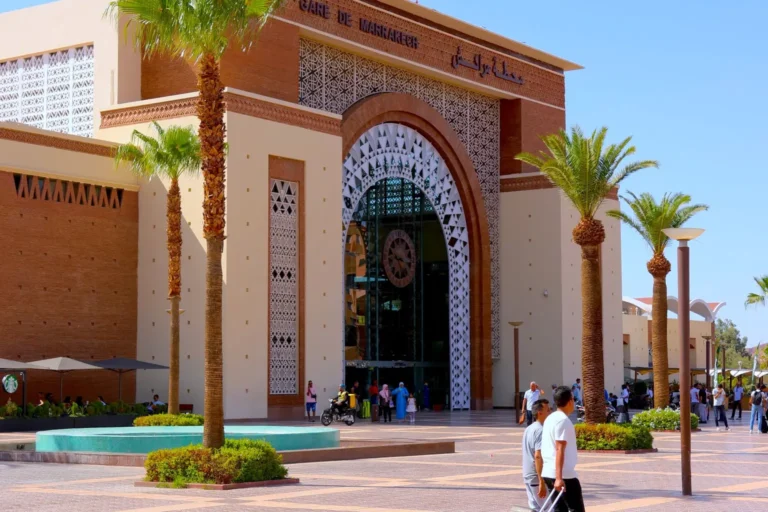
Yes, Morocco is safe to visit for most tourists. The U.S. State Department currently rates Morocco Level 2: Exercise Increased Caution</a>, which is the same advisory level as Spain and France, not some uniquely alarming designation. If I were visiting Morocco today, I would go — but I would go expecting petty theft, tourist scams, and medina hassle, not treating it like a no-risk beach resort and not treating it like a war zone either.
That is the real answer. Morocco is not the kind of place where most tourists get into serious danger, but it is the kind of place where unprepared visitors get worn down by fake guides, overcharging, and crowded-medina nonsense. If you understand that before you arrive, the country is much easier to enjoy.
What the “terrorism” mention actually means
The U.S. advisory for Morocco is Level 2 because of terrorism, and you should take that seriously without turning it into panic. It does not mean there is some active, trip-defining crisis that makes Morocco broadly off-limits to tourists. It means exactly what the advisory level says: exercise increased caution, especially in crowded places, tourist sites, transport hubs, and during periods of tension.
The easiest way to keep perspective is this: Morocco is not in the “Reconsider Travel” or “Do Not Travel” category, and it is not being singled out in a way that makes it obviously riskier than every Western European destination. The advisory is telling you to stay alert, not to cancel your trip.
Petty crime and scams: this is the real Morocco safety issue
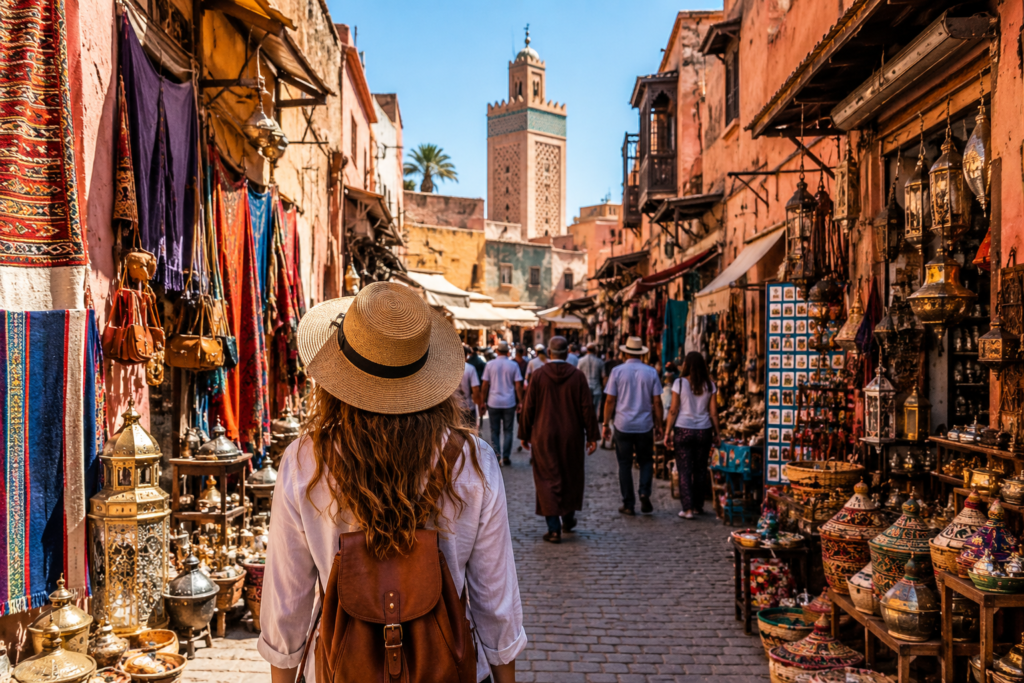
For most travelers, the real Morocco safety issue is not violent crime. It is pickpocketing, bag snatching, aggressive touts, fake guides, and tourist-targeted scams, especially in medinas and busy tourist areas. Australia’s Smartraveller Morocco advice is actually a good practical reality check here, because it focuses on the same problems real travelers run into most often.
The scam types you actually need to recognize are specific.
Unsolicited “guide” offers
This is the classic one. Someone approaches you near a medina entrance, major square, station, or tourist site and offers to “help,” “show you the way,” or “just explain something quickly.” That often turns into a demand for money, pressure to follow them somewhere, or a detour into a shop that pays them commission.
My rule is simple: if you did not ask for help, say no and keep walking.
Henna and photo scams
In the busiest tourist zones, especially in Marrakech, you may get pulled into a henna situation or asked for a quick photo with performers, animals, or props. The problem is not the photo itself. The problem is that the price becomes aggressive only after the interaction has already started.
So the rule is:
- do not let anyone begin a service you did not clearly agree to
- do not assume “one quick photo” means free or low-cost
- if you want a photo, agree the price first
Inflated taxi fares
Taxi overcharging is one of the most normal tourist frustrations in Morocco. That does not make taxis unsafe, but it does mean you should not get in and sort it out later.
The clean rule:
- use official petit taxis
- ask for the meter
- if the driver refuses, agree the price before the ride starts
Pickpocketing in medinas and crowded transport zones
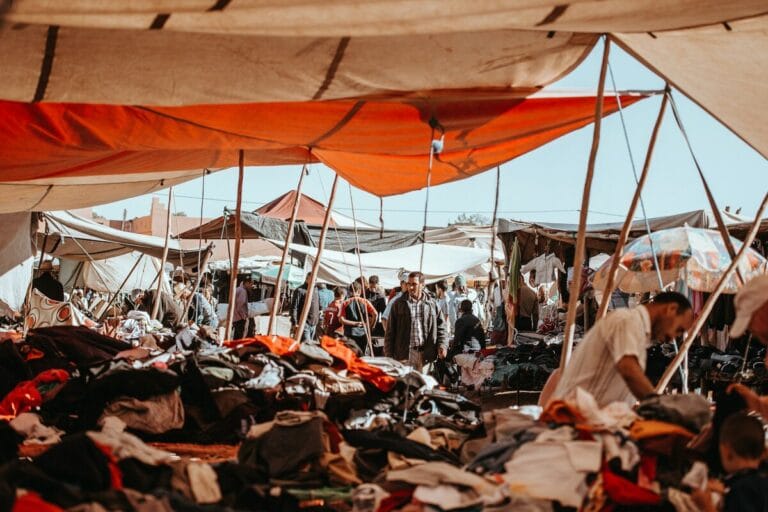
This is not unique to Morocco, but the medina environment makes it easier for petty theft to happen because you are distracted, crowded, and often looking at your phone or trying not to get lost.
That means:
- keep your phone out of your back pocket
- wear a cross-body bag, not a loose tote
- do not unzip your bag in the middle of a crowded lane unless you need to
- do not stand still with your wallet out in obvious tourist bottlenecks
Is Morocco safe for solo female travelers?
Yes, Morocco can be safe for solo female travelers, but this is not the kind of destination where I would pretend the experience is identical to solo travel in Portugal or Italy.
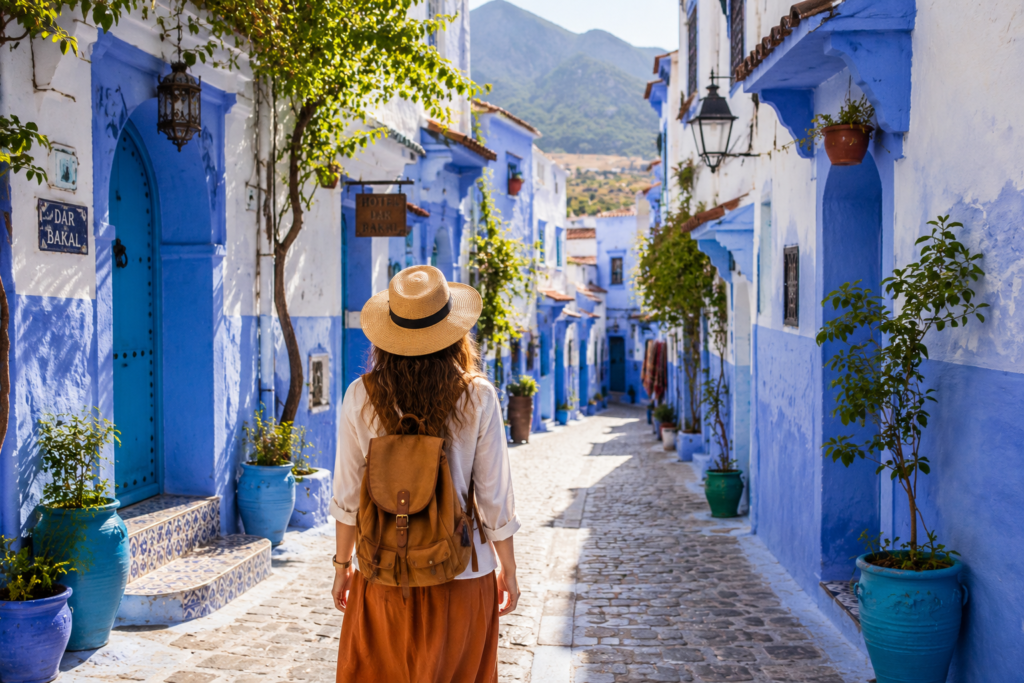
The main issue is usually harassment and friction, not automatic physical danger. Catcalling, staring, unwanted conversation, and random men trying to insert themselves into your plans are all things you should expect at least occasionally. That does not mean you should avoid Morocco. It means you should arrive with the right expectations.
My honest advice is:
- dress more modestly than you would in Southern Europe
- do not reward random men who “just want to help”
- avoid isolated wandering late at night
- arrange your first arrival clearly, especially if reaching a medina after dark
- do not book a place that sounds romantic on the map if it leaves you dragging luggage through confusing lanes alone at midnight
Morocco is very doable solo as a woman. But it is easier if you treat hassle reduction as part of safety, not as an optional comfort extra.
Transport safety: trains first, taxis second
For intercity travel, the safest and least stressful default is ONCF rail, including Al Boraq, the high-speed line linking Tangier, Kenitra, Rabat, and Casablanca. Morocco’s official tourism transport page is useful here, because it confirms the core rail logic and the Tangier–Casablanca 2h10 timing.
If I were moving between major cities, I would default to:
- ONCF trains first
- Al Boraq where it fits the route
- buses only when rail is not the natural option
- private transfers only when arrival timing or luggage makes them worth it
Inside cities, petit taxis are the normal official option. They are practical, but you still need to be proactive:
- use clearly marked official taxis
- ask for the meter
- if there is no meter use, agree the fare first
- avoid getting into random unofficial cars that offer a lift
That is the real Morocco taxi rule. The safety problem is usually not some dramatic crime scenario. It is confusion, overcharging, or ending up in a situation you could have avoided by being a little firmer at the start.
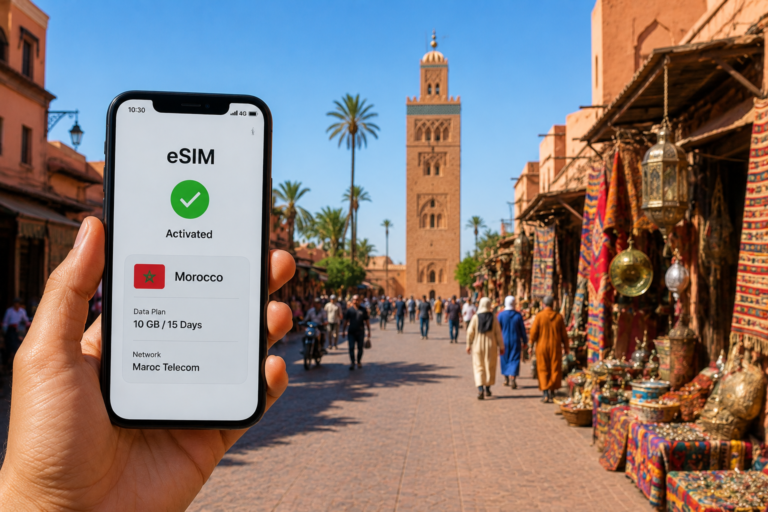
It’s also worth arranging mobile data before you arrive. Our Morocco eSIM guide covers the main options and what mobile coverage is like outside the major cities.
Cultural and legal notes that actually matter
This is the part too many travel articles soften.
Public affection
Morocco is conservative by tourist-destination standards. Even if you see couples being relaxed in some places, public displays of affection are not a smart idea if you want the lowest-friction trip. Keep it understated.
Same-sex relationships
This matters more than many travel writers want to admit: same-sex relations are illegal in Morocco. The UK’s Morocco safety guidance says this directly and also warns against showing affection in public because complaints can lead to prosecution.
If that applies to you, you should factor it into your risk assessment honestly, not after you arrive.
Dress
Outside resort zones, modest dress makes travel easier. That is especially true for women, but honestly it also applies more broadly if you want to move through the country with less friction.
This does not mean you need to dress theatrically conservatively. It means:
- cover more than you would at a Mediterranean beach resort
- keep outfits low-key in medinas and non-resort areas
- treat beachwear as beachwear, not citywear
City-by-city: where Morocco feels easiest, and where it feels hardest
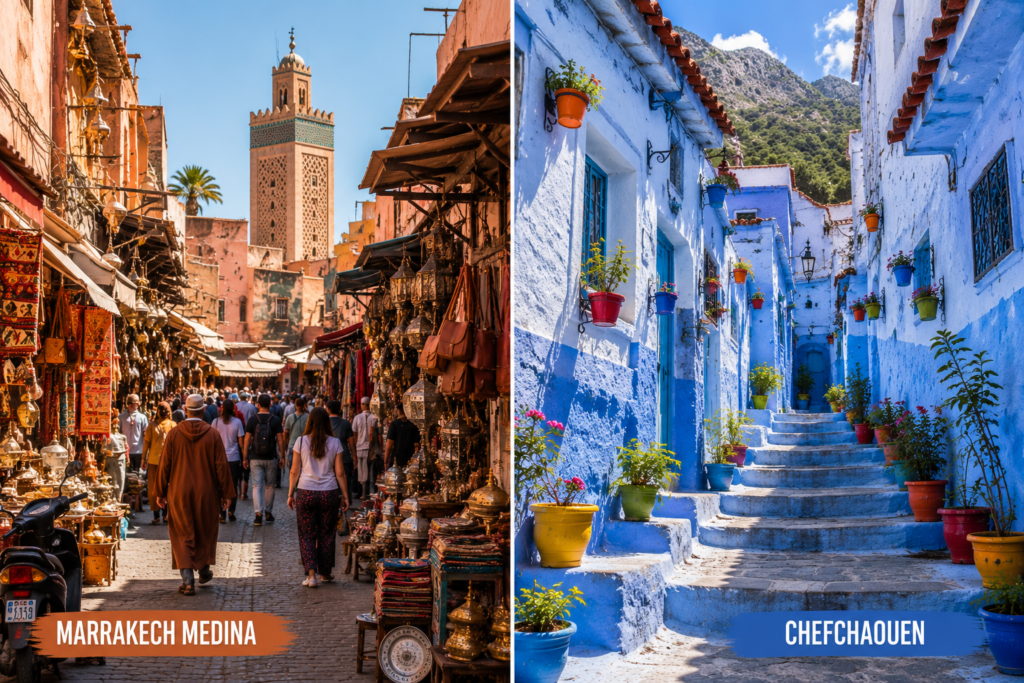
Marrakech
Marrakech is safe enough for tourists, but it is the city where many first-timers confuse hassle with danger.
The biggest issues are:
- medina confusion
- fake guides
- photo hustles
- overcharging
- the general sensory overload of Jemaa el-Fna and the surrounding area
If you stay in a well-reviewed riad, arrange your first transfer, and treat unsolicited help as a default no, Marrakech is manageable. But it is not the city where I would tell a nervous first-time traveler to improvise everything.
Fes
Fes is the city I would describe as more draining than dangerous.
The medina is more confusing than Marrakech’s, and the fake-guide pressure can feel stronger because the old city is so maze-like. If I were advising a first-timer, I would be more inclined to recommend a licensed guide for the first half-day in Fes than I would in Chefchaouen or Casablanca.
That does not mean Fes is unsafe. It means the city rewards preparation more than confidence.
Chefchaouen
Chefchaouen is usually the easiest-feeling of these four cities.
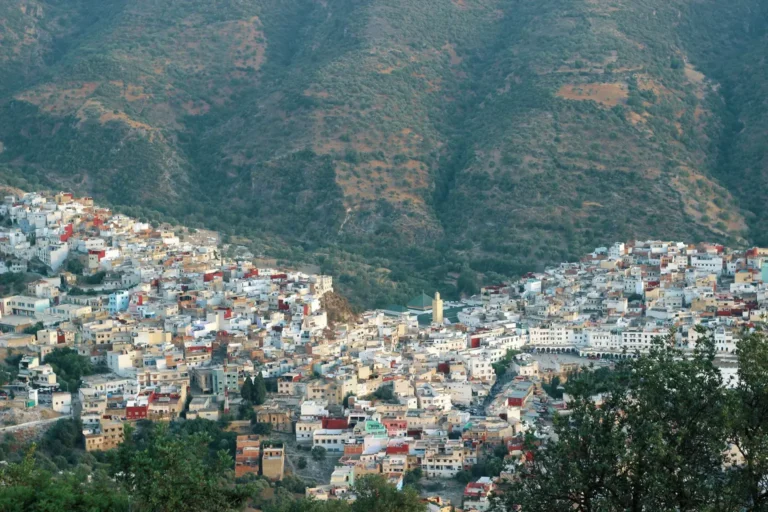
It is smaller, slower, calmer, and less intense than Marrakech or Fes. If someone told me they wanted a softer landing in Morocco, Chefchaouen is one of the places I would mention first.
That does not mean you should switch your brain off there. It just means the atmosphere is usually less aggressive and less exhausting than the bigger tourism centers.
Casablanca
Casablanca is a normal big city, which means it deserves normal big-city common sense.
In one way, that makes it easier than Marrakech or Fes because there is usually less medina-style tourist hassle. In another way, it is less obviously charming and more likely to punish careless urban behavior:
- flashing your phone
- drifting around unfamiliar areas late for no reason
- assuming every part of the city is meant for tourists
I would treat Casablanca like a large working city first and a sightseeing city second.
Is Morocco affected by the war?
Not in the sense most travelers mean when they ask that.
Morocco itself is not under a U.S. “Reconsider Travel” or “Do Not Travel” advisory. The practical implication for tourists is still the same as anywhere else under a Level 2 advisory:
- stay aware of major current events
- avoid demonstrations and crowds if tensions rise
- do not confuse regional anxiety with an automatic reason to cancel a normal Morocco itinerary
So the honest answer is: be informed, not alarmist.
What to avoid doing in Morocco
If you want the shortest useful list, avoid these mistakes:
- following unsolicited “guides”
- getting into taxis without sorting the meter or fare
- dressing like you are in a resort when you are not
- wandering medinas late at night without knowing where you are going
- assuming a “friendly local” has no financial motive
- flashing cash, phone, or expensive gear in crowded places
- treating public affection and legal conservatism like background trivia
Most tourist problems in Morocco come from one of those.
How should female tourists dress in Morocco?
The practical answer is: modestly enough to reduce friction.
That usually means:
- shoulders and chest covered more often than not
- skirts, shorts, or dresses not pushed to the absolute minimum
- looser clothing instead of body-hugging outfits in non-resort areas
- carrying a layer you can throw on quickly if needed
You do not need to cosplay local dress. You just need to dress in a way that makes your life easier.
Final verdict
If you want the shortest honest answer: yes, Morocco is safe to visit, and I would not hesitate to go myself.
But Morocco is one of those places where “safe” does not mean “effortless.” You need more scam awareness than in Spain or Portugal, more cultural awareness than in Italy, and more solo-female friction tolerance than in a typical Western European city. If you bring that mindset, Morocco is very workable. If you arrive expecting zero hassle, you will probably have a worse time than the advisory level suggests.
If you are also comparing costs before you decide, read Is Morocco expensive to visit?.
Weather and heat can affect the practical safety of your itinerary, especially in the Sahara and Atlas Mountains. Read the best time to visit Morocco before choosing your dates.
FAQ
Is Morocco safe for tourists right now?
Yes. Morocco is generally safe for tourists right now, with the main practical risks being petty crime, scams, and medina hassle rather than serious violent danger.
Is Morocco safe for solo female travelers?
Yes, but with more friction than many parts of Europe. The issue is usually harassment and unwanted attention, not automatic physical danger.
What should tourists avoid doing in Morocco?
Avoid fake guides, unagreed taxi fares, flashy behavior in crowded places, wandering unfamiliar medinas late at night, and public behavior that ignores the country’s more conservative norms.
How should female tourists dress in Morocco?
Modestly enough to reduce attention and hassle, especially outside resort zones.
Is Morocco safer than people think?
Usually yes. Morocco’s biggest tourist problems are often more annoying than dangerous. The country is more manageable once you understand that distinction before you arrive.
Planning beyond safety? See all our Morocco guides for routes, costs, connectivity and the best time to visit.