Morocco has two official languages: Arabic and Amazigh. In everyday conversation, however, most Moroccans use Darija, the local form of Arabic. French is widely used in business, education and tourism, Spanish is more common in northern Morocco, and English is increasingly useful in major tourist destinations.
For travelers, the practical answer is simple: English is usually enough in hotels, tours and popular attractions, but a few words of Darija—or basic French—will make communication much easier outside the main tourist areas.
Languages spoken in Morocco at a glance
| Language | Where it is used | Useful for travelers? |
|---|---|---|
| Darija | Daily conversation across Morocco | Very useful |
| Modern Standard Arabic | Government, news, schools and formal writing | Helpful but not essential |
| Amazigh | Atlas, Rif, Souss and Amazigh communities | Regionally useful |
| French | Business, education, cities and tourism | Very useful |
| Spanish | Northern Morocco, especially around Tangier and Tetouan | Useful in the north |
| English | Tourism, younger people and major cities | Usually enough for a tourist trip |
Morocco is genuinely multilingual. A conversation may begin in Darija, include several French words and switch to English or Spanish when a visitor joins. The language you hear depends on the city, the speaker’s age, education and family background.
What are Morocco’s official languages?
Arabic and Amazigh are the two official languages of Morocco. Article 5 of the country’s 2011 Constitution confirms Arabic as an official state language and gives Amazigh official status as a shared heritage of all Moroccans.
Official status does not mean both are used identically everywhere. Modern Standard Arabic dominates formal documents, national news, government communication and much of education. Amazigh has been progressively introduced into education, public institutions, signs and official communication, often using the distinctive Tifinagh script.
This distinction matters because the Arabic used in an official announcement is not the same variety you will normally hear in a taxi, café or family home.
Darija: the language of everyday Morocco
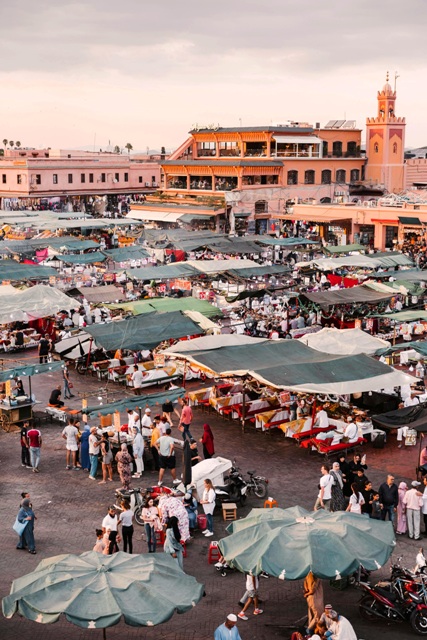
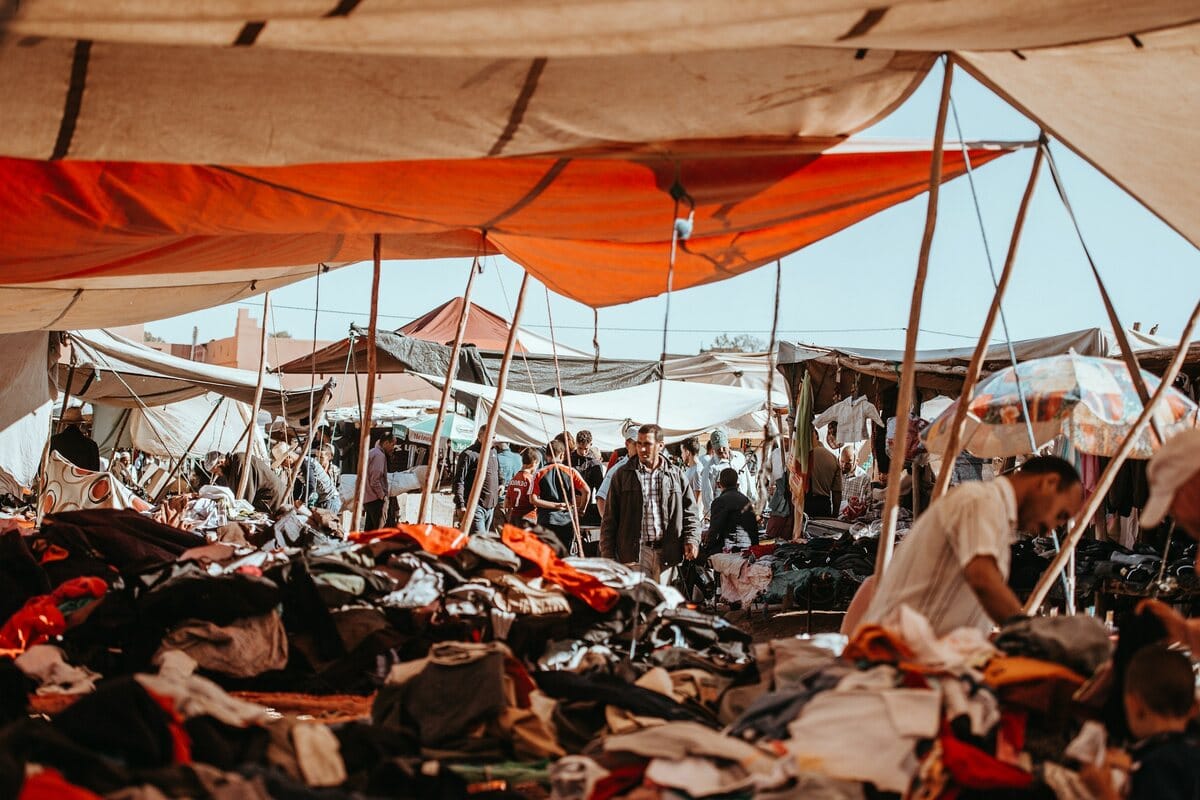
Darija, or Moroccan Arabic, is the main language of daily conversation for a large part of the population. It is what you are most likely to hear in markets, taxis, cafés, shops and casual discussions in cities such as Marrakech, Casablanca, Rabat and Fes.
Darija developed from Arabic while absorbing vocabulary and pronunciation from Amazigh, French, Spanish and other languages. It is primarily a spoken language, although Moroccans also write it informally in Arabic or Latin characters, particularly in messages and social media.
Is Darija the same as standard Arabic?
No. Darija and Modern Standard Arabic share an Arabic foundation, but vocabulary, pronunciation, rhythm and grammar differ considerably. A visitor who learned formal Arabic will recognize some words and can often make basic communication work, but fast Darija may be difficult to understand.
Modern Standard Arabic remains useful for reading formal signs, following news and communicating when a local speaker adjusts toward a more widely understood form of Arabic. It is simply not the language most people naturally use in ordinary conversation.
Amazigh languages in Morocco
Amazigh is sometimes called Berber in English-language travel guides. Many people prefer the name Amazigh for the people and Tamazight as a broad language term. Morocco contains several major Amazigh varieties rather than one identical spoken language across the entire country.
- Tashelhit is associated with the Souss region, parts of the High Atlas and areas around Agadir.
- Central Atlas Tamazight is spoken through parts of the Middle Atlas.
- Tarifit is used in the Rif region of northern Morocco.
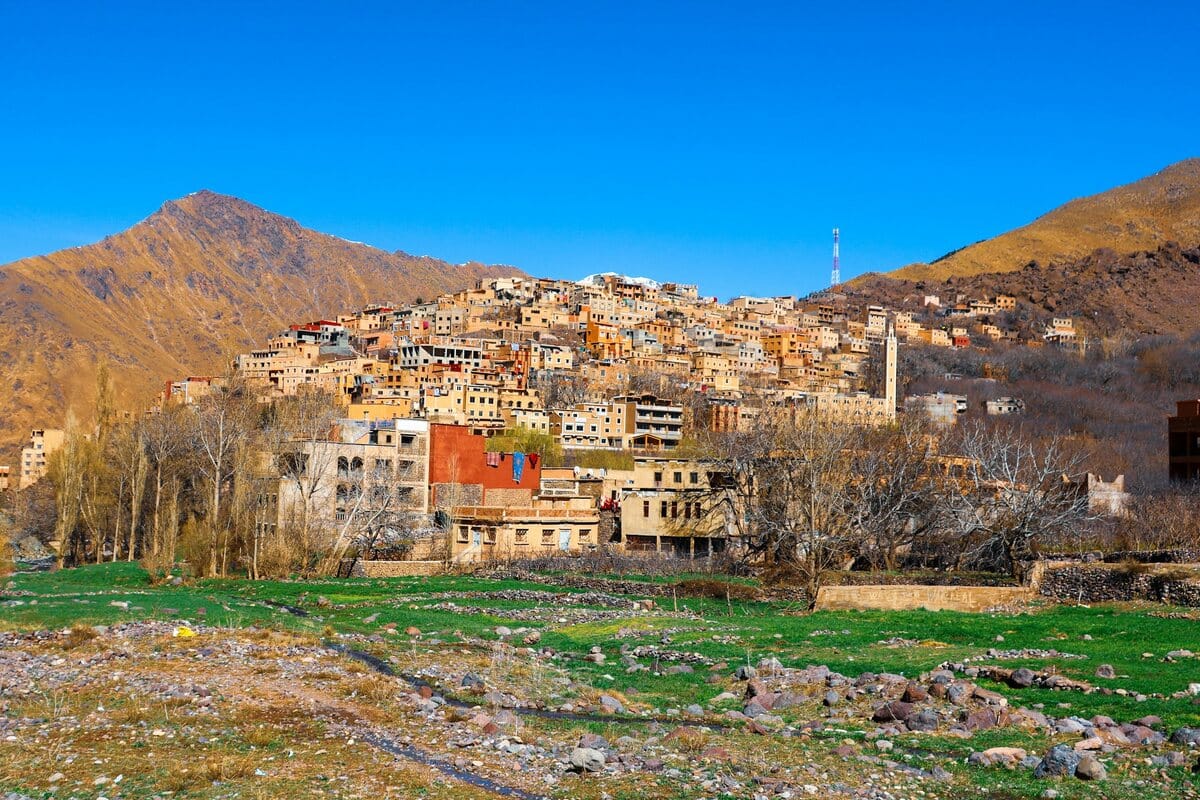
Amazigh may be the first language in rural communities and mountain regions, while speakers commonly also know Darija or another language. Travelers will see Tifinagh characters on public signs, often alongside Arabic and French.
Why is French widely spoken in Morocco?
French has no constitutional status as an official language, but it remains influential because of Morocco’s history as a French protectorate and its continuing economic and educational connections with the Francophone world.
You will encounter French in businesses, universities, medicine, advertising, menus, transport information and many urban workplaces. It is particularly useful in Casablanca, Rabat and other large cities. Hotels, restaurants and tour companies often operate comfortably in French.
That does not mean every Moroccan speaks fluent French. Ability varies by region, age and education. In a rural village or traditional market, Darija or the local Amazigh language may be more natural. Still, for a traveler who already speaks French, it is one of the most practically useful languages to bring to Morocco.
Where is Spanish spoken in Morocco?
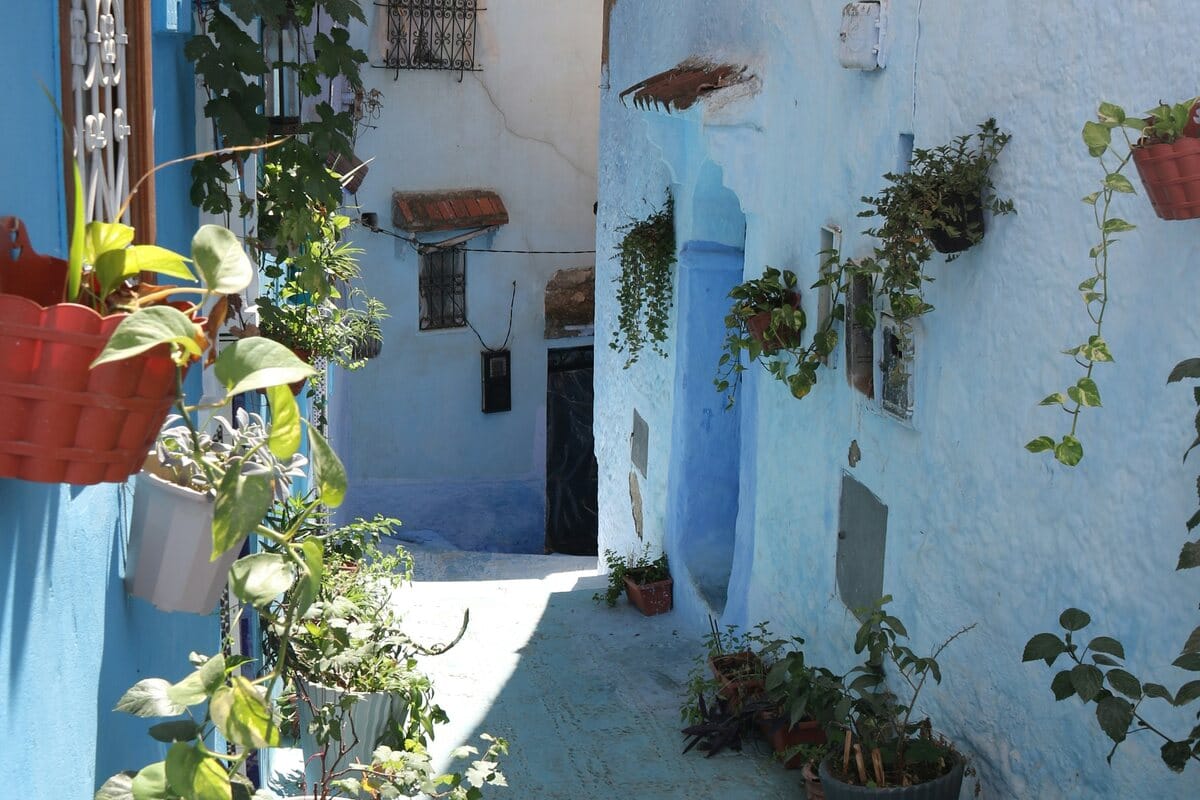
Spanish is most useful in northern Morocco, reflecting the region’s historical links and proximity to Spain. You are more likely to encounter it around Tangier, Tetouan, Chefchaouen and parts of the Mediterranean coast than in Marrakech or central Morocco.
Spanish should not be treated as a universal second language, but Spanish-speaking travelers sometimes find communication surprisingly easy in northern hotels, shops and tourism businesses. Our route guide from Tangier to Chefchaouen helps with planning a trip through the part of Morocco where Spanish is most visible.
Do people speak English in Morocco?
Yes, especially in tourism and among younger Moroccans. In Marrakech, Fes, Casablanca, Rabat, Essaouira, Agadir, Chefchaouen and the main desert-tour circuits, hotel staff, guides and many restaurant workers can usually communicate in English.
English becomes less dependable in small towns, local markets, rural communities, older generations and administrative situations. A translation app, written hotel address and offline map are useful backups. French may work when English does not, while a polite Darija greeting often makes people more willing to help.
If you need mobile data for maps and translation, compare our guide to the best eSIMs for Morocco. You can also check Airalo’s Morocco data plans before departure.
Which language is spoken in each Moroccan city?
There are no hard city borders between languages, but these are the combinations a traveler is most likely to encounter:
| Destination | Languages commonly encountered |
|---|---|
| Marrakech | Darija, French, English in tourism and some Tashelhit |
| Fes | Darija, Modern Standard Arabic, French and tourism English |
| Casablanca | Darija and French, with growing English use |
| Rabat | Darija, formal Arabic, French and English |
| Tangier | Darija, French, Spanish and English in tourism |
| Chefchaouen | Darija, local Amazigh varieties, Spanish and tourism English |
| Agadir | Darija, Tashelhit, French and English in resorts |
| Atlas regions | Amazigh varieties, Darija and varying French |
Traveling between Marrakech and Fes illustrates the change well: Darija remains useful throughout, while French and English support varies between major transport hubs and smaller stops. See our practical Marrakech to Fes transport guide before planning that route.
What language should tourists use in Morocco?
Start with English in a hotel, formal tour or major attraction if that is your strongest language. In shops, taxis and less tourist-oriented places, simple French may be more successful. If you know Arabic, begin with a greeting and let the other person guide the conversation toward Darija or a more standard variety.
Do not worry about choosing the “wrong” language. Most people will switch pragmatically to whichever language both sides understand. Speak clearly, avoid slang and keep sentences short. Showing a written destination on your phone is often more effective than repeating a place name louder.
Useful Darija phrases for travelers
Darija spelling in Latin characters is not fully standardized, so you may see the same phrase written in several ways. These simple forms are widely recognizable:
| Darija | Meaning |
|---|---|
| Salam | Hello |
| Shukran | Thank you |
| Afak | Please |
| Iyah / La | Yes / No |
| Labas? | Are you well? / Everything okay? |
| Ma fhemtsh | I do not understand |
| Bshhal? | How much? |
| La, shukran | No, thank you |
Pronunciation and spelling vary, but the effort matters more than perfection. A greeting and a thank-you are enough to make an interaction friendlier.
Language tips for a smoother Morocco trip
- Download French and Arabic offline translation packs before leaving Wi-Fi.
- Save accommodation names and addresses in writing; traditional riads can be difficult to locate inside medinas.
- Ask the hotel to write a destination in Arabic when traveling outside tourist centers.
- Learn numbers or keep a calculator screen ready when negotiating prices.
- Do not assume everyone prefers French; begin politely and adapt to the response.
- Confirm transport details visually when names or departure times sound unclear.
Language is only one part of preparing for the country. Check whether Morocco is safe to visit, the best time to visit Morocco and our breakdown of Morocco travel costs.
Frequently asked questions
What are the three main languages spoken in Morocco?
The three languages visitors encounter most widely are Darija, French and Amazigh. Modern Standard Arabic is essential in formal settings and written communication, while Darija is more common in everyday speech.
Is Morocco an Arabic-speaking country?
Yes, but that description is incomplete. Arabic is official and Darija is widely spoken, while Amazigh is also an official language and a central part of Moroccan identity.
Is Moroccan Arabic difficult to understand?
It can be difficult even for speakers of other Arabic varieties because Darija is fast and contains distinctive pronunciation and vocabulary. Standard Arabic knowledge still provides a useful foundation.
Can I travel through Morocco speaking only English?
Yes, particularly on a standard tourist route. English is less reliable in rural areas, local markets and administrative situations, so an offline translator and a few Darija or French words are helpful.
Do Moroccans prefer French or English?
There is no universal preference. French remains more established in business and education, while English is increasingly common among younger people and tourism workers. Use whichever language creates the clearest conversation.
What language is spoken in Marrakech?
Darija is the main everyday language in Marrakech. French is widely useful, English is common in hotels and tourist businesses, and Tashelhit is spoken by people with roots in the Souss and High Atlas regions.
Is Berber the same as Amazigh?
The terms are often used for the same Indigenous people and related languages of North Africa, but many speakers prefer “Amazigh.” Morocco recognizes Amazigh as an official language.
The bottom line
Morocco’s official languages are Arabic and Amazigh, but Darija is the language you will hear most often in everyday conversation. French remains extremely practical, Spanish helps in the north, and English is usually sufficient along the main tourist route. Learn a greeting and “thank you” in Darija, keep translation available offline and let each conversation naturally determine the language.
Language information checked September 22, 2026, against Morocco’s 2011 Constitution and guidance from the Moroccan National Tourist Office.