Quick answer
The best time to visit Morocco is generally from March to May or September to November. Temperatures are more comfortable in Marrakech and Fes, Sahara trips are easier, and the Atlas Mountains are suitable for hiking.
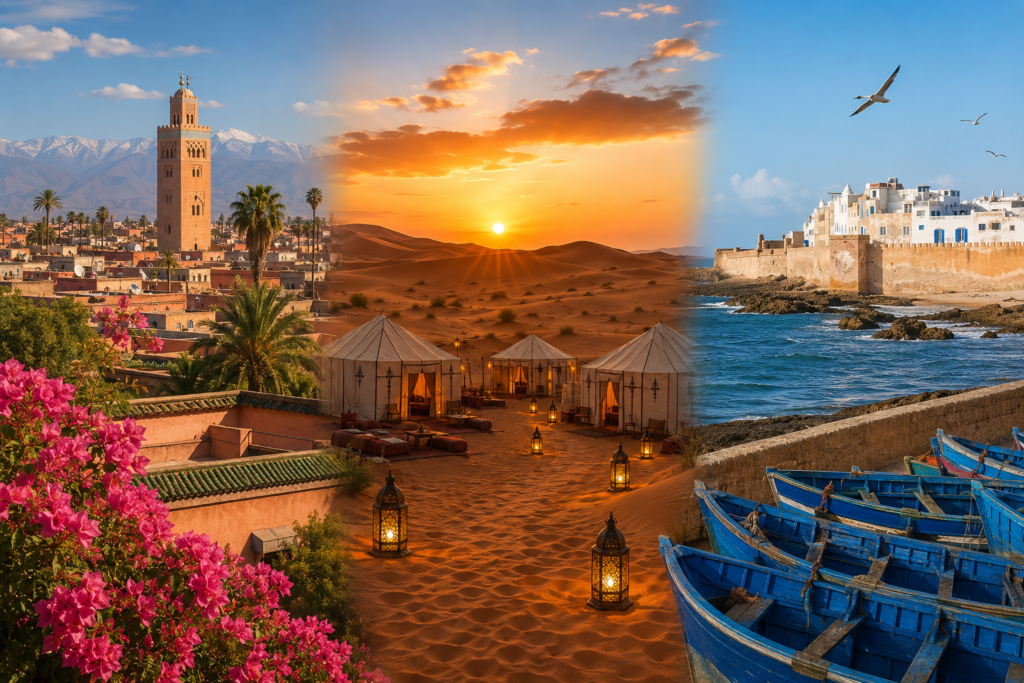
However, there is no single best month for the whole country. Summer works well in Essaouira and northern Morocco, while winter is one of the best seasons for the Sahara.
Best time to visit Morocco at a glance
| Destination or activity | Best time |
|---|---|
| Marrakech and Fes | March–May and September–November |
| Sahara Desert | October–April |
| Essaouira and Atlantic coast | May–September |
| Chefchaouen and Tangier | April–October |
| Atlas Mountains hiking | May–October |
| Atlas Mountains skiing | December–March |
| Multi-region Morocco trip | April, May, September or October |
| Lowest inland hotel prices | Summer, due to extreme heat |
| Mild winter escape | Marrakech, Agadir and southern Morocco |
For most first-time itineraries covering Marrakech, Fes and the Sahara, April, May, September and October offer the best balance.
Before booking, you may also want to read:
Why the best time depends on where you are going
A blanket recommendation such as “visit Morocco in spring or autumn” is useful, but incomplete.
Morocco’s climate changes considerably between:
- the hot inland cities
- the Sahara Desert
- the windy Atlantic coast
- the Mediterranean north
- the high Atlas Mountains
You could experience intense desert heat, cool ocean winds and freezing mountain temperatures during the same trip.
The Moroccan National Tourist Office’s climate guide also recommends planning around the region rather than treating Morocco as one climate zone.
Best time to visit Marrakech and Fes
Best months: March–May and September–November
Spring and autumn are the best seasons for exploring Morocco’s imperial cities.
During these periods, you can spend more time walking through medinas, visiting palaces and sitting on rooftop terraces without planning your entire day around extreme heat.
Marrakech weather
Marrakech can reach approximately 36°C or 97°F in July. Winter daytime temperatures are much milder, commonly around 19°C or 66°F, although mornings and evenings can feel considerably cooler.
The most comfortable periods are:
- March through May
- late September through November
April and October are particularly good if Marrakech is the main focus of your trip.
Fes weather
Fes can also become extremely hot, reaching approximately 36°C or 97°F in August. Winter daytime temperatures are closer to 17°C or 63°F, with colder evenings.
Fes has a dense and confusing medina, so hot weather can feel more tiring than the temperature alone suggests. You will spend considerable time walking through enclosed lanes, climbing slopes and trying to navigate crowded areas.
Should you visit Marrakech or Fes in summer?
You can, but your schedule needs to change.
During July and August:
- start sightseeing early
- visit indoor attractions during the hottest hours
- return to your accommodation in mid-afternoon
- resume exploring after sunset
- choose accommodation with effective air conditioning
- carry water continuously
Summer can bring lower accommodation prices inland, but the savings come with a significant comfort trade-off.
Winter in Marrakech and Fes
Winter is underrated for city travel.
Days can be sunny and comfortable, but riads and older buildings may feel surprisingly cold at night. Heating standards vary, so check accommodation reviews rather than assuming every room is warm.
Winter works well if you prefer:
- fewer crowds
- lower prices
- cooler walking weather
- combining cities with a Sahara trip
Best time to visit the Sahara Desert
Best months: October–April
The Sahara is one of the clearest examples of why Morocco needs a regional travel calendar.
In the Merzouga area, temperatures can reach approximately 40–45°C or 104–113°F during July and August. That level of heat makes camel rides, dune walks and outdoor desert camps uncomfortable and potentially unsafe during the day.
From October through April, conditions are far better for:
- camel trekking
- dune walks
- desert camps
- sunrise and sunset tours
- photography
- stargazing
Sahara weather in winter
Winter days near Merzouga can be approximately 18–20°C or 64–68°F, but nights may approach freezing.
A desert camp can therefore feel warm during the afternoon and extremely cold after sunset.
Pack:
- a warm jacket
- long trousers
- closed footwear
- thermal layers for overnight camps
- a hat and sun protection for daytime
Do not assume that “desert” automatically means warm at night.
Best Sahara months
The strongest choices are:
- October and November for warmer evenings
- March and April for pleasant daytime temperatures
- December through February for cool days but very cold nights
Avoid July and August unless your itinerary only involves a brief, carefully managed visit with air-conditioned transport and accommodation.
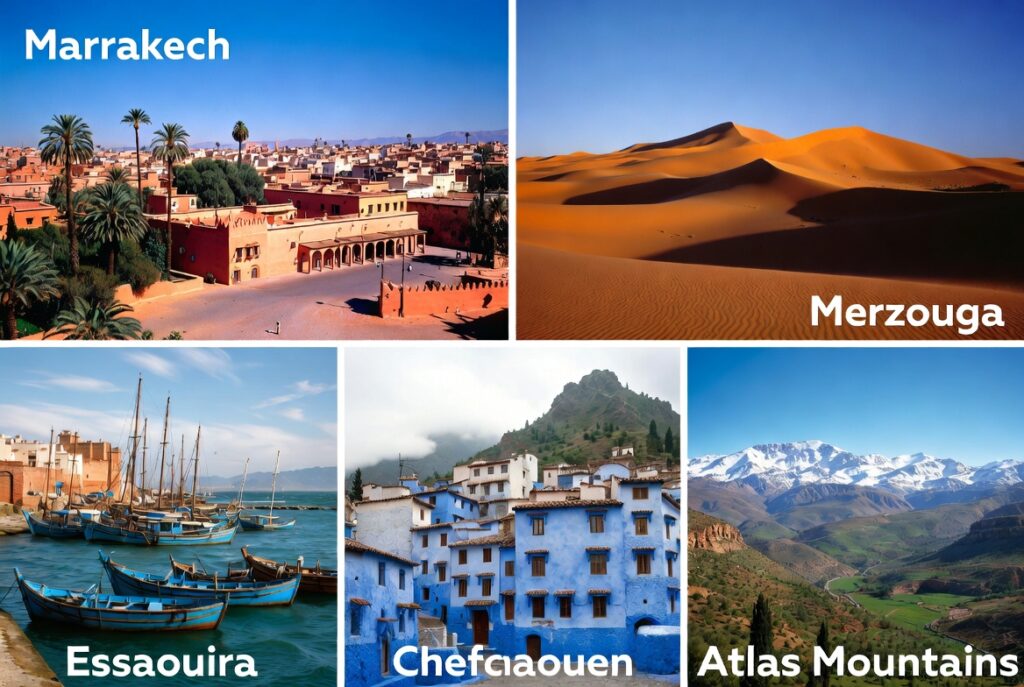
Best time to visit Essaouira and the Atlantic coast
Best months: May–September
Essaouira is one of Morocco’s best summer destinations.
While Marrakech and Fes can become oppressively hot, Essaouira benefits from Atlantic winds and generally stays below approximately 30°C or 86°F, even in summer.
This makes it a practical escape from inland heat.
Essaouira is particularly good for:
- surfing
- kitesurfing
- seafood
- beach walks
- slower travel
- combining the coast with Marrakech
What to expect from Essaouira’s weather
The wind is part of the destination.
It keeps temperatures comfortable but can make the beach feel cooler than expected. Bring a light jacket or overshirt even during summer evenings.
Spring and early autumn are also pleasant, although the Atlantic water remains cool.
Is winter good in Essaouira?
Winter is mild compared with northern Europe, but it is not guaranteed beach weather. Wind, cloud and rain can make the coast feel colder than the temperature suggests.
Choose winter for atmosphere and quieter streets rather than sunbathing.
Best time to visit Chefchaouen and northern Morocco
Best months: April–October
Northern Morocco has a more Mediterranean climate than the inland south.
Chefchaouen and Tangier commonly see summer temperatures around 28–30°C or 82–86°F, making them more comfortable than Marrakech, Fes or the Sahara.
Summer is therefore a reasonable time to visit:
- Chefchaouen
- Tangier
- Tetouan
- the Mediterranean coast
Spring in Chefchaouen
Spring is one of the most attractive periods because the surrounding Rif Mountains are greener and daytime temperatures are comfortable.
Rain is still possible, so carry a lightweight waterproof layer.
Summer in northern Morocco
July and August are busy but manageable. Book accommodation early, particularly in Chefchaouen, where the historic centre has limited space.
The town’s steep lanes can still feel tiring in midday heat, so explore early in the morning and again in the late afternoon.
Winter in Chefchaouen
Chefchaouen can feel cold and damp during winter. The blue streets remain attractive, but rain and cloud can affect mountain views and outdoor plans.
Winter is better for low prices and fewer visitors than for dependable weather. <!– Add link when live: How to get from Tangier to Chefchaouen –>
Best time to visit the Atlas Mountains
The ideal season depends on whether you want to hike or ski.
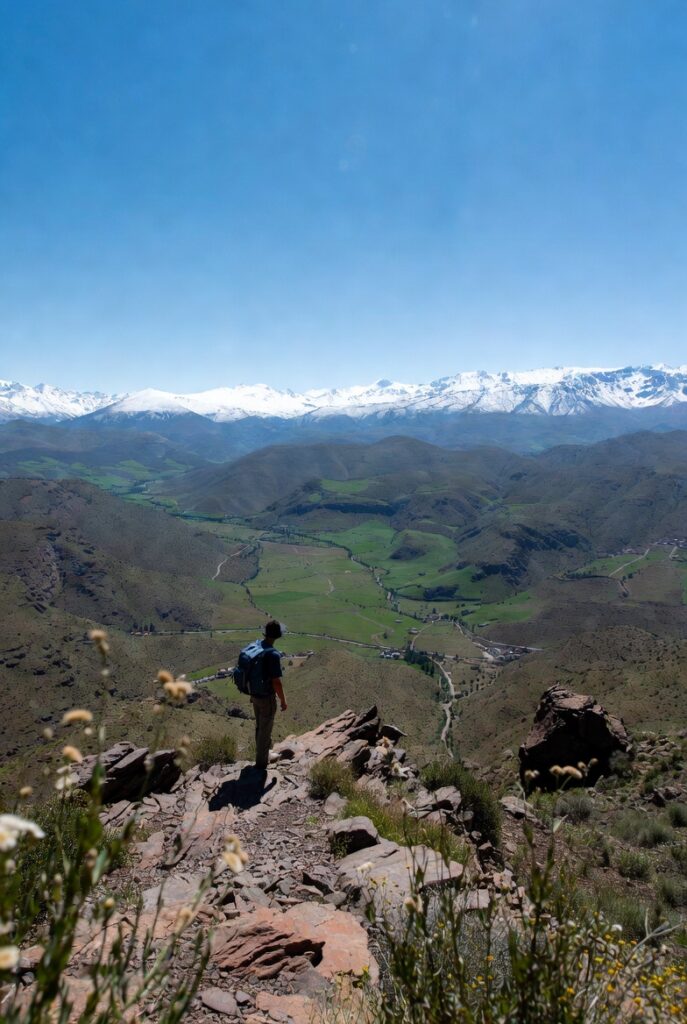
Best time for hiking: May–October
Late spring through autumn offers the most reliable conditions for hiking in the Atlas Mountains.
May, June, September and October are particularly comfortable because temperatures are milder than in midsummer.
At higher elevations, conditions can change quickly. Even when Marrakech is hot, mountain evenings may be cold.
Bring:
- layered clothing
- proper walking shoes
- sun protection
- sufficient water
- offline maps or a local guide for remote routes
Best time for skiing: December–March
Morocco has a winter ski season, most notably around Oukaïmeden.
Snow conditions vary by year, but the general skiing window is approximately December through March. Temperatures at altitude can fall below freezing.
Do not build an entire trip around skiing without checking current snow and road conditions shortly before departure.
Winter trekking
Lower-altitude valleys may remain accessible, but high routes can require technical equipment, winter experience and local guidance.
For a normal sightseeing or moderate-hiking trip, spring and autumn are safer choices.
Morocco month-by-month
| Month | What to expect | Best for |
|---|---|---|
| January | Cool cities, cold nights, mild southern days | Sahara, Marrakech, skiing |
| February | Similar to January; possible rain in the north | Sahara, cities, fewer crowds |
| March | Warmer days and greener landscapes | Multi-region trips |
| April | Excellent temperatures across most regions | Marrakech, Fes, Sahara, hiking |
| May | Warm but usually comfortable | Cities, mountains, coast |
| June | Hotter inland; pleasant on the coast | Essaouira, northern Morocco |
| July | Extreme inland and desert heat | Atlantic and north coast |
| August | Hottest month in many inland areas | Essaouira, Tangier, beaches |
| September | Heat begins easing | Multi-region trips |
| October | One of the best months overall | Cities, Sahara, mountains |
| November | Cooler, quieter and usually comfortable | Sahara and cultural trips |
| December | Cool cities and cold desert nights | Winter sun and Sahara trips |
Best months for a first Morocco trip
For a route combining Marrakech, Fes, Chefchaouen and the Sahara, choose:
- October
- April
- May
- September
- November
October is arguably the strongest all-round choice. The worst summer heat has passed, the Sahara becomes more comfortable and most mountain routes remain accessible.
Visiting Morocco during Ramadan
Ramadan does not make Morocco inaccessible, but it changes the rhythm of the trip.
Ramadan 2027 is expected to begin around February 8 and continue until approximately March 8. Eid al-Fitr is expected around March 9 or 10.
The exact dates are confirmed through moon sighting and may shift by one day.
What stays open
Tourist infrastructure generally continues operating, including:
- hotels
- riads
- major monuments
- airports
- trains
- organised tours
- many restaurants in tourist areas
What changes during Ramadan
You may encounter:
- fewer restaurants serving food during the day
- reduced daytime opening hours
- modified tour schedules
- quieter streets before sunset
- busy roads immediately before iftar
- lively evenings after the fast ends
In major tourist destinations, you will normally find food during the day. Choices may be more limited outside hotel and tourist areas.
Should you avoid Ramadan?
No.
Visit during Ramadan when the dates suit you, but plan more carefully. Confirm restaurant and transport schedules, be respectful around people who are fasting and avoid eating conspicuously in conservative public settings.
The evening atmosphere can be one of the most interesting parts of the experience.
Morocco festival calendar
The major 2026 festival dates below are useful as a reference for how Morocco’s cultural calendar is structured. Since these dates have now passed, check the official event websites for the next confirmed editions before booking flights.
| Festival | Location | 2026 dates |
|---|---|---|
| Fes Festival of World Sacred Music | Fes | June 4–7, 2026 |
| Mawazine | Rabat | June 19–27, 2026 |
| National Festival of Popular Arts | Marrakech | July 2–6, 2026 |
| Jazzablanca | Casablanca | July 2–11, 2026 |
Fes Festival of World Sacred Music
The Fes Festival of World Sacred Music brings international and Moroccan performers to historic venues across the city.
The 2026 edition ran from June 4 to June 7. Check the official Fes Festival websitefor future dates and programmes.
Book accommodation early because popular riads inside and near the medina can fill well ahead of the festival.
Mawazine
Mawazine is a major music festival held across Rabat.
The 2026 edition ran from June 19 to June 27. Future schedules are published through the official Mawazine website.
Expect:
- increased hotel demand
- busy evening transport
- road closures around venues
- large crowds
National Festival of Popular Arts
Marrakech’s National Festival of Popular Arts showcases traditional music, dance and regional performance.
The 2026 programme ran from July 2 to July 6, during one of the hottest times of the year. Plan daytime sightseeing early and leave festival activities for the evening.
Jazzablanca
Jazzablanca brings international and Moroccan performers to Casablanca.
The 2026 edition ran from July 2 to July 11. Festival periods can raise accommodation prices, particularly near major venues.
Booking tips by season
Spring and autumn
These are the busiest periods for cultural itineraries.
Book early when your trip includes:
- Marrakech
- Fes
- Chefchaouen
- popular Sahara camps
- highly rated riads
For April, May, September and October, reserving accommodation several months ahead gives you more choice.
Summer
Inland cities may offer lower prices because of the heat, but coastal accommodation becomes more popular.
Book ahead for:
- Essaouira
- Tangier
- Mediterranean beach destinations
- Chefchaouen
- coastal weekends
Winter
Winter can offer good value in Marrakech, Fes and coastal towns outside Christmas and New Year.
For the Sahara, choose accommodation based on heating and bedding quality rather than price alone.
Check accommodation prices
Morocco covers a large area, so avoid booking every night in one city before finalising your route.
👉 Check current accommodation prices across Morocco on Booking.com.
Before you go: mobile data and navigation
Mobile data is especially useful in Morocco for:
- navigating medinas
- checking train and bus schedules
- contacting riads
- arranging transfers
- using translation apps
- confirming opening hours
Install your eSIM before departure while you still have reliable Wi-Fi.
👉 Check current Airalo eSIM plans for Morocco.
Keep offline copies of your accommodation address because medina access can be confusing, particularly when arriving after dark.
Is Morocco expensive during the best months?
Spring and autumn usually bring the strongest demand and therefore higher accommodation prices.
You can reduce costs by:
- travelling in early March or late November
- booking riads early
- staying outside the medina walls
- avoiding major festival weekends
- comparing private transfers with trains and buses
- visiting inland cities outside peak spring and autumn dates
For detailed daily budgets, accommodation prices and transport costs, read our guide to how expensive Morocco is to visit.
Is Morocco safe in every season?
Season does not change Morocco’s general safety profile dramatically, but it creates different practical risks.
In summer:
- heat exhaustion becomes a concern
- dehydration can affect long sightseeing days
- Sahara excursions require more caution
In winter:
- mountain roads may be affected by snow
- desert nights can become extremely cold
- rain can make old medina surfaces slippery
During major festivals or demonstrations, avoid dense crowds when conditions feel uncomfortable.
Read our complete Morocco safety guide for advice on scams, taxis, solo female travel and city-specific precautions.
FAQ
What is the best month to visit Morocco?
October is the best all-round month for most travelers. Marrakech and Fes are cooler than in summer, the Sahara becomes comfortable again and the Atlas Mountains remain suitable for hiking.
April is an equally strong alternative.
What is the cheapest month to visit Morocco?
Prices vary by region. Summer can be cheaper in Marrakech and Fes because of the heat, while coastal destinations become more expensive.
January and February can offer good accommodation value outside holiday periods.
Is Morocco too hot in July and August?
Marrakech and Fes commonly reach approximately 36°C or 97°F, while the Sahara can reach 40–45°C or 104–113°F.
Essaouira, Tangier and northern coastal areas are much more manageable in summer.
Is December a good time to visit Morocco?
Yes, especially for Marrakech, southern Morocco and the Sahara.
Expect cool evenings, cold desert nights and possible snow in the Atlas Mountains.
When is the best time to visit the Sahara?
The best period is October through April. March, April, October and November offer the best balance between comfortable days and less severe overnight cold.
When is the best time to visit Marrakech?
Visit Marrakech from March to May or September to November.
April and October are the strongest individual months.
When is the best time to visit Chefchaouen?
April through June and September through October offer comfortable temperatures and attractive scenery.
July and August are also manageable but busier.
Should I visit Morocco during Ramadan?
Yes, provided you expect reduced daytime restaurant availability and altered opening hours.
Tourist accommodation and major attractions generally remain open, while evenings become more active after sunset.
How many days do you need in Morocco?
Seven days is enough for one concentrated route. Ten to fourteen days is better for combining imperial cities, the Sahara, mountains and coast without spending most of the trip in transit.
Final verdict
For most travelers, the best time to visit Morocco is:
- March–May
- September–November
For specific regions:
- Marrakech and Fes: spring or autumn
- Sahara Desert: October–April
- Essaouira: May–September
- Chefchaouen and Tangier: April–October
- Atlas hiking: May–October
- Atlas skiing: December–March
Choose the season based on the hottest or most weather-sensitive part of your itinerary. A summer trip can work well on the Atlantic coast, while a winter trip can be ideal for the Sahara.
The most reliable months for a first multi-region trip are April, May, September and October.