ATM fees in Thailand are usually 220 THB per withdrawal for a foreign card. That charge comes from the Thai ATM operator, not from your home bank. Your own bank or card provider may then add a cash-withdrawal fee, a foreign-transaction fee, or both.
There is no dependable fee-free ATM network for overseas cards in Thailand. The practical way to pay less is to make fewer, larger withdrawals, choose Thai baht instead of your home currency, and use a travel card that keeps its own exchange and withdrawal costs low.
If you are planning the rest of your budget too, start with our breakdown of how much a trip to Thailand costs.
Prices and fees checked: 21 September 2026. Most Thai bank ATMs still show a 220 THB operator fee for foreign Visa and Mastercard withdrawals. Some machines or card types may show 250 THB or more. Always treat the fee displayed on the ATM confirmation screen as definitive and cancel if it is higher than expected.
Quick answer: can you avoid ATM fees in Thailand?
Usually, no—not if you withdraw with a foreign card from a Thai ATM. The local fee is charged by the Thai bank or ATM operator and applies even when your own card advertises fee-free international withdrawals.
A low-fee travel card can still make a meaningful difference. It can reduce or remove the second layer of costs: your card issuer’s exchange-rate markup and overseas cash-withdrawal fee. For most travelers, Wise is the most practical first option to compare because it shows conversion costs transparently and lets you hold or convert Thai baht. Wise does not reimburse or waive the Thai ATM’s 220 THB fee, and its own ATM allowance and charges depend on where your card was issued.
Best cards and ATM strategy for Thailand
| Option | Thai ATM operator fee | Possible card-provider cost | Best for |
|---|---|---|---|
| Wise card | Usually 220 THB; not waived by Wise | Country-specific free allowance, then Wise fees; conversion cost may apply | Transparent exchange costs and holding multiple currencies |
| Revolut | Usually 220 THB; not waived by Revolut | Allowance and fair-usage charges depend on plan and country | Travelers already using a suitable Revolut plan |
| Debit card with no foreign ATM fee | Usually 220 THB | Potentially zero from your bank; check exchange markup | Keeping issuer-side costs low |
| Standard bank debit card | Usually 220 THB | Often withdrawal fee plus FX markup | Backup only |
| Credit card cash advance | Usually 220 THB | Cash-advance fee and immediate interest may apply | Emergency use only |
Bottom line: the best card does not make the Thai operator fee disappear. It prevents your card provider from making the same withdrawal even more expensive.
How the 220 THB ATM fee works
The fee is normally a flat charge per transaction. Withdrawing 3,000 THB or 20,000 THB can therefore trigger the same 220 THB operator fee. On a 3,000 THB withdrawal, 220 THB is 7.3% before your own bank adds anything. On a 20,000 THB withdrawal, it is 1.1%.
- Thai bank or ATM operator: charges the local access fee shown on screen.
- Your card issuer: may add its own ATM and foreign-exchange fees.
- Currency conversion: can add another markup if you accept conversion into EUR, GBP, USD, or another home currency.
The ATM must show the local access fee before you confirm. This is your opportunity to cancel and try another bank. Do not assume a card described as “fee-free abroad” also covers third-party ATM charges.
Always choose THB and decline conversion
If the machine offers to convert the withdrawal into your home currency, decline that conversion and continue in Thai baht (THB). The home-currency option is dynamic currency conversion, or DCC. It lets the ATM provider set the exchange rate. Choosing THB leaves the conversion to your card network or provider, which is generally the better and more transparent route. N26 gives the same practical guidance in its card-use guide for Thailand.
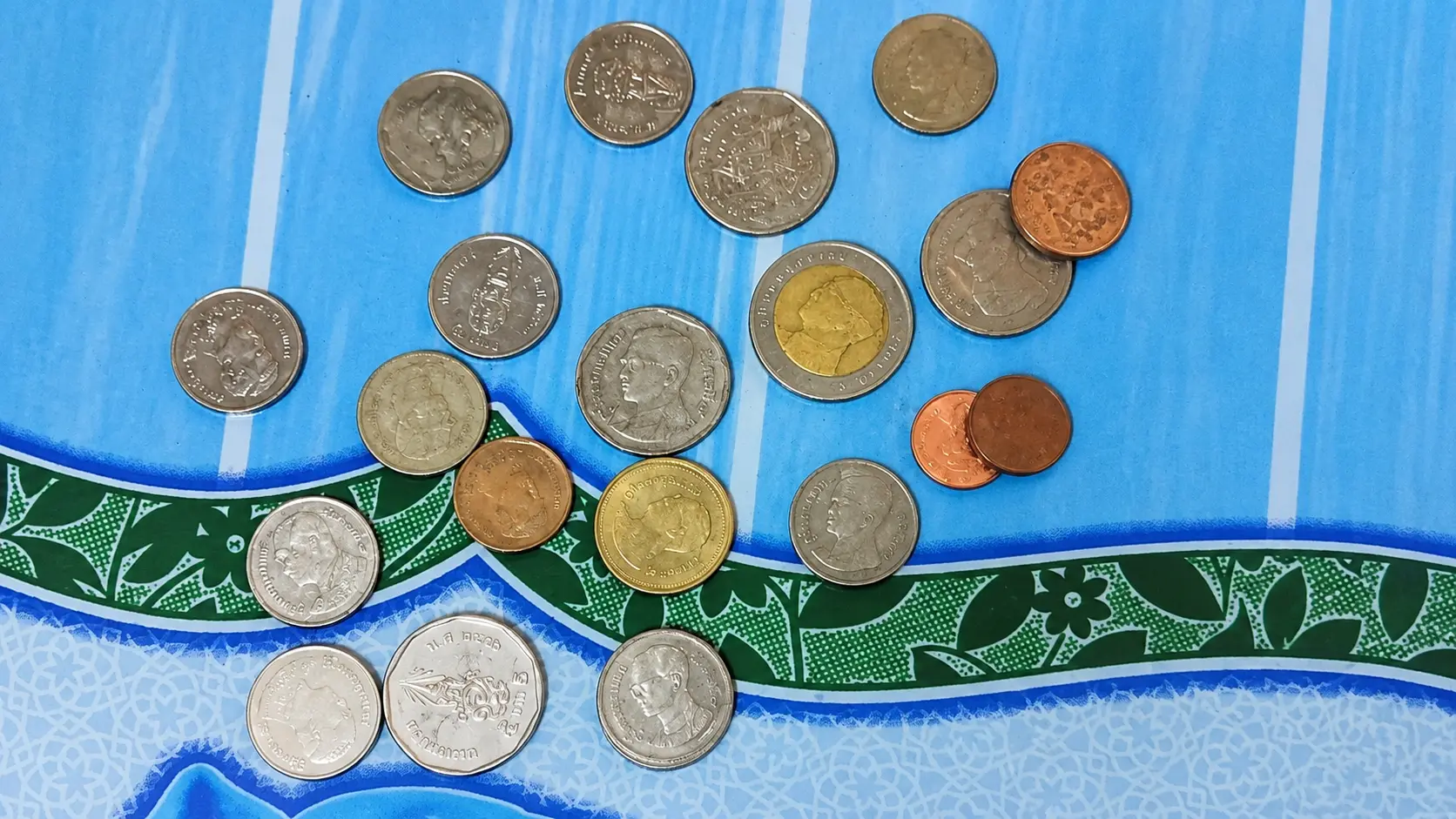
How to minimize ATM fees in Thailand
1. Withdraw larger amounts, less often
Because the local fee is flat, consolidating withdrawals is the biggest saving available to most visitors. Thai ATMs commonly allow around 20,000 to 30,000 THB per transaction, although the limit depends on the machine and your card. A 30,000 THB withdrawal with a 220 THB fee has an effective local-fee rate of about 0.73%.
Do not withdraw more cash than you can store safely. Split money between a secure hotel safe, a concealed wallet, and the amount you need for the day.
2. Use a card with low issuer-side fees
Compare your card’s international cash-withdrawal fee, foreign-exchange markup, monthly allowance, and out-of-hours conversion rules. Wise and Revolut can be competitive, but both use country- and plan-specific pricing. A domestic bank card that refunds overseas ATM fees may be cheaper still. Check the current terms for your exact account rather than relying on a generic comparison.
3. Use bank-attached ATMs
Choose a machine attached to an open bank branch when possible. If the ATM retains your card or a withdrawal fails, staff may be able to help. Bank-attached machines are also preferable to isolated machines in nightlife or heavily touristed areas.
4. Carry a backup card
Bring a second card on a different network and store it separately. A declined card is not evidence that every ATM in Thailand will reject it; try a machine from another major bank before contacting your issuer.
5. Plan data access before you land
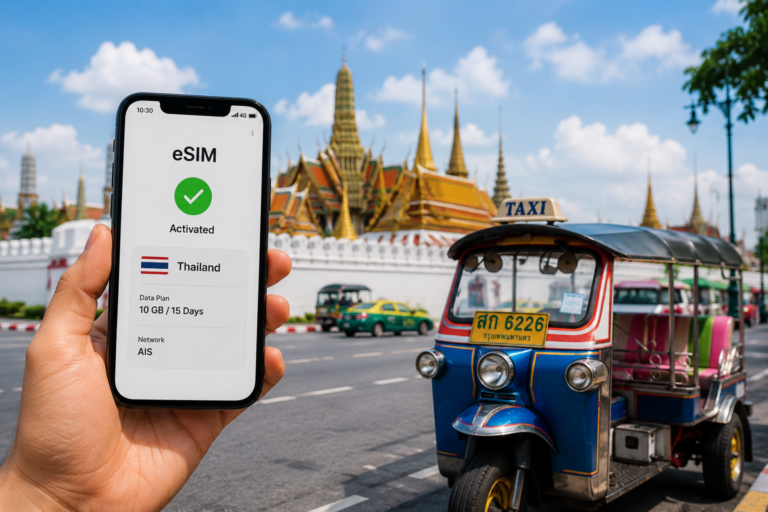
Mobile data helps you check balances, freeze a card, or contact support immediately after a failed withdrawal. Our guide to the best eSIM for Thailand compares the main options before you travel.
What is the best ATM in Thailand for tourists?
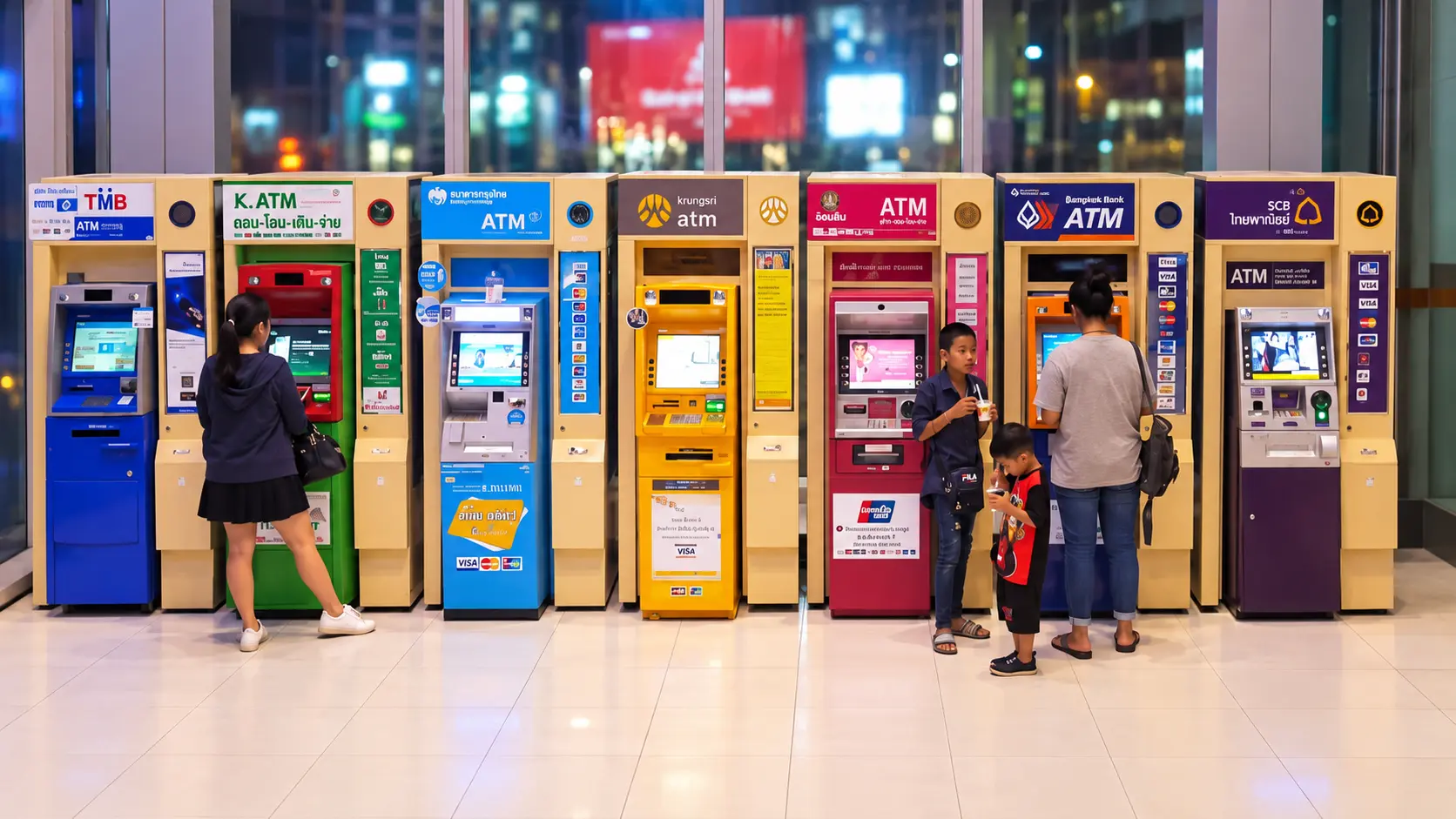
The best ATM in Thailand is usually a bank-attached machine from a major Thai bank that accepts your card, shows the standard fee clearly, and offers the highest withdrawal limit for that transaction. Bangkok Bank, Krungsri, Kasikornbank, Krungthai, and Siam Commercial Bank are widely available.
| Thai bank | What tourists should know | Our practical verdict |
|---|---|---|
| Bangkok Bank | Large branch and ATM network. There is no reliable current evidence that its standard foreign-card fee is consistently below other major banks. | Good first choice when attached to an open branch; confirm fee and limit on screen. |
| Krungsri | Often selected by travelers seeking a higher per-transaction limit, but the amount still depends on card and machine. | Worth trying when you want one larger withdrawal. |
| Kasikornbank | Very common in cities and tourist destinations. | Convenient backup; compare the displayed limit. |
| Krungthai | Broad national coverage, including many transport and commercial areas. | Useful outside the main tourist hubs. |
| Siam Commercial Bank | Common in malls and urban areas. | Convenient, but not reliably cheaper. |
Do not walk across a city looking for a supposed “free” ATM. A higher withdrawal limit is normally more valuable than a bank logo because it lets you spread the flat fee across more cash.

How much cash should you carry in Thailand?
Carry enough for small food stalls, local transport, markets, tips, and places that do not accept cards, but avoid carrying your entire trip budget. For many travelers, a practical daily amount is 1,500 to 3,000 THB outside prepaid hotels and major tours. Your real number depends heavily on destination and travel style.
Bangkok, Phuket, and Chiang Mai have widespread card acceptance in hotels, malls, and larger restaurants. Cash becomes more important at night markets, small guesthouses, rural stops, and local transport. Season and destination also change your total budget, so compare our best time to visit Thailand guide and our cost comparison of Thailand vs the Philippines.
Airport ATM strategy
Airport ATMs are useful when you need immediate cash for transport, but the same flat-fee logic applies. If the machine offers a normal limit and shows the expected fee, one larger withdrawal can be reasonable. If you prefer to compare machines in town, withdraw only enough for your first day and use a bank-attached ATM later.
Whatever the location, reject home-currency conversion. The “guaranteed” EUR, GBP, or USD amount is a convenience offer, not a requirement.
Frequently asked questions
Is there a way to avoid ATM fees in Thailand?
Not reliably with a foreign card. Most Thai ATMs charge a local operator fee. You can minimize total cost by withdrawing larger amounts less often, declining dynamic currency conversion, and using a card with low or no issuer-side international withdrawal fees.
How much are ATM fees in Thailand?
The usual fee is 220 THB per withdrawal for a foreign card, plus any charge from your own bank. Some machines or card types may display 250 THB or more, so check the final fee before confirming.
Do all ATMs in Thailand charge the same fee?
No. The 220 THB charge is the common benchmark across major banks, but the displayed fee and withdrawal limit can vary by bank, machine, and card network.
Which is the best ATM in Thailand for foreign cards?
Start with a bank-attached ATM from Bangkok Bank or Krungsri and compare the offered limit. The best choice is the machine that accepts your card, shows the expected fee, and lets you withdraw enough to avoid several small transactions.
Does Wise avoid the 220 THB ATM fee?
No. The Thai ATM operator fee still applies. Wise may reduce your separate exchange and card-provider costs, depending on your country-specific allowance and pricing.
How much cash should I carry in Thailand?
For day-to-day spending, 1,500 to 3,000 THB is a practical range for many visitors, excluding prepaid accommodation and major activities. Carry less in cities where you use cards more often and more for markets, islands, or rural travel.
Final recommendation
Expect a 220 THB local fee, choose THB, decline the ATM’s conversion, and withdraw a sensible larger amount from a bank-attached machine. Pair that strategy with a low-fee travel card and a separate backup card. That will not make every withdrawal free, but it is the most reliable way to keep ATM fees in Thailand under control.
Methodology: Fees and limits were checked on 21 September 2026 against current provider guidance and recent Thailand ATM references. Because ATM fees can change without notice, we distinguish the Thai operator fee from card-issuer charges and treat the on-screen confirmation as definitive. Card recommendations are based on fee transparency and international-use features, not a guarantee of free withdrawals.