Yes, Vietnam is generally safe to visit in 2026. The United States and Australian governments both place Vietnam at their lowest travel-advice level: exercise normal safety precautions. Violent crime against foreign visitors is rare. The problems tourists are more likely to face are phone or bag snatching, pickpocketing, dishonest taxi or card transactions, traffic accidents and preventable health issues.
Vietnam is not risk-free, but it does not require unusual security measures for a normal tourist trip. Stay alert in busy cities, book transport through established companies, be conservative about motorbike riding and keep valuables away from the roadside. Those habits address most of the situations that cause visitors trouble.
Vietnam safety at a glance
| Risk | Risk level for tourists | What to do |
|---|---|---|
| Violent crime | Low | Use normal city precautions and avoid isolated places late at night |
| Pickpocketing and bag snatching | Moderate in tourist areas | Keep phones and bags away from passing motorcycles |
| Road traffic | Significant | Use reputable transport and avoid riding without experience and valid documents |
| Taxi and payment scams | Moderate | Book in an app, verify the vehicle and keep cards in sight |
| Food and water illness | Manageable | Choose busy vendors, drink sealed water and use basic hygiene |
| Natural hazards | Seasonal | Check forecasts during typhoon and flood periods |
Safety advice checked 28 September 2026. Government guidance can change, so review your own country’s travel advice before departure.
What official travel advice says about Vietnam
The current US advisory for Vietnam is Level 1: Exercise Normal Precautions. Australia uses the equivalent green level and gives the same overall recommendation. UK guidance says violent crime against foreigners is rare while petty theft and pickpocketing occur regularly in crowded and tourist areas.
That is the right way to frame the country. Vietnam is a normal tourism destination with some specific practical risks, not a place where visitors generally need to avoid traveling. The official guidance was checked in September 2026 through the US Department of State, Smartraveller and UK travel advice.
Is Vietnam safe for tourists?
Most tourists travel through Hanoi, Ninh Binh, Ha Long Bay, Hoi An, Da Nang, Ho Chi Minh City and the Mekong Delta without a serious incident. Tourism infrastructure is well developed, transport can be booked online and accommodation staff are accustomed to helping international visitors.
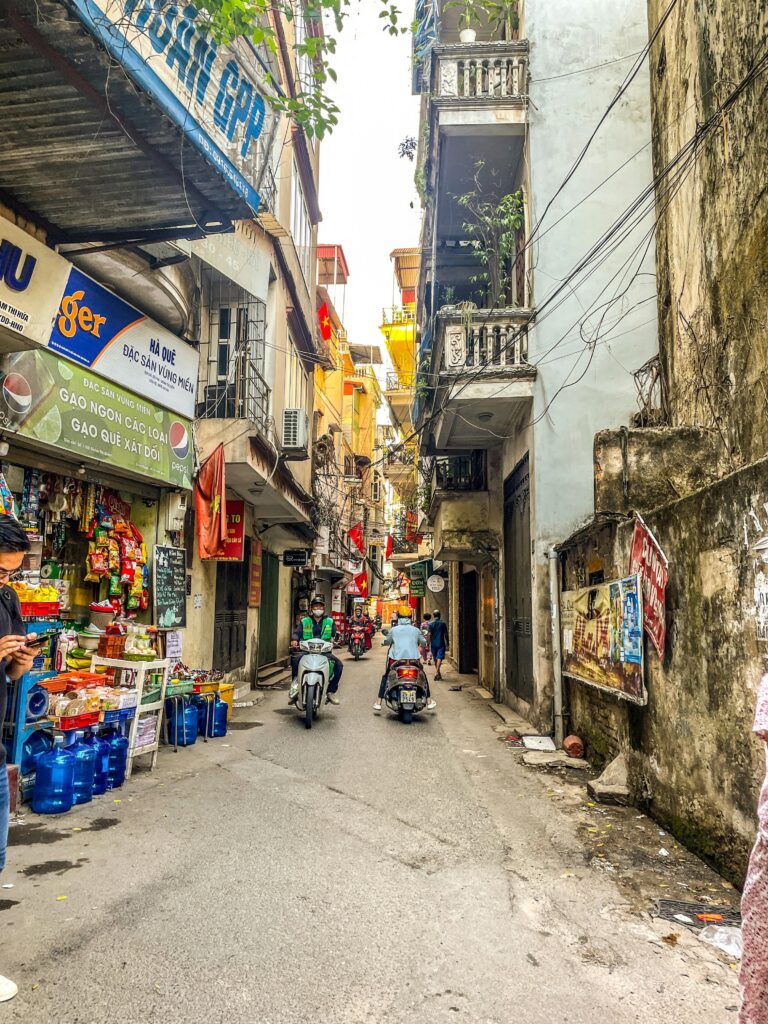
The feeling of chaos in a Vietnamese city can be stronger than the actual crime risk. Dense motorcycle traffic, busy pavements and unfamiliar street layouts make the first day intense. Once you understand how to cross roads, protect a phone and arrange a licensed taxi, the country becomes much easier.
The safest approach is simple: use Grab or another reputable service booked inside the app, keep your passport in secured accommodation, carry only the cash you need and do not display a phone near moving traffic. If someone grabs property from a motorcycle, let it go rather than risking injury.
Petty crime and bag snatching
Pickpocketing, phone snatching and bag theft are the most relevant crime risks for visitors. They are more common around markets, nightlife streets, transport hubs and crowded tourist attractions. Thieves on motorcycles may take a phone or shoulder bag from a pedestrian and disappear into traffic.
- Use your phone away from the curb and hold it with both hands when checking directions.
- Carry a cross-body bag with the opening facing your body.
- Walk with the bag on the side away from traffic.
- Do not hang a bag on the back of a café chair.
- Keep your passport and backup bank card in a hotel safe or another secure place.
- Take photo and digital copies of your passport and insurance details.
- On sleeper buses and trains, keep your phone and wallet attached to you rather than loose beside the bed.
There is no need to carry an anti-theft backpack everywhere. Awareness matters more than specialist equipment. The most common mistake is standing next to the road while holding a phone loosely in one hand.
Common scams in Vietnam
Taxi and rideshare impersonation
A person may claim to be your Grab driver or offer a cheap ride outside an airport or station. Book the full trip inside the official app and compare the number plate, vehicle and driver with the details shown before getting in. Do not follow someone simply because they know the name of a rideshare company.
Card skimming and incorrect charges
Keep your card in sight, cover the keypad when entering a PIN and check the amount on the terminal before approving it. For small street purchases, cash or a trusted mobile payment method can be simpler. Check your banking app periodically rather than waiting until the trip ends.
Currency confusion
Vietnamese banknotes contain large numbers and some denominations have similar colors. Count change without rushing. Confirm the price before accepting a service and type it into a calculator if communication is unclear.
Motorbike rental disputes
Photograph the vehicle from every side before leaving and agree on fuel, return time and damage rules. Never leave your passport as security. A cash deposit or another agreed method is safer, but the best decision is not to rent at all unless you are properly licensed, insured and experienced.
Overfriendly gambling invitations
Be cautious if a new acquaintance quickly invites you to a private home for cards or gambling. Rigged games and confidence tricks can lead to large financial losses. Decline and leave before money becomes involved.
Is Vietnam safe for solo travelers?

Vietnam is one of the easier countries in Southeast Asia for solo travel. There is frequent transport, a broad range of hostels and guesthouses, affordable app-based taxis and a well-established tourist route. A solo traveler can move between major destinations without arranging a private guide.
The main solo-travel disadvantage is that no companion will notice a bad decision or watch your belongings. Share your itinerary with someone you trust, send accommodation details, keep a charged phone and avoid arriving alone at an unfamiliar rural stop very late at night.
When booking a long-distance trip, check the exact pickup and drop-off points. “Hanoi” or “Sapa” can refer to an operator office rather than a central station. Our guide to getting from Hanoi to Sapa explains how this works on one of the country’s most popular overnight routes.
Is Vietnam safe for solo female travelers?
Many women travel alone in Vietnam without problems, and the overall risk of violent crime remains low. However, official UK guidance records reports of harassment, inappropriate touching, drink spiking and sexual assault, including incidents linked to unlicensed taxi drivers.
- Use a licensed taxi booked by an accommodation or through an app.
- Verify the vehicle and driver before entering.
- Buy your own drink and keep it in sight.
- Do not accept open drinks, snacks or gum from strangers.
- Share a ride or live location with someone you trust at night.
- Choose busy, well-lit streets and reputable accommodation with recent reviews.
- If a situation feels wrong, leave without worrying about appearing rude.
These precautions are not unique to Vietnam, but the taxi and drink-safety points deserve explicit attention. A well-reviewed hostel or small hotel can also be useful for finding companions for evening activities and transport.
Road safety and crossing the street
Traffic is the largest everyday safety concern for many visitors. Road rules may be applied differently from what you expect, motorcycles can approach from several directions and pavements are not always clear for pedestrians. Long-distance night buses also introduce risks from tired drivers and variable vehicle maintenance.
How to cross a road in Vietnam
- Choose a visible crossing point rather than stepping out between parked vehicles.
- Wait for the traffic pattern to become manageable.
- Walk at a steady, predictable pace.
- Keep looking in both directions, including for motorcycles using the edge of the road.
- Do not suddenly run, stop or step backward unless necessary.
- Follow local pedestrians when possible, but still make your own safety decision.
On larger roads, use traffic lights or pedestrian bridges when available. Never assume a green pedestrian signal means every vehicle has stopped.
Should tourists ride a motorbike in Vietnam?
Only if they have suitable experience, valid licensing accepted in Vietnam and insurance that explicitly covers the vehicle and engine size. Motorbike accidents involving foreign visitors are common enough for multiple governments to emphasize the risk. A helmet is legally required, and a cheap decorative helmet is not adequate protection.
If you are learning from scratch, Vietnam’s busy roads are the wrong classroom. Use Grab, a car transfer, train or reputable bus instead. Check whether an overnight bus is necessary; a daytime departure or train can be a better choice when road conditions or weather are poor.
Are trains, buses and boats safe in Vietnam?
Trains are generally a practical way to avoid highway traffic, although petty theft is possible when passengers sleep. Keep valuables secured and use the provided lock where a compartment has one.
Bus quality varies widely. Choose an established operator, wear a seat belt when one is provided and avoid a company with a pattern of recent safety complaints. Night coaches are convenient, but government advice specifically warns that crashes are more likely at night.
For boat trips, especially overnight cruises, check the operator’s recent reviews, vessel registration and safety briefing. Locate the life jacket before departure. Weather can alter or cancel itineraries, and a cancellation for safety reasons should be taken seriously.
Food, water and health safety
Street food is not automatically unsafe. Busy stalls with high turnover and food cooked thoroughly in front of you can be excellent choices. Be more cautious with food that has been sitting at room temperature, raw shellfish, unpeeled fruit washed in uncertain water and ice from an unclear source.
Drink sealed bottled water or properly treated water. Wash or sanitize your hands before eating. Carry oral rehydration salts and know how to contact your insurer if symptoms are severe or persistent.
The US Centers for Disease Control and Prevention maintains current health guidance for Vietnam, including vaccination and mosquito-borne disease information. Health needs differ by itinerary, season and personal medical history, so discuss vaccines or preventive medicine with a qualified clinician before travel.
Dengue is a relevant mosquito-borne risk in Vietnam. Use repellent, wear suitable clothing and choose accommodation with screens or air conditioning where possible. Malaria advice depends strongly on the area: the risk is not the same in major cities and remote rural regions.
Alcohol and nightlife safety
Use the same precautions you would in any unfamiliar nightlife area. Do not leave a drink unattended, avoid becoming separated from friends and arrange the ride home before you are tired or intoxicated.
Official UK guidance warns about methanol poisoning in Vietnam. Methanol cannot be identified reliably by taste or smell. Avoid unlabelled spirits, homemade alcohol and suspiciously cheap mixed drinks. Seek urgent medical help if someone develops severe headache, vomiting, confusion, breathing problems or visual disturbance after drinking.
Weather, typhoons and flooding
Vietnam’s long north–south geography means weather varies significantly by region. Tropical storms, heavy rain, flooding and landslides can disrupt transport. Mountain roads and coastal boat trips are particularly sensitive to severe weather.
Check the forecast and local advice before an overnight bus, trek or cruise. Do not walk or ride through floodwater, and do not pressure an operator to depart after authorities or crews decide conditions are unsafe. Build flexibility into the itinerary during wet-season travel.
Local laws tourists should know
Vietnam has strict drug laws and severe penalties. Do not carry, buy or use illegal drugs. Be cautious with prescription medication: keep it in original packaging and check the rules before bringing controlled medicines.
Avoid photographing military sites, security facilities or anything clearly marked as restricted. Do not join demonstrations. Political speech and online activity may be treated differently from your home country.
Same-sex relationships are legal, although social attitudes can be more conservative in rural areas and same-sex partnerships do not have the same legal recognition as in some countries. Public affection is generally restrained across Vietnamese society, regardless of orientation.
Emergency numbers in Vietnam
| Service | Number |
|---|---|
| Police | 113 |
| Fire and rescue | 114 |
| Ambulance | 115 |
Save the number for your travel insurer and your country’s embassy or consulate before the trip. Ambulance capabilities can be limited outside major cities. In a serious situation, contact the nearest suitable hospital and your insurer as quickly as possible.
Practical Vietnam safety checklist
- Buy travel insurance that covers your activities and motorbike use if applicable.
- Save offline copies of your passport, visa, insurance and accommodation addresses.
- Keep your phone away from the curb and motorcycles.
- Use app-booked or hotel-arranged transport.
- Carry a backup card separately from your main wallet.
- Check the amount before approving card payments.
- Choose daytime transport when road or weather conditions are poor.
- Use mosquito repellent and drink sealed or treated water.
- Monitor official weather and travel advice.
- Know 113, 114 and 115.
For realistic planning beyond safety, see how much a trip to Vietnam costs. A sensible budget should include insurance, app-based transport when needed and a small emergency reserve rather than focusing only on the cheapest daily total.
FAQ
Is Vietnam safe to visit right now?
Yes. As of 28 September 2026, both the US and Australian governments advise travelers to exercise normal safety precautions in Vietnam. Check the guidance again before departure because conditions can change.
Is Vietnam safe for American tourists?
Yes. The US Department of State places Vietnam at Level 1, its lowest advisory level. Petty crime and road safety are more relevant concerns than targeted violence against American visitors.
Is Vietnam safe for solo female travelers?
Vietnam is generally suitable for solo female travel. Use licensed app-booked transport, keep drinks in sight, stay in well-reviewed accommodation and take normal precautions when walking alone at night.
Which is safer, Hanoi or Ho Chi Minh City?
Both cities are broadly safe for tourists. The practical risks are similar: dense traffic, phone or bag snatching, pickpocketing and taxi scams. Your neighborhood, transport choices and behavior matter more than choosing one city over the other.
Is street food safe in Vietnam?
It can be. Choose busy vendors with high turnover, food cooked thoroughly in front of you and clean-looking preparation areas. Avoid items that have been sitting unrefrigerated and drink sealed or treated water.
Is it safe to take night buses in Vietnam?
Night buses are widely used, but official guidance notes that coach crashes are more likely at night. Choose an established operator, use a seat belt if provided and consider a train or daytime service when practical.
Is it safe to rent a scooter in Vietnam?
Only for experienced riders with the correct legal licence and insurance coverage. Traffic conditions are challenging, and serious motorcycle accidents involving travelers occur. For most first-time visitors, app-based taxis and organised transport are safer.
What is the biggest danger in Vietnam?
For most tourists, road traffic presents a greater everyday risk than violent crime. Petty theft is also common enough to justify careful phone and bag habits, especially in crowded areas.
Methodology: official travel advisories and health information were checked on 28 September 2026. This guide is general travel information, not medical or legal advice.