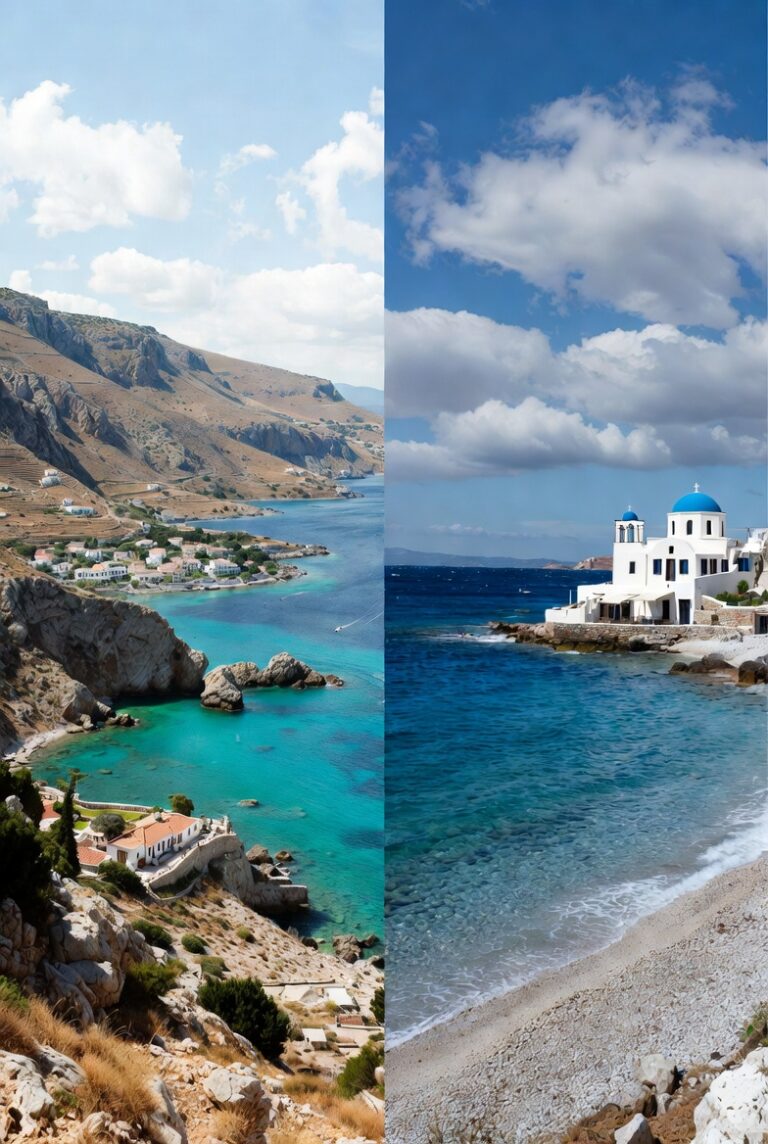
Koukaki is the best area to stay in Athens for most first-time visitors. It puts you within walking distance of the Acropolis and Plaka, but its café-lined residential streets feel calmer and more local than the busiest parts of the historic center. If airport access matters more than atmosphere, choose Syntagma instead; for nightlife, choose Psyrri or Monastiraki.
There is no single Athens neighborhood that suits every trip. A couple staying for four nights needs a different base from a family visiting for two days or a traveler catching an early ferry. This guide compares the eight areas that make the most sense for visitors, including their atmosphere, transport, noise and main drawback. Neighborhood and transport details checked on September 23, 2026.
Best areas to stay in Athens at a glance
| Area | Best for | Main advantage | Main drawback | Price level |
|---|---|---|---|---|
| Koukaki | First-time visitors, couples, families | Walkable, relaxed and close to the Acropolis | Popular properties sell out early | €€ |
| Plaka | Short stays and classic Athens atmosphere | Historic setting beside the main sights | Touristy and busy during the day | €€€ |
| Syntagma | Airport access and maximum convenience | Direct metro and airport bus connections | More traffic and less neighborhood character | €€€ |
| Monastiraki | Sightseeing and lively evenings | Central transport hub near the old city | Noise and heavy foot traffic | €€ |
| Psyrri | Food, bars and nightlife | Excellent evening atmosphere | Can be loud well after midnight | €€ |
| Kolonaki | Luxury, shopping and couples | Polished streets, museums and restaurants | Higher prices and uphill walking | €€€ |
| Pangrati | Longer stays and local life | Residential atmosphere and strong food scene | Less convenient for a one-night visit | €–€€ |
| Glyfada | Beaches and summer stays | Coastal setting and seaside restaurants | Far from the Acropolis and historic center | €€–€€€ |
The euro symbols compare the neighborhoods with one another, not fixed hotel prices. Athens room rates change sharply with season, weekday, property type and booking date. Compare current availability before choosing an area, especially from May to October.
Compare current Athens accommodation on Booking.com
Koukaki: the best area in Athens for most visitors
If I had to recommend one neighborhood without knowing anything else about your trip, I would choose Koukaki. It sits immediately south of the Acropolis, between the major archaeological sights and the wooded slopes of Philopappos Hill. You can walk to the Acropolis Museum, Plaka and Monastiraki, then return to streets where Athenians still use the cafés, bakeries and small restaurants.
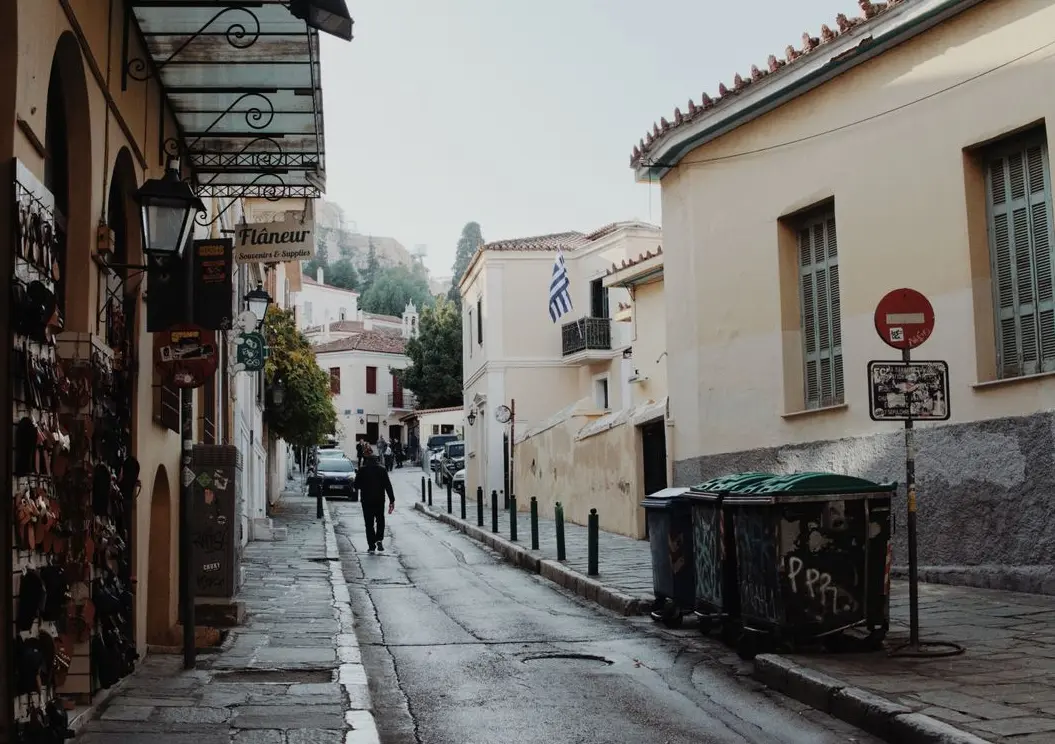
Koukaki works particularly well for a first stay of two to four days. Akropoli and Syngrou-Fix metro stations handle longer journeys, while the streets around Drakou and Olympiou offer plenty of places to eat. It is central without feeling like a transport interchange.
The compromise is popularity. Koukaki is no longer a secret, and well-reviewed accommodation can disappear early for summer dates. Some properties advertised as being in Koukaki also sit close to busy Syngrou Avenue, so check the exact pin and recent comments about traffic noise before booking.
Choose Koukaki if: you want the best balance of sightseeing, atmosphere and calmer nights.
Plaka: best for historic atmosphere and very short stays
Plaka is the Athens many travelers imagine before arrival: neoclassical houses, narrow lanes, bougainvillea, small churches and occasional Acropolis views. It begins below the Acropolis and reaches toward Monastiraki and Syntagma, placing you beside the city’s most important first-time sights.
For one or two nights, that location is hard to beat. You can reach the Acropolis before the largest crowds and return easily during the hottest part of the day. Plaka also suits families who choose a quieter side street.
The disadvantages are price and tourism. Day-trippers fill the main streets, souvenir shops dominate some sections, and restaurants directly on the busiest routes are not always the city’s best value. Upper Plaka and Anafiotika are beautiful but include steps and sloping lanes, which can be inconvenient with heavy luggage, a stroller or limited mobility.
Choose Plaka if: this is your first visit, you have limited time and staying inside the historic setting matters more than finding the lowest rate.
Syntagma: best for airport transport and convenience
Syntagma is the most practical base in central Athens. Metro Line 3 connects the airport with Syntagma, and the X95 airport bus terminates at the square and operates around the clock. From here, Plaka, the National Garden, Ermou Street, Monastiraki and Kolonaki are all within walking distance.
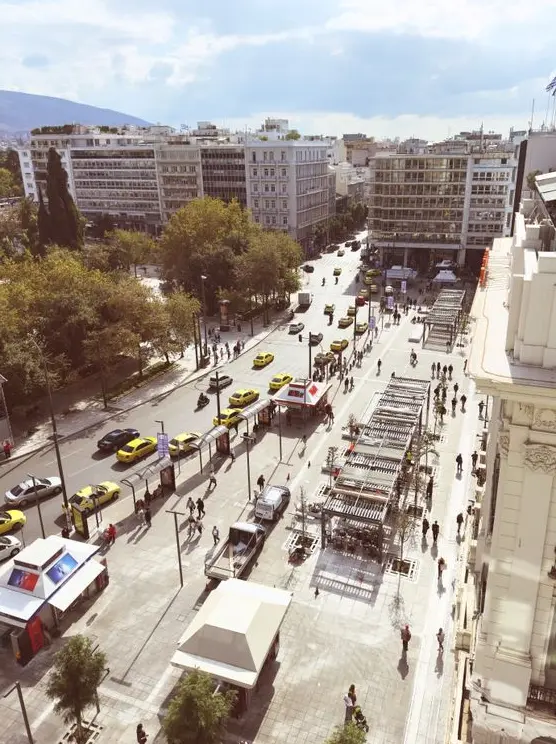
This makes Syntagma the best choice for a late arrival, early departure or short stop between a flight and an island itinerary. It also helps travelers who do not want to navigate small lanes with luggage. The area has accommodation across several categories, although addresses closest to the square and Parliament tend to command a premium.
Syntagma feels busier and more formal than Koukaki or Pangrati. Traffic is constant around the main roads; its strength is efficiency rather than intimacy.
Choose Syntagma if: transport convenience is your first priority or you are spending only one night in Athens.
Monastiraki: best for central sightseeing and energy
Monastiraki places you in the middle of the action. The Ancient Agora, Roman Agora, Plaka and Psyrri are nearby, rooftop bars face the Acropolis, and the metro connects directly with both Piraeus and the airport route. For travelers who want to walk almost everywhere and return late without crossing the city, it is extremely convenient.
That energy continues after dark. Around the square and Ermou Street, music and crowds can last late. Light sleepers should look for double glazing and read the newest noise comments, not just the overall score.
Monastiraki is also one of the places where travelers should watch bags and phones in dense crowds and on public transport. That does not make it a no-go area, but it makes street choice and normal city awareness important. Read our guide to safety in Athens and the areas where extra caution helps.
Choose Monastiraki if: you want a central, lively base and do not mind crowds or evening noise.
Psyrri: best for food and nightlife
Psyrri lies just north of Monastiraki and feels different by hour. During the day you will find workshops, street art, cafés and small shops. In the evening, restaurant tables spread into the lanes and bars remain active long after the archaeological sites close.
It suits couples, friends and repeat visitors who want dinner and nightlife outside the hotel door. The historic center remains walkable, with useful connections from Monastiraki station.
The exact street matters more here than the neighborhood name. One block can be animated and attractive while another feels scruffier or becomes loud at 1 a.m. Use the map, check recent guest photographs and avoid assuming that every address marketed as “historic center” has the same atmosphere.
Choose Psyrri if: restaurants, bars and late evenings are a major part of your trip. Skip it if uninterrupted sleep is non-negotiable.
Kolonaki: best for luxury, couples and polished city life
Kolonaki climbs the lower slopes of Lycabettus Hill northeast of Syntagma. It is known for boutiques, galleries, museums, smart cafés and a more polished residential atmosphere. The Benaki Museum and Museum of Cycladic Art are nearby, and central streets feel calmer than the entertainment lanes around Monastiraki.
The neighborhood works well for couples, luxury travelers and visitors interested in modern Athens. It is convenient for Syntagma, but the walk home may be uphill. Travelers with limited mobility should check the gradient and distance from Evangelismos or Syntagma metro.
Kolonaki usually costs more than Pangrati or outer Koukaki. You are paying for a refined location rather than the shortest possible walk to the ancient sites.
Choose Kolonaki if: you prefer stylish restaurants, museums and quieter evenings over a doorstep view of the old town.
Pangrati: best for a local feel and longer stays
Pangrati sits east of the National Garden and Panathenaic Stadium. It has become one of the strongest choices for travelers who want neighborhood cafés, bakeries, bars and restaurants without living inside the tourism core. Prices can be more reasonable than in Plaka, while the center remains accessible on foot or by bus.
This is a good base for stays of four days or longer, remote workers and repeat visitors. You gain everyday Athens and more space, but the nearest metro may require a walk. Check the route rather than relying on the broad neighborhood label.
Choose Pangrati if: you want a residential food-focused area and do not need every landmark within a ten-minute walk.
Glyfada: best for beaches, not first-time sightseeing
Glyfada belongs to the Athens Riviera, well south of the historic center. It offers seaside walks, beach access, shopping and restaurants that feel more like a coastal break than a classical city trip. In warm weather, this can be exactly the combination some travelers want.
It is not the best base for a first two-day visit focused on the Acropolis. Journeys into central Athens consume time. Glyfada makes more sense after a longer trip, for families prioritizing the coast or for repeat visitors.
Choose Glyfada if: the sea is part of the reason you are visiting and you accept a longer trip to ancient Athens.
Where should families stay in Athens?
Koukaki is the best all-round family choice: the Acropolis and museum are close, restaurants are casual, and residential blocks can offer larger apartments. Plaka suits a very short stay, but check for steps and daytime crowds.
Syntagma is useful with luggage or an early airport transfer. Pangrati offers more space for longer stays. Avoid a nightlife street in Psyrri; a few saved minutes are not worth noisy nights with children.
Where should solo travelers stay?
Koukaki and Syntagma are the simplest choices for a first solo trip, with straightforward routes and easy access to major sights. Monastiraki suits social hostels and nightlife, but crowded stations require more attention to belongings.
For a late arrival, check the exact street, recent reviews and reception hours. A bargain on an isolated side street may not beat a slightly more expensive room on a comfortable walking route.
Areas where I would choose the exact street carefully
Omonia and parts of Metaxourgeio often offer lower rates and central locations, but the experience changes quickly from block to block. Some travelers are comfortable there; others dislike the street environment, particularly after dark. I would not recommend booking blindly around either area for a first family or solo visit.
This is not a claim that the entire neighborhoods should be avoided. It is a reason to inspect the property pin, walk from the nearest station on Street View, read the most recent reviews and avoid judging an address only by its distance from the Acropolis. The same street-level check is useful around the edges of Psyrri and north of Monastiraki.
How to choose the right Athens neighborhood
- Count your usable days. If you have only one or two, pay more for Koukaki, Plaka, Syntagma or Monastiraki. Our Athens itinerary guide shows what realistically fits into each trip length.
- Check the exact pin. Neighborhood names are used loosely on accommodation platforms. Look at the walking route, not just the marketing label.
- Read the newest noise reviews. In Monastiraki and Psyrri, a room’s direction and windows can matter more than its star rating.
- Stay near the transport you will actually use. Airport passengers benefit from Line 3 or the X95 bus; island travelers should plan around the correct port.
- Do not choose on price alone. A cheaper outer room can cost time and taxi fares every day.
If Athens is the start of an island trip, compare the practical routes from Athens to Mykonos and Athens to Santorini. For a mainland journey, use our Athens to Thessaloniki comparison. Athens has multiple ports and stations, so the best area depends partly on where you go next.
How much does the area affect your Athens budget?
Plaka, Syntagma and Kolonaki usually command the strongest location premium. Koukaki sits in the middle, while Pangrati and less central residential areas can provide more space for the same money. Monastiraki and Psyrri cover a wide range, from hostel beds to design hotels, so the neighborhood average is less useful than checking your exact dates.
Compare the final price, not only the first nightly rate shown. Greece applies a climate resilience charge to accommodation, and the amount depends on property type, classification and season. It may be collected separately. For a wider estimate covering food, transport and accommodation, see how much a trip to Greece costs in 2026.
Check Athens properties and prices for your dates on Booking.com
Frequently asked questions
What is the best area to stay in Athens for first-time visitors?
Koukaki is the best overall choice because it is walkable to the Acropolis and Plaka but calmer than the busiest historic streets. Choose Plaka instead if atmosphere and maximum proximity matter most, or Syntagma if airport transport is the priority.
Is it better to stay in Plaka or Monastiraki?
Stay in Plaka for historic atmosphere, attractive lanes and slightly calmer evenings. Stay in Monastiraki for transport, nightlife and a busier city experience. Both are excellent for sightseeing, but light sleepers should be more selective around Monastiraki Square.
Is Koukaki a good area to stay in Athens?
Yes. Koukaki is central, close to the Acropolis Museum and served by Akropoli and Syngrou-Fix metro stations. It combines visitor convenience with residential cafés and restaurants, making it suitable for couples, families and solo travelers.
Should I stay near the Acropolis or Syntagma Square?
Stay near the Acropolis for atmosphere and walking access to ancient sights. Stay near Syntagma for the simplest airport connection, broader public transport and an easier arrival with luggage. The two areas are close enough that neither choice isolates you from central attractions.
What is the safest area to stay in Athens?
Plaka, Koukaki, Syntagma and Kolonaki are common, comfortable choices for visitors. No central district is free from petty theft, especially in crowds and on metro services, so recent property reviews and the exact street remain important.
Where should I stay in Athens without a car?
Koukaki, Plaka, Syntagma, Monastiraki and Psyrri all work well without a car. Central Athens is highly walkable, and the metro covers longer trips. A car is usually more of a burden than an advantage in the historic center because of traffic and parking.
What is the best area for one night in Athens?
Choose Syntagma for one night if you need a simple airport transfer. Choose Koukaki or Plaka if you have enough time for an evening walk and early sightseeing. If the next journey leaves from Piraeus, Monastiraki offers a useful direct metro connection.
Is Glyfada too far from central Athens?
Glyfada is too far for most short, first-time sightseeing trips. It is a good choice when beaches and the Riviera are the priority, but Koukaki or Syntagma will save significant travel time if the Acropolis and historic center are your focus.
Final verdict: where should you stay in Athens?
Book Koukaki for the best overall Athens experience. It combines easy sightseeing with a calmer neighborhood atmosphere and works for most couples, families and solo travelers. Choose Plaka for the most atmospheric short stay, Syntagma for transport, Monastiraki or Psyrri for nightlife, Kolonaki for an upscale city break, Pangrati for local life, and Glyfada for the coast.
Before booking, check the exact street and the newest reviews for noise. Then match the area to your real itinerary rather than choosing the neighborhood with the most famous name. If you want mobile data ready on arrival, compare our recommended eSIMs for Greece or check Airalo’s current Greece plans.
Once you have chosen where to stay, explore more of our Greece travel guides for routes, budgets and practical trip planning.