For a first visit, plan 3 full days in Athens. Two days are enough for the Acropolis, Plaka and the essential ancient sites, while 4 days give you a slower pace or room for a day trip. If Athens is only a stop before the islands, one well-planned day still works—but it will feel rushed.
This guide compares exactly what fits into 1, 2, 3 and 4 days, then gives you a practical itinerary for each option. Itinerary details checked on September 22, 2026.

How many days in Athens do you really need?
Three days is the sweet spot for most first-time visitors. It is long enough to see the Acropolis without racing, walk through the historic center, visit one or two major museums, experience modern neighborhoods and enjoy at least one evening at a relaxed Greek pace.
| Time | What fits | Verdict |
|---|---|---|
| 1 day | Acropolis, Plaka, key viewpoints | Possible but rushed |
| 2 days | Main ancient sites, museum, old town | Good for a short break |
| 3 days | Essentials plus neighborhoods and food | Best for most visitors |
| 4 days | Relaxed city time or a day trip | Ideal for deeper travel |
The right answer also depends on your arrival time. A “three-night stay” may provide only two usable sightseeing days if you land late and leave early. Count full days on the ground, not simply hotel nights.
Is one day in Athens enough?
One day is enough to understand why Athens is special, but not enough to explore it fully. It makes sense if you have a long stopover or are connecting to a ferry. Stay centrally, start early and accept that you will need to choose between depth and variety.
Athens in one day
- Morning: enter the Acropolis at opening time and see the Parthenon before the busiest part of the day.
- Late morning: walk through Anafiotika and Plaka.
- Afternoon: choose either the Acropolis Museum or the Ancient Agora. Trying to do both will make the day feel like a checklist.
- Evening: walk through Monastiraki and finish at a rooftop or viewpoint for sunset.
Wear supportive shoes, carry water and reserve timed attractions before arrival. In hot weather, schedule outdoor archaeological sites early and use the afternoon for a museum or long lunch.
Two days in Athens: the essentials
Two full days work well for a weekend city break or a short stop before Santorini or Mykonos. You can cover the core sights without sprinting, although there will be little time for a day trip.
Day 1: Acropolis, Plaka and the ancient center
Begin at the Acropolis, then continue to the Acropolis Museum. After lunch, wander through Plaka and Anafiotika, following the pedestrian streets toward the Roman Agora and Monastiraki. End around Monastiraki Square or climb a central viewpoint for sunset.
Day 2: Agora, Syntagma and modern Athens
Start at the Ancient Agora, where the site and museum give useful context to classical Athens. Continue through Psyrri to Syntagma Square. See the changing of the guard, then walk through the National Garden toward the Panathenaic Stadium. Spend the evening in Pangrati, Koukaki or Kolonaki rather than repeating the busiest tourist streets.

Three days in Athens: the ideal first visit
If you are asking how many days in Athens gives the best balance, choose three. The first two days follow the itinerary above. The third day adds the part many short visits miss: Athens as a living Mediterranean capital, not only an archaeological stop.
Day 3: museums, neighborhoods and a city view
Choose one major museum in the morning. The National Archaeological Museum suits travelers who want the broadest collection of ancient Greek art. The Benaki Museum is a good option for a wider timeline of Greek culture. Then explore a neighborhood at street level: Exarchia for contemporary city life, Kolonaki for cafés and shopping, or Pangrati for a more residential feel.
Later, walk to Lycabettus Hill or Philopappos Hill. Lycabettus offers the widest city panorama, while Philopappos gives a beautiful view back toward the Acropolis. Keep the evening unscheduled for a long dinner; Athens is at its best when you leave space between attractions.
Before choosing an evening area, read our practical guide to safety in Athens. The city is generally manageable for visitors, but knowing where pickpocketing is more common makes a short trip smoother.
Four days in Athens: go slower or take a day trip
A fourth day is valuable if you enjoy museums, want unhurried meals or dislike stacking major sights back to back. It also creates room for one of the easiest day trips from Athens.
Option 1: a relaxed fourth day in the city
Visit a museum you skipped, explore the Central Market, browse independent shops, or spend time along the Athens Riviera. In warm months, the coast is a refreshing contrast to the stone and traffic of the center. This option is especially good for families and travelers arriving after a long flight.
Option 2: Cape Sounion and the Temple of Poseidon
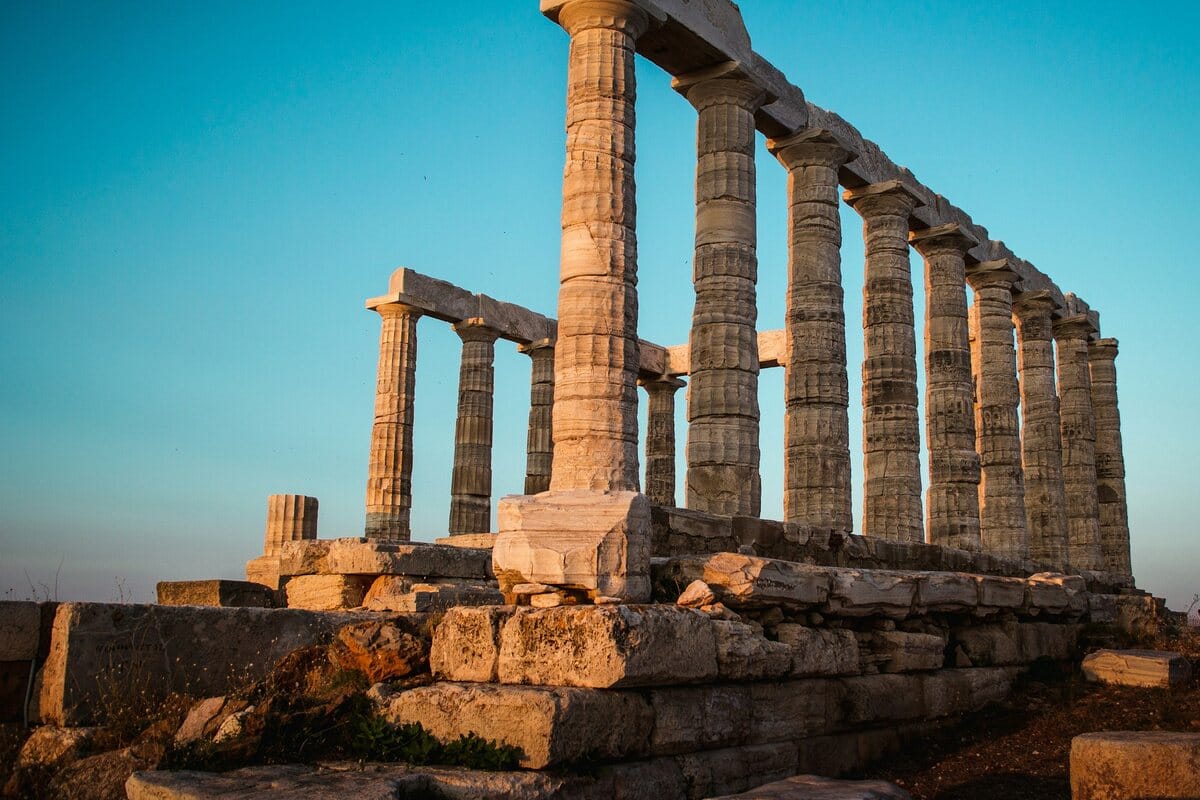
Cape Sounion is the easiest scenic addition. The Temple of Poseidon stands above the Aegean, and late afternoon departures can align the visit with sunset. Allow roughly half a day, more if you combine it with stops along the coast.
Option 3: Delphi or an island
Delphi is historically rewarding but requires a long day. A nearby Saronic island can be appealing in summer, although ferry schedules make it less flexible. If your trip already includes the Cyclades, save your island time for the main itinerary and use day four to enjoy Athens at a calmer pace.
How many nights should you stay in Athens?
For three complete sightseeing days, book four nights when possible. That protects your itinerary from flight times and gives you three evenings in the city. If you arrive before noon and depart late, three nights can still work.
- One full day: usually 2 nights.
- Two full days: usually 3 nights.
- Three full days: ideally 4 nights.
- Four full days: ideally 5 nights, especially with a day trip.
Staying near a metro station matters more than choosing the most famous street. To compare central accommodation, check Athens hotels on Booking.com. Plaka and Monastiraki maximize convenience; Koukaki is central with a more residential feel; Syntagma is useful for airport connections.
How to split Athens and the Greek islands
Do not reduce Athens to a single arrival night if this is your first trip to Greece. A sensible allocation is three days in Athens followed by three to five nights on one island. Every extra island adds transfer time, packing and the risk of transport disruption.
- 5-day Greece trip: 2 days Athens plus 3 days on one island.
- 7-day trip: 3 days Athens plus 4 days on one island.
- 10-day trip: 3 days Athens plus 6–7 days split between one or two islands.
- 14-day trip: 3–4 days Athens plus two islands or a mainland region.
For transfer planning, compare our guides to Athens to Santorini and Athens to Mykonos. They explain the practical differences between flying and taking the ferry.
When you may need more—or less—time
History lovers can easily use four or five days because Athens has far more than the Acropolis. Travelers focused on beaches and nightlife may prefer two days before moving to an island. Families often benefit from an extra day because heat, stairs and museum fatigue make a compressed schedule harder.
Season matters too. Summer heat can reduce how much you comfortably cover between midday and late afternoon. In spring and autumn, long walking days are easier. Winter offers fewer crowds and comfortable museum time, although daylight is shorter and some schedules may be reduced.
Time-saving tips for a short Athens trip
- Group sights geographically. The Acropolis, Acropolis Museum, Plaka and Monastiraki belong on the same day.
- Start outdoors early. This reduces both heat and queues.
- Choose museums before arrival. Two excellent museums are better than rushing through four.
- Use the metro selectively. Central Athens is highly walkable, but the metro saves energy on longer jumps.
- Keep the arrival day light. Plan a neighborhood walk and dinner rather than a timed major attraction.
- Leave margin before ferries. Athens has multiple ports, and travel time varies by traffic and departure point.
Estimate the full budget with our guide to how much a trip to Greece costs. For mobile data on arrival, compare the best eSIMs for Greece, or check Airalo’s Greece plans before departure.
Frequently asked questions
Are 2 days enough in Athens?
Yes. Two full days cover the Acropolis, Acropolis Museum or Ancient Agora, Plaka, Monastiraki and a few modern landmarks. You will need to prioritize, but it is a satisfying short visit.
Is 3 days too long in Athens?
No. Three days is ideal for most first-time visitors. It gives you two days for the historic core and one day for a museum, local neighborhoods, markets and viewpoints.
Is 4 days in Athens too much?
Four days is not too much if you like history or slower travel. It also allows a half-day trip to Cape Sounion or a longer excursion to Delphi without sacrificing the city’s main sights.
Can you see Athens in one day from a cruise?
You can see the highlights, but port transfers reduce your available time. Prioritize the Acropolis and one walk through Plaka or the Agora, then leave a conservative margin for the return journey.
Should I visit Athens before or after the islands?
Either direction works, but many travelers prefer Athens first so they can recover from the flight, explore the capital and then slow down on the islands. If you place Athens last, return at least one night before an international flight.
What is the best area to stay for a first visit?
Plaka, Monastiraki, Syntagma and Koukaki are the most convenient bases for a short first trip. Choose a property close to a metro station and check recent reviews for street noise.
How much cash do I need in Athens?
Cards are widely accepted, but a small amount of cash is useful for kiosks, small purchases and occasional transport needs. Do not carry your entire travel budget while sightseeing.
Final verdict: how many days in Athens?
Book 3 full days for your first trip to Athens. Choose 2 days if the city is part of a fast island itinerary, or 4 days if you want a relaxed pace and a day trip. One day is worthwhile when that is all you have, but it should be treated as a highlights tour—not a complete Athens experience.