Yes, Thailand is safe to visit for most travellers. The US rates it at Level 1, “Exercise normal precautions”, the lowest level, and millions of tourists visit every year without problems. The real risks are not violent crime but road accidents (especially on motorbikes), scams, drink spiking, strong sea currents and strict laws that surprise visitors. The only areas to avoid are the Cambodian border zone, where fighting broke out in 2025, and the deep south near Malaysia. Here is what you need to know before you go, based on the latest US, UK and Australian advice.
Thailand safety at a glance
| Overall | Safe for tourists; violent crime against visitors is rare |
| US advisory | Level 1, “Exercise normal precautions” (issued 7 July 2026), with Level 2 for the Cambodian border region and Yala, Pattani and Narathiwat |
| UK advice | Against all but essential travel within 20 km of the Cambodian border and to the far south (updated 12 October 2026) |
| Australia | “Exercise a high degree of caution” overall (updated October 2026) |
| Biggest risks | Road accidents, scams, drink spiking, rip currents |
| Areas to avoid | The Cambodian border zone; Yala, Pattani, Narathiwat and southern Songkhla |
| Emergency numbers | Tourist Police 1155 (English-speaking), police 191, ambulance 1669 |
Is it safe to travel to Thailand right now?
Yes. The main tourist areas, including Bangkok, Chiang Mai, Chiang Rai, Pai, Phuket, Krabi, Koh Samui, Koh Phangan, Koh Tao and Koh Lanta, are not affected by any travel warnings. What has changed since 2025 is the situation on the Cambodian border. A long-running border dispute turned into armed fighting in July 2025, and clashes, including rocket and artillery fire, broke out again in December 2025. Western governments responded with warnings for the border areas, not the whole country:
- United States: Level 1 overall, with Level 2, “Exercise increased caution”, for the Cambodian border region because of the risk of armed conflict and unexploded ordnance, and for Yala, Pattani and Narathiwat because of unrest.
- United Kingdom: advises against all but essential travel to areas within 20 km of the Cambodian border, and to Pattani, Yala, Narathiwat and the southern Songkhla districts of Chana, Thepa, Na Thawi and Saba Yoi.
- Australia: “exercise a high degree of caution” in Thailand overall, with higher levels for the border areas.
Some older articles say the US raised Thailand to Level 2 overall. That was during the 2025 border fighting; the advisory issued on 7 July 2026 is back at Level 1.
Where to avoid in Thailand
The Cambodian border. The land border crossings with Cambodia remain suspended, temples on the border such as Preah Vihear (Khao Phra Wihan) are closed, and there are landmines and unexploded ordnance in the area. Thai authorities can set up security zones at short notice. This mainly affects the provinces of Sa Kaeo, Buriram, Surin, Sisaket, Ubon Ratchathani, Chanthaburi and Trat near the frontier; the islands off Trat, such as Koh Chang and Koh Kood, are not in the warning zones, but check current advice before travelling in the area. If you want to visit Angkor Wat, fly: see Bangkok to Siem Reap and our guide to whether Cambodia is safe.
The deep south. Yala, Pattani and Narathiwat, and parts of Songkhla, have had a low-level insurgency for two decades, with regular bombings and shootings. Few tourists go there. The UK also advises against using the Hat Yai to Padang Besar railway through these areas. Hat Yai itself is outside the warning zone, but many travel insurance policies will not cover you in areas your government advises against.
Road safety: the biggest risk in Thailand
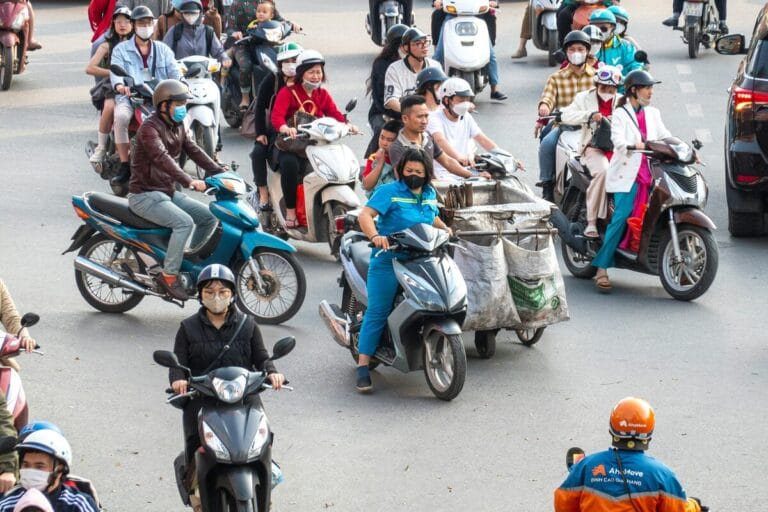
Thailand’s roads are far more dangerous than its streets. It has one of the highest road death rates in the world, and the World Health Organization ranks it among the deadliest countries for motorcyclists. Most tourist injuries and deaths happen on rented scooters, especially on islands such as Phuket, Koh Samui, Koh Phangan and Koh Tao, where roads are steep and drivers are often inexperienced.
- Do not ride a motorbike unless you are licensed to ride one at home and carry an International Driving Permit that covers motorcycles. Without them, you are breaking Thai law and your travel insurance will usually refuse any claim.
- Always wear a helmet. It is a legal requirement for riders and passengers, and police fine tourists who do not.
- Leave your passport with no one. Rental shops sometimes ask to keep it as a deposit; offer a cash deposit or a copy instead.
- Use Grab or Bolt for cars and taxis, which gives you a fixed price and a record of the driver.
- Book long-distance buses and minivans with reputable operators, or take the train or a domestic flight; minivan drivers on tourist routes are often criticised for speeding.
Crime and scams in Thailand
Violent crime against tourists is rare. The crimes you are most likely to meet are petty theft and scams, mostly in Bangkok, Pattaya and Phuket:
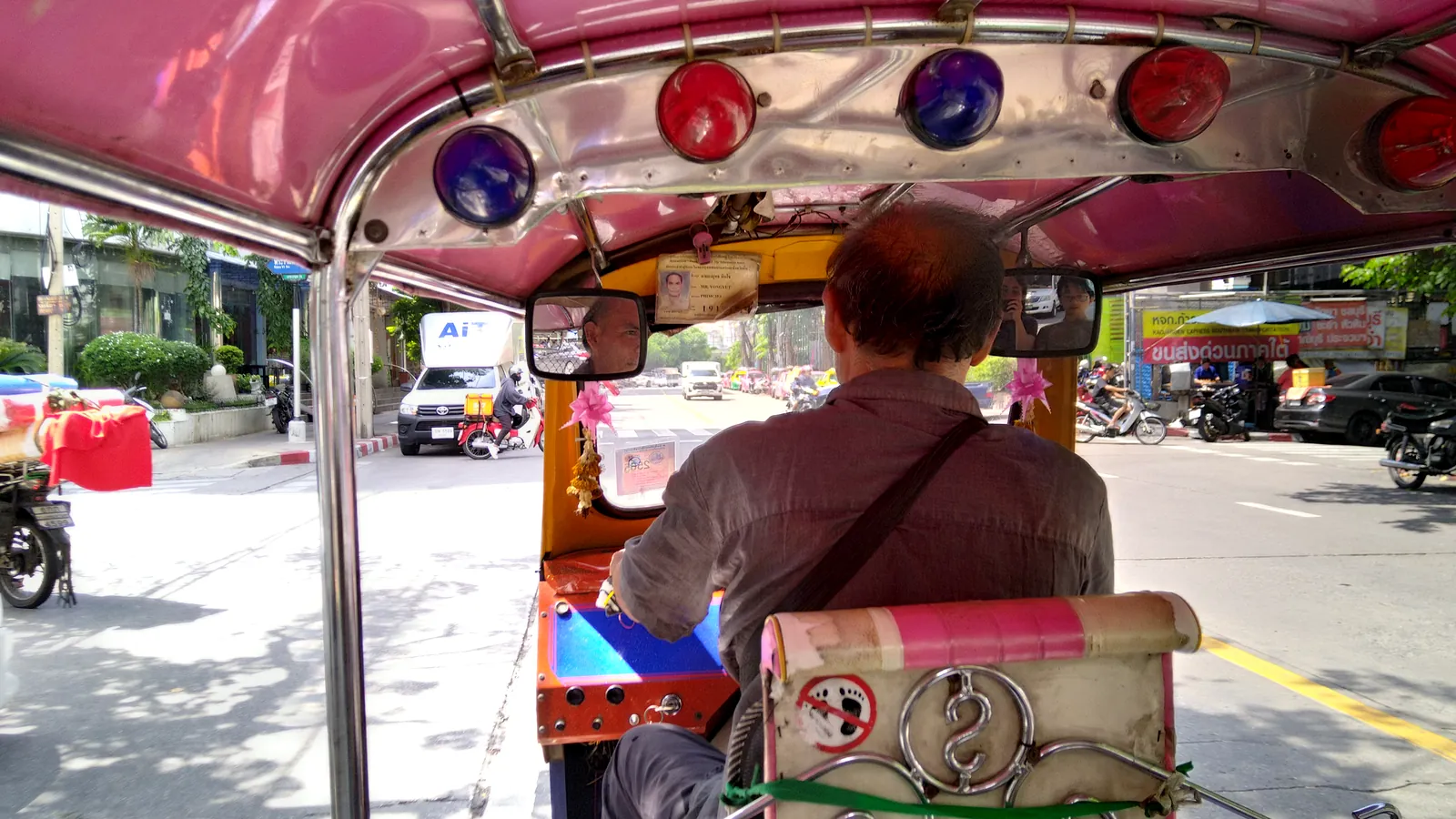
- “The Grand Palace is closed today.” A friendly stranger tells you a sight is closed and offers a cheap tuk-tuk tour instead, which ends at a gem or tailor shop. Check opening times at the official entrance.
- Gem scams. You are told about a one-day government sale or tax-free export deal. The stones are worth a fraction of what you pay.
- Taxi meters. Some taxi drivers refuse to use the meter. Insist on the meter or use Grab or Bolt.
- Jet ski and scooter damage claims. Rental operators demand money for old scratches. Photograph and film the vehicle before you take it.
- Bag snatching by thieves on motorbikes. Carry your bag on the side away from the road.
- ATM skimming and card fraud. Use ATMs inside banks or shopping centres; our guide to ATM fees in Thailand explains which ones to use.
- Fake job offers. The UK warns of online job adverts that traffic people into scam centres in neighbouring countries. Be wary of any job offer that involves crossing a border.
Drink spiking and methanol poisoning
Drink spiking happens in tourist areas, including at Full Moon parties, on Khao San Road and in some Pattaya and Phuket bars, and is sometimes linked to robbery or sexual assault. Do not leave drinks unattended or accept drinks from strangers, and arrange your transport back before a night out. Avoid cheap buckets and homemade spirits: methanol poisoning from illegally produced alcohol has killed tourists in the region.
Beach and sea safety
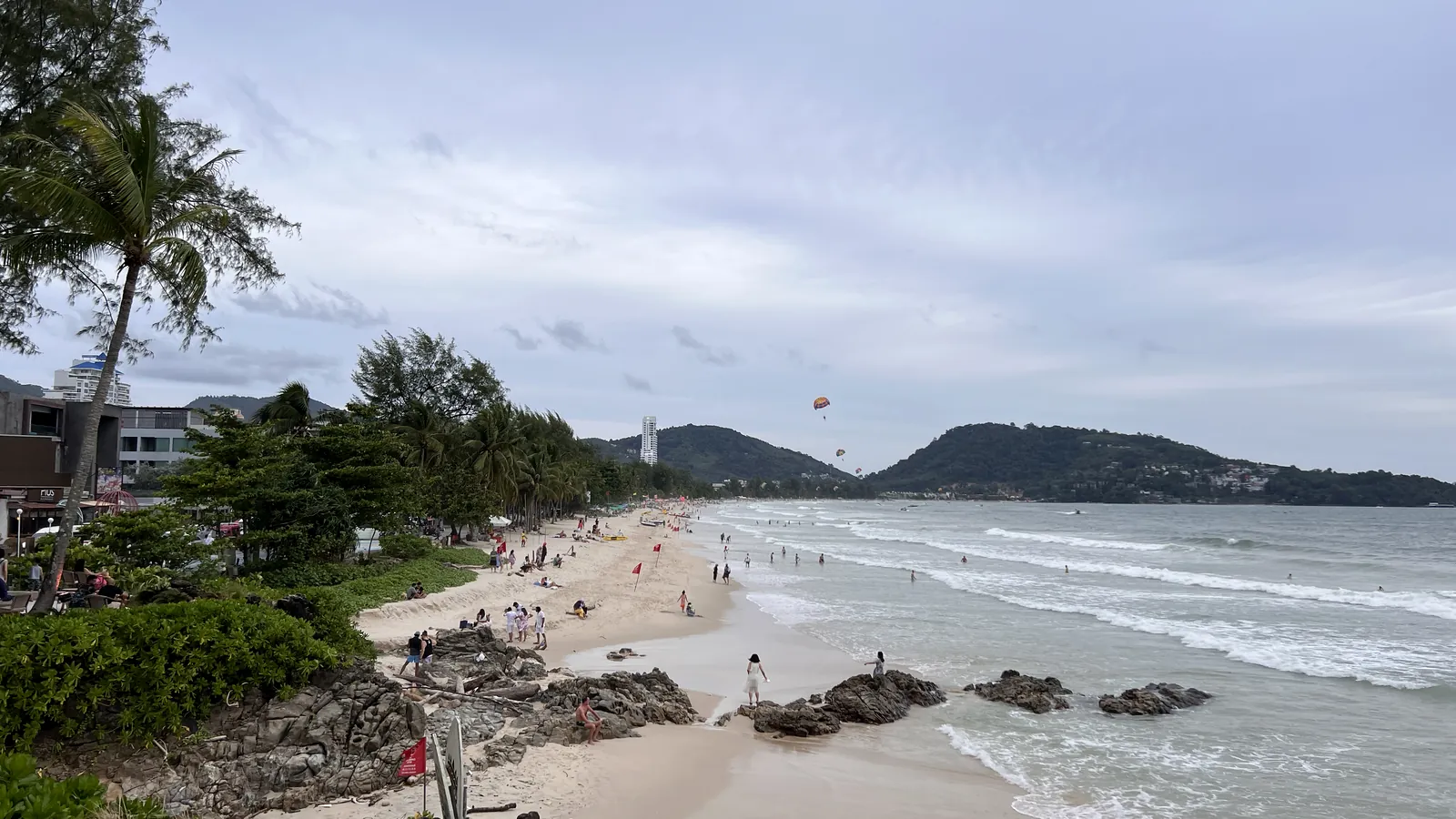
People drown in rip currents in Thailand every year, especially on the Andaman coast (Phuket, Khao Lak and Krabi) during the southwest monsoon from about May to October, when waves are bigger. Thai beaches use a flag system: a red flag means it is not safe to swim. Many beaches have no lifeguards. Jellyfish, including dangerous box jellyfish, are also a risk, particularly from May to October; some beaches have vinegar stations for stings. Before booking boat trips, check that the boat carries life jackets and do not go out in bad weather. See the best time to visit Thailand for sea conditions by region.
Laws that can get tourists into trouble
- Insulting the monarchy is a serious crime (see the 112 rule below).
- Vapes and e-cigarettes are illegal to bring in, buy or use, and fines can be heavy.
- Cannabis is restricted to medical use with a Thai prescription since 25 June 2025; recreational use is not allowed, and taking it out of the country is a crime.
- Drugs carry very long prison sentences, and possession of large quantities can bring the death penalty.
- Carry your passport or a copy. Police can ask for identification.
- New deportation rules introduced on 28 August 2026 allow foreigners to be removed from Thailand for breaking rules, even without a criminal conviction.
- Littering and smoking on some beaches, including many in Phuket, can bring large fines.
What is the 112 rule in Thailand?
The “112 rule” refers to Section 112 of Thailand’s Criminal Code, the lèse-majesté law. It makes it a crime to defame, insult or threaten the King, the Queen, the heir-apparent or the regent, with a prison sentence of three to fifteen years for each offence. It is interpreted broadly and covers social media posts and shares, and foreigners have been charged under it. In practice: do not criticise or joke about the royal family, in public or online; do not damage or step on banknotes or coins, which carry the King’s image; and show respect to royal portraits.
What happens at 8am and 6pm in Thailand?
The Thai national anthem is played at 8am and 6pm every day on radio and television and over loudspeakers in public places such as parks, train stations and some markets. People stop and stand still until it finishes, which takes about a minute. Visitors are expected to do the same. In cinemas, everyone stands for the royal anthem before the film starts.
Can I wear red in Thailand?
Yes. Red clothing is perfectly normal in Thailand. Colours have had political meanings in the past, during protests by the “red shirts” and “yellow shirts”, so it is wise to avoid political demonstrations and not to wear one colour in a way that looks like a political statement near a rally. Black is worn for mourning, but you do not need to avoid it either.
Can females wear shorts in Thailand?
Yes, on the street, at the beach and in most places. The exception is temples and royal sites. At the Grand Palace, Wat Pho, Wat Arun and other temples, men and women must cover their shoulders and knees, so shorts, short skirts and sleeveless tops are not allowed. Carry a sarong or light trousers. Away from the beach, swimwear and going topless are considered disrespectful.
Is Bangkok safe for female tourists?
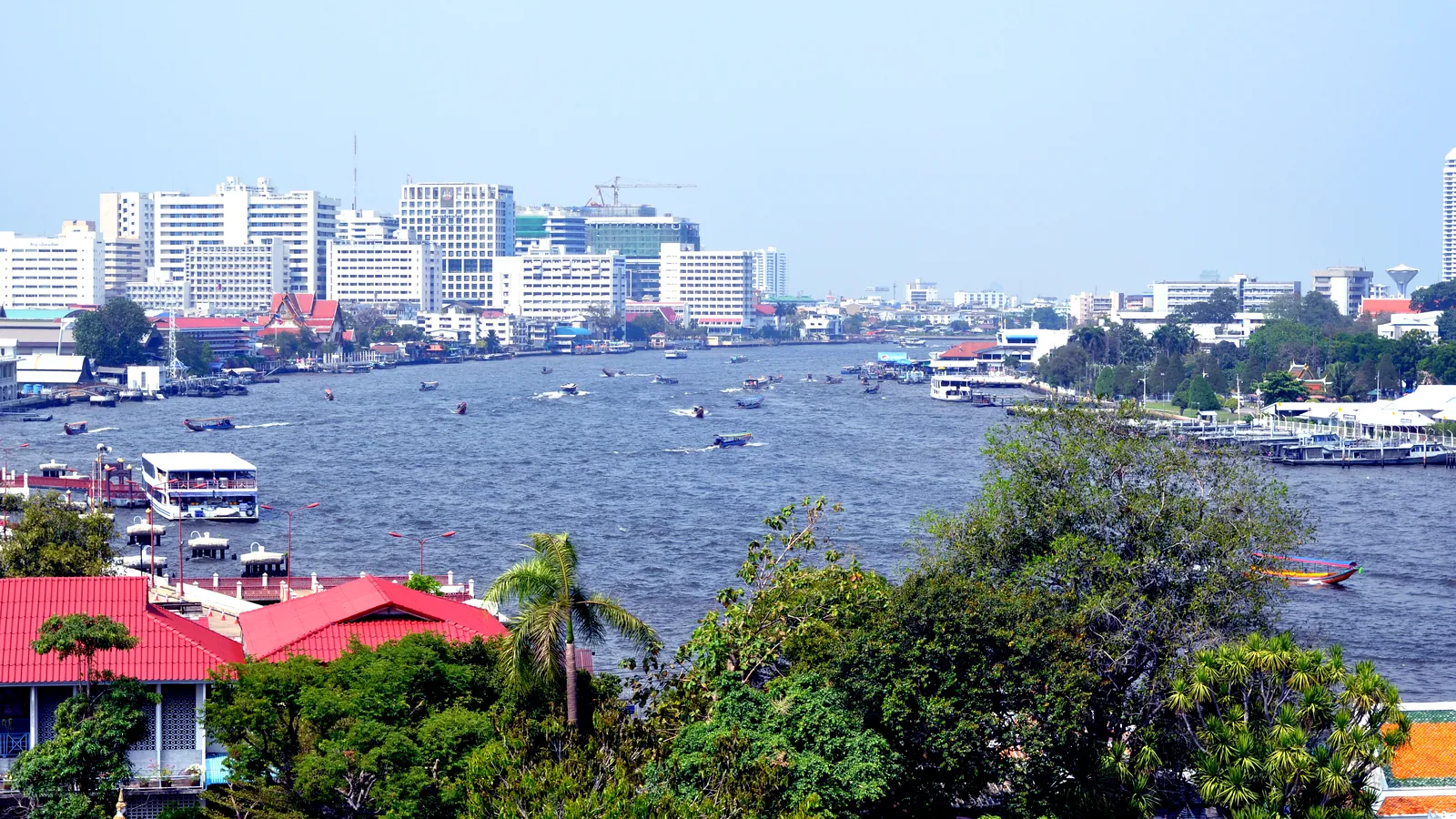
Yes. Bangkok is one of the most visited cities in the world and is generally safe for women travelling alone, including at night in busy areas. The precautions are the same as in any big city: use Grab or Bolt rather than unmetered taxis late at night, choose well-reviewed accommodation (many hostels have female-only dorms), watch your drink, and avoid empty streets and parks late at night. Our guides to solo travel in Thailand and the safest countries for solo female travelers have more tips.
Is Phuket safe?
Yes, but it has more of Thailand’s typical tourist risks than most places: scooter accidents on steep roads, rip currents in the monsoon season, jet ski scams and late-night problems in Patong’s bar district. Stay in a quieter area such as Kata, Karon or Kamala if you do not want the nightlife, use Grab rather than street taxis, and swim only where there are lifeguards and no red flags. See Bangkok to Phuket for getting there.
Health risks in Thailand
- Dengue fever, spread by mosquitoes, is common, especially in the rainy season. Use repellent during the day as well as at night.
- Rabies is present in dogs, cats and monkeys. Do not touch animals, and get medical help immediately after any bite or scratch.
- Tap water is not usually drunk; use bottled or filtered water.
- Heat is a real risk from March to May. Drink plenty and avoid the midday sun.
- Healthcare in private hospitals in Bangkok, Chiang Mai, Phuket and Koh Samui is good, but expensive. Travel insurance with medical cover is essential.
Entry requirements for Thailand
From 15 September 2026, many nationalities, including US and UK citizens, can stay in Thailand visa-free for 30 days, down from 60. All foreign visitors must complete the free online Thailand Digital Arrival Card (TDAC) before arrival. Your passport should be valid for at least six months. Rules change often, so check with the Thai embassy for your country before you travel. A local eSIM makes it easier to use Grab and maps from the moment you land; see the best eSIM for Thailand.
Safety tips for Thailand
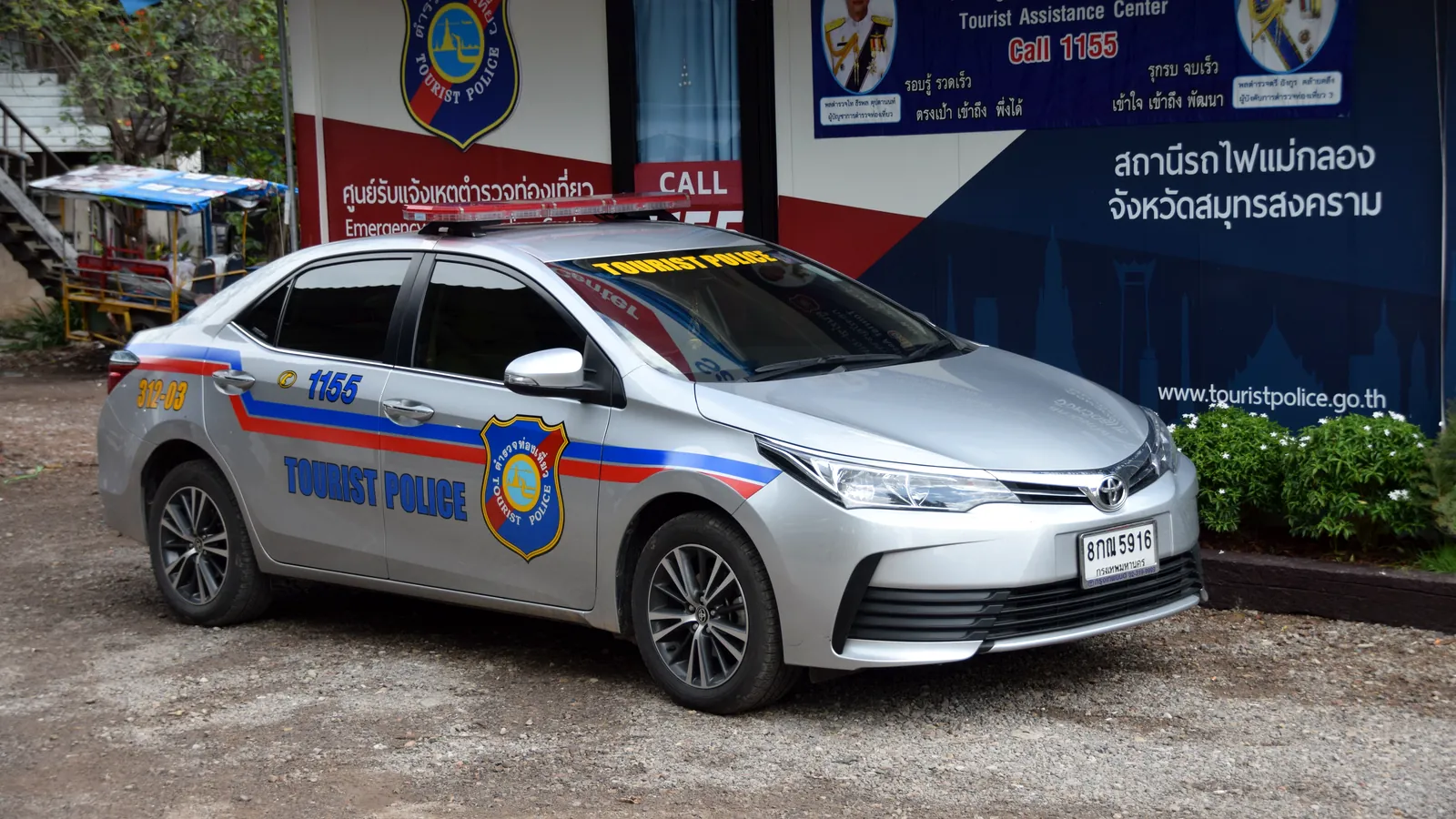
- Save the Tourist Police number, 1155. It has English-speaking operators and can help with scams, theft and disputes.
- Buy travel insurance that covers medical evacuation and, if you will ride one, motorbikes.
- Register with your embassy if your country offers it, for example the US STEP programme.
- Keep copies of your passport and cards, and split your cash. Our Thailand currency guide explains how to pay.
- Use ride-hailing apps at night.
- Book reputable tour operators for boats, diving and trekking.
- Avoid political protests and stay away from the border zones.
Planning your trip? See our Thailand itinerary, how much a trip to Thailand costs and whether Thailand is worth visiting. Heading on to the neighbours? Read whether Laos is safe.
Compare well-reviewed hotels in Bangkok on Booking.com
FAQ
Is Thailand safe for Americans?
Yes. The US State Department rates Thailand at Level 1, its lowest level, and Americans are welcome. Avoid the Cambodian border region and the three southernmost provinces, which are rated Level 2.
Is Thailand safer than other countries in Southeast Asia?
Thailand is about as safe as its neighbours for tourists, with better healthcare and infrastructure than Cambodia or Laos and a dedicated tourist police force. Its road safety record is worse than most. Compare with Bali, Cambodia and Laos.
Is it safe to travel to Thailand with the Cambodia conflict?
Yes, away from the border. The fighting has been confined to the border region, hundreds of kilometres from Bangkok, Chiang Mai and the southern islands. Do not plan to cross into Cambodia by land, as the crossings are suspended.