Cambodia’s official currency is the riel (KHR), but the US dollar is used everywhere for anything larger than a snack. Prices for hotels, tours, restaurants in tourist areas and Angkor passes are quoted in dollars, while change under $1 is given in riel at about 4,000 riel to $1. Bring clean, undamaged $10 and $20 notes, expect to pay $4–6 per ATM withdrawal, and keep a few thousand riel for tuk-tuks, markets and street food.
Quick answer
| Official currency | Cambodian riel (KHR) |
| Also used everywhere | US dollar (USD) |
| Everyday rate | About 4,000 riel = $1 (some supermarkets use about 4,100) |
| When you use riel | Change under $1, street food, markets, short tuk-tuk rides |
| ATM fee for foreign cards | Usually $4–6 per withdrawal; no fee-free banks |
| What ATMs give you | Mostly US dollars |
| Best notes to bring | Clean $10 and $20 bills without tears |
| Cards | Accepted at better hotels, restaurants and supermarkets, often with a 2–4% surcharge |
What is the currency of Cambodia?
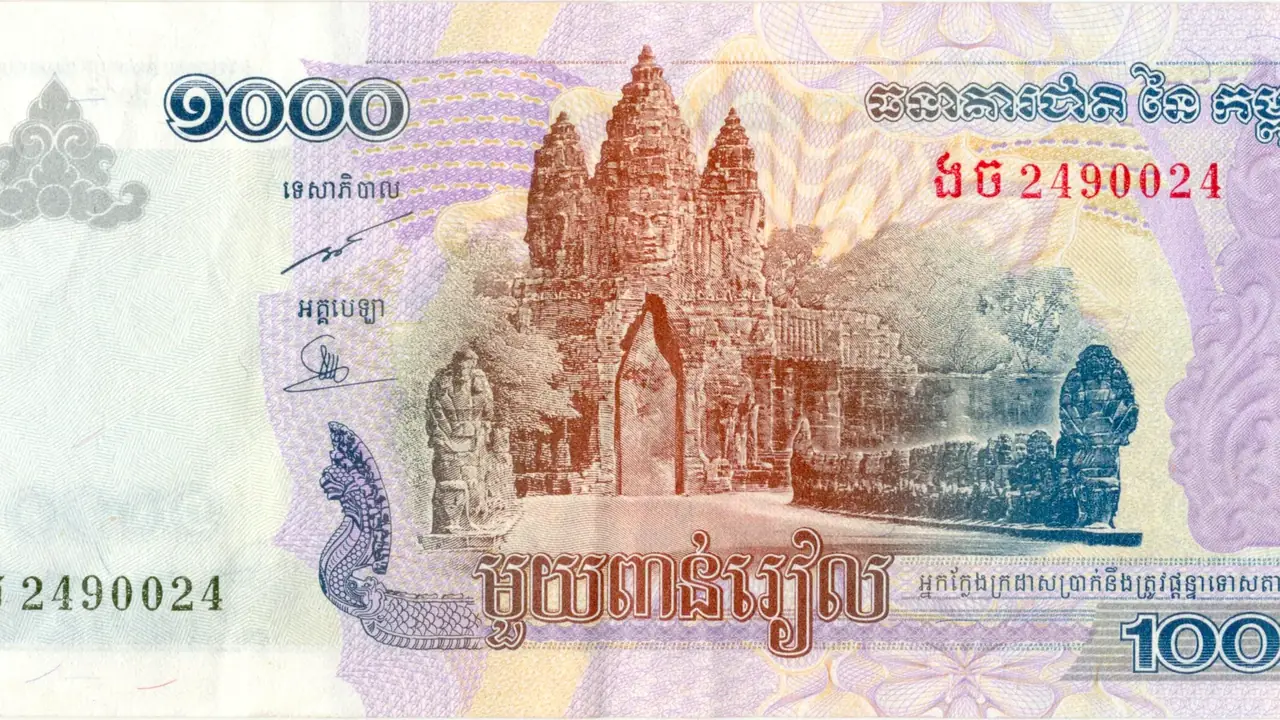
The Cambodian riel (KHR, symbol ៛) is the official currency, issued by the National Bank of Cambodia. In practice, Cambodia runs on two currencies: US dollars for most prices and riel for small amounts and change. The capital, Phnom Penh, works exactly the same way as Siem Reap and the coast. “Riel” is pronounced roughly “ree-el”.
Everyday riel notes are 500, 1,000, 2,000, 5,000, 10,000 and 20,000; larger 50,000, 100,000 and 200,000 notes also exist, and the 200,000-riel note, issued in 2024, is the largest in circulation. Coins are almost never used, so amounts are simply rounded.
How much is $1 in Cambodian riel?
About 4,000 riel. Shops, restaurants and tuk-tuk drivers use 4,000 riel to $1 as a fixed everyday rate, and some large supermarkets use about 4,100. The market rate has stayed close to this for years. Useful conversions: 1,000 riel is about 25 cents, 10,000 riel about $2.50, and 20,000 riel about $5.
Can you use US dollars in Cambodia?
Yes, and for most travelers dollars are the main currency of the trip. Hotels, guesthouses, tours, restaurants in tourist areas, bus tickets and Angkor passes are priced in USD. If you pay $10 for a $7.50 bill, you will usually get $2 back in dollars and the 50 cents in riel (2,000 riel). For pass prices and how to buy them online, see Angkor Wat tickets.
The condition of your notes matters. Torn, heavily marked or very old US notes are often refused by vendors, even though banks have been told to accept worn notes. Bring clean bills printed in the last 15 years or so, mostly $10s and $20s; $1 and $5 notes are useful for tips, while $2 bills and large $100s are harder to use outside banks and hotels. Cambodia is gradually promoting the riel, but this has not changed how tourists pay.
Do you need riel in Cambodia?
A little. You don’t need to exchange money into riel before you arrive, because you will receive riel as change. Keep 20,000–50,000 riel ($5–12) in small notes for street food, market stalls, water, short tuk-tuk rides and tips. Spend or exchange leftover riel before you leave, because it is hard to exchange outside Cambodia.
ATMs in Cambodia: fees and which banks to use
ATMs are easy to find in Phnom Penh, Siem Reap, Kampot, Sihanoukville and other towns, and almost all of them dispense US dollars to foreign cards. There are no fee-free ATMs for foreign cards. Typical fees reported in early 2026:
| Bank | Fee per withdrawal | Maximum per withdrawal |
|---|---|---|
| PPCBank | $5 | Up to about $1,000 |
| ABA | About $4–8 (varies) | About $500–1,000 |
| ACLEDA | About $4–5 | About $500 |
| Canadia | About $5 | About $500 |
| BRED | About $6 (Visa) or $10 (Mastercard) | Up to about $2,000 |
Because the fee is per withdrawal, take out larger amounts less often; PPCBank’s high limit makes it good value. If the machine offers to convert the withdrawal into your home currency, decline: this conversion (DCC) usually costs 3–7% more than letting your card handle the exchange.
👉 Get a Wise card to pay and withdraw in USD at the real exchange rate
Where to exchange money in Cambodia
If you arrive with euros, pounds or other currencies, change them into US dollars rather than riel. Licensed money changers, often in jewelry and phone shops near markets, usually give better rates than banks, airports or hotels. Banks such as ABA, ACLEDA and Canadia exchange money on weekdays and ask for your passport. Count your money at the counter, and check that dollar notes you receive are not torn.
Cards and mobile payments in Cambodia
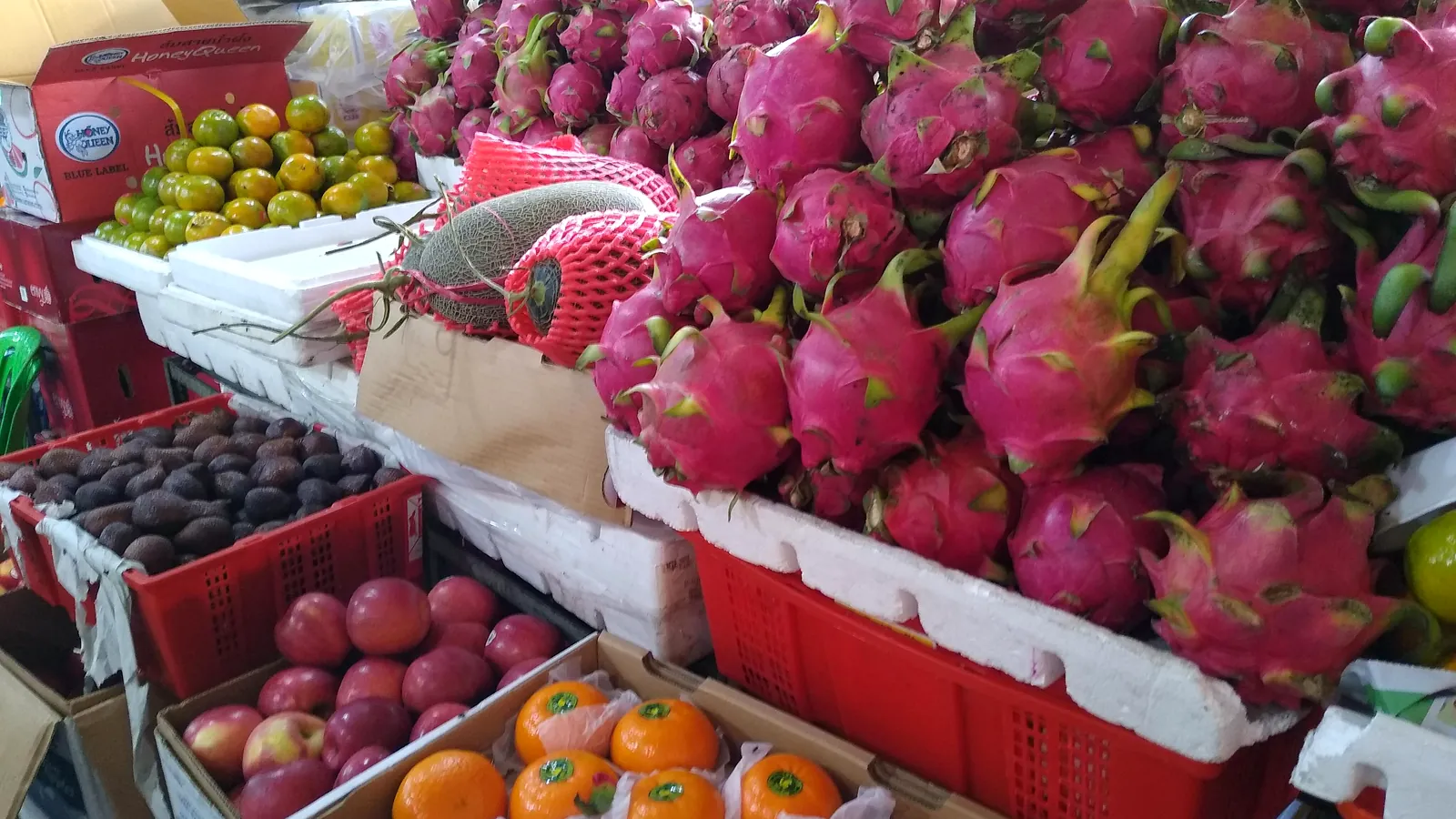
Visa and Mastercard are accepted at mid-range and upscale hotels, many restaurants in Phnom Penh and Siem Reap, and large supermarkets, but a 2–4% card surcharge is common. American Express is rarely accepted. Markets, street food, tuk-tuks and small guesthouses are cash only.
Cambodia’s QR payment system (KHQR, run on the national Bakong network) is everywhere, from cafés to market stalls. Visitors can use the Bakong Tourists app, launched in 2024, to pay KHQR codes in dollars or riel after topping it up; top-up options include cash at banks or Wing outlets, and card top-up has been reported since 2025, although some foreign cards are declined. It is convenient, but cash is still the reliable fallback.
How much cash do you need per day in Cambodia?
Budget travelers typically spend about $20–40 a day in cash on food, drinks, tuk-tuks and small entry fees, with hotels and tours often paid by card or online. Carry more when heading to rural areas and islands, where ATMs are scarce. For full daily budgets, see how much a trip to Cambodia costs, and for a side-by-side comparison, Thailand vs Cambodia travel cost.
Can you use Thai baht or Vietnamese dong in Cambodia?
Only near the borders. Thai baht is commonly accepted around Poipet, Koh Kong and Pailin, and Vietnamese dong near the Bavet crossing, but the rates are poor elsewhere. Visa fees at land borders and airports are paid in US dollars. Ignore touts at land borders who insist you must change money into riel before entering. If you are coming from Vietnam, see the Vietnam currency guide; from Thailand, ATM fees in Thailand. Heading north next? Our Laos currency guide covers the kip, ATM fees and using baht.
Tipping in Cambodia
Tipping is not required but is appreciated, especially in the tourism industry. Common amounts are 5–10% in restaurants that don’t already add a service charge, about $5–10 a day for a guide, $3–5 a day for a tuk-tuk driver on a full-day hire such as Angkor, and $1–2 for hotel porters or housekeeping. Small dollar notes and riel are handy for this.
Money mistakes to avoid in Cambodia
- Bringing torn or worn US dollar notes that vendors refuse.
- Accepting the ATM’s offer to convert into your home currency (DCC).
- Making many small ATM withdrawals and paying $5 each time.
- Changing money with border touts at poor rates.
- Leaving the country with riel, which is hard to exchange abroad.
- Not checking that your change is correct when paying in a mix of dollars and riel.
More guides are in our Cambodia travel section.
FAQ
What is the currency and capital of Cambodia?
The currency is the Cambodian riel (KHR), used alongside the US dollar, and the capital is Phnom Penh.
Should I bring US dollars to Cambodia?
Yes, a few hundred dollars in clean $10 and $20 notes is useful, especially for the visa on arrival and your first day. You can then withdraw dollars from ATMs as needed.
What is the biggest Cambodian riel note?
The 200,000-riel note, issued in 2024, is the largest in circulation. It is worth about $50 and is rarely seen in daily use.
Is Cambodia a cash-based country?
Largely, yes for travelers. Cards work at better hotels and restaurants, and QR payments are common for locals, but you will need cash for most daily spending.
Can I use a Wise or Revolut card in Cambodia?
Yes, at ATMs and card terminals that accept Visa or Mastercard. The local ATM fee still applies, so withdraw larger amounts less often.
Rates, fees and payment information checked on November 10, 2026.