Morocco’s currency is the Moroccan dirham (MAD). It is a closed currency: you generally cannot buy it before you travel, and you may carry no more than MAD 2,000 in banknotes into or out of the country. The easiest way to get dirhams is an ATM or an exchange office after you land. In November 2026, US$1 was worth about MAD 9.75 and €1 about MAD 10.94.
Quick answer
- Currency: Moroccan dirham (MAD, also written DH or Dhs).
- Getting cash: ATMs and licensed exchange offices in Morocco; dirhams are rarely sold abroad.
- Limit: MAD 2,000 in dirham banknotes in or out.
- ATM fees: local banks often charge about MAD 20–40 per foreign-card withdrawal, plus your own bank’s fee.
- Cards: fine in hotels and larger restaurants; cash for souks, taxis and small cafés.
- Daily cash: about MAD 300–600 (US$31–62) for food, taxis and small purchases.
What currency is used in Morocco?
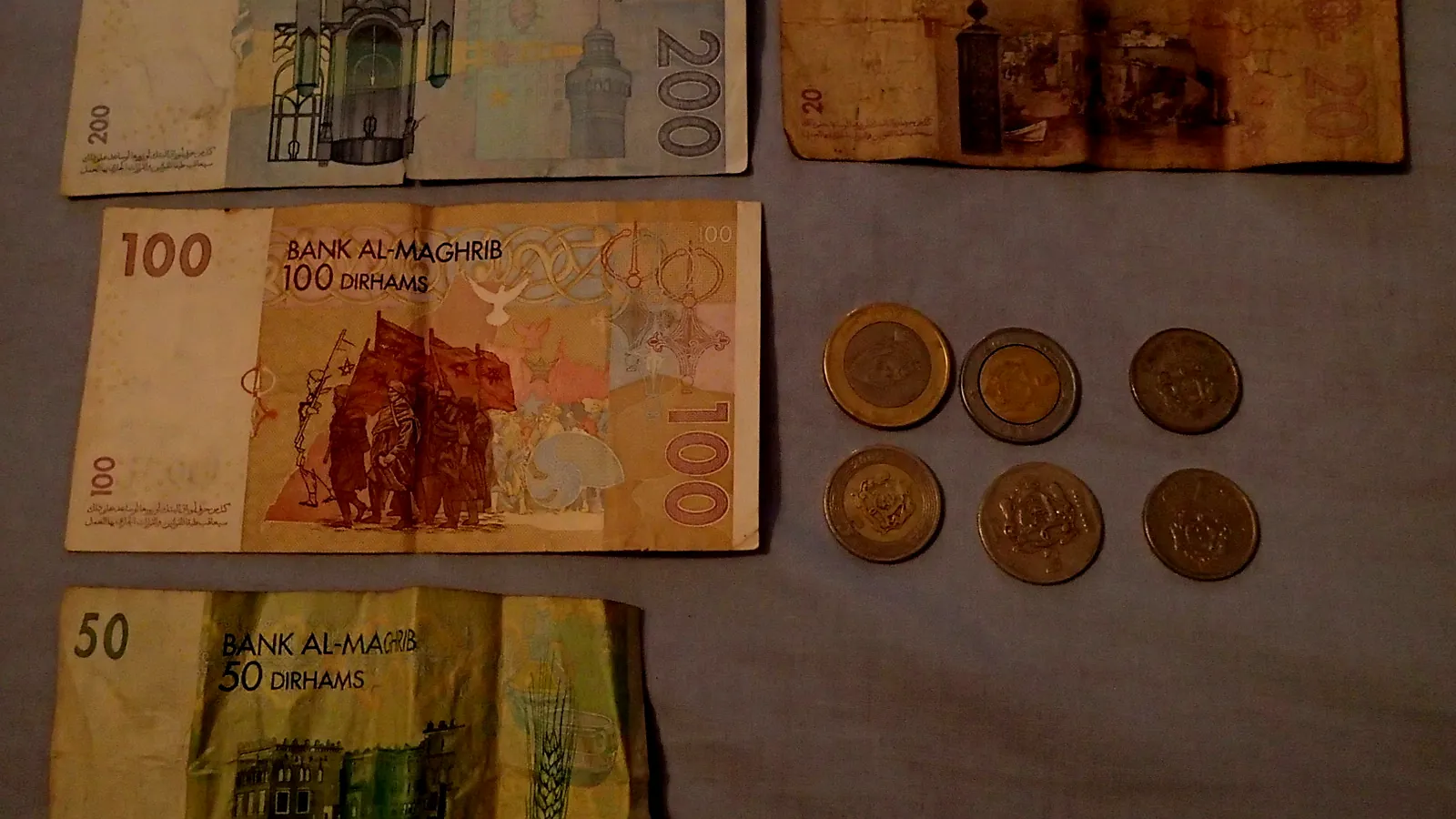
The Moroccan dirham, issued by Bank Al-Maghrib. One dirham is divided into 100 centimes, though prices in shops are almost always given in whole dirhams. Banknotes in everyday use are 20, 50, 100 and 200 dirhams, and coins of 1, 2, 5 and 10 dirhams are common. Some older people and market sellers still quote prices in “rials” (1 dirham = 20 rials), so if a price sounds twenty times too high, ask “dirham?”. A few polite phrases make bargaining easier; see what language they speak in Morocco.
| Note or coin | Approx. US$ | Approx. € | Typical use |
|---|---|---|---|
| 10 dirham coin | $1.00 | €0.90 | Mint tea, tips, small snacks |
| 20 dirham note | $2.05 | €1.80 | Short petit taxi ride, street food |
| 50 dirham note | $5.10 | €4.60 | Simple café meal |
| 100 dirham note | $10.25 | €9.15 | Restaurant dinner, entrance fees |
| 200 dirham note | $20.50 | €18.30 | Larger purchases; hard to break in small shops |
Are old Moroccan banknotes still valid?
Some are not. Bank Al-Maghrib has been introducing a new banknote series since 2023, and older notes from the 1987, 1990 and 1996 series stopped being legal tender on 1 January 2026, according to Morocco World News. They can still be exchanged free of charge at Bank Al-Maghrib and banks until 31 December 2030. If you have dirhams left over from an older trip, check them before you go and swap any withdrawn notes at a bank rather than trying to spend them.
Can you buy Moroccan dirhams before you travel?
Usually not. The dirham is a closed currency, and Moroccan rules limit visitors to MAD 2,000 in dirham banknotes when entering or leaving the country. Foreign currency is unlimited, but amounts worth MAD 100,000 or more must be declared on arrival (MarHire, October 2026; MoroccoAirport, August 2026). In practice, bring a debit card and some euros, pounds or dollars as backup, and get dirhams on arrival.
ATMs in Morocco: fees and limits
ATMs are easy to find in cities, airports and most towns, run by banks such as Attijariwafa Bank, Banque Populaire, Bank of Africa (BMCE), CIH and Al Barid Bank. Most Moroccan ATMs now charge foreign cards an operator fee of around MAD 20–40 per withdrawal, on top of anything your own bank charges (Morocco Prices, September 2026). The screen shows the fee before you confirm.
Withdrawal limits are typically around MAD 2,000 per transaction, sometimes up to MAD 3,000–4,000 depending on the machine and your card. Because the fee is fixed, one larger withdrawal is cheaper than several small ones. Al Barid Bank, the post office bank, has a reputation for low fees, but recent reports are mixed, so check the screen rather than relying on it. In rural areas and the desert, ATMs are scarce: take enough cash before heading to places like Merzouga.
Always choose dirhams, not your home currency
When an ATM or card machine offers to charge you in euros, pounds or dollars, choose MAD. Accepting the conversion (called dynamic currency conversion) lets the machine set the exchange rate, often 5–12% worse than your card’s rate. Declining it does not remove the ATM fee, but it avoids the extra markup.
How to withdraw cash with the lowest fees
Use a card with no foreign transaction fee, withdraw larger amounts less often and pay in dirhams. A multi-currency card helps: you can get a Wise card for low-cost spending in MAD, which converts at the mid-market rate with a small, transparent fee; the Moroccan ATM operator’s own charge still applies. This guide contains affiliate links.
Exchanging money in Morocco
Licensed exchange offices (bureaux de change) are common in city centres and often charge no separate commission; their rates are usually better than airport counters. Euros are the easiest currency to exchange, followed by US dollars and pounds. Bring clean, undamaged notes, take your passport, count the money at the counter and keep the receipt.
The receipts matter when you leave: non-residents can change leftover dirhams back into foreign currency at banks or licensed counters, and you will be asked for proof of the original exchange or withdrawal. Never use street money changers, who are a common source of counterfeit notes and short-changing.
Can you use euros or dollars in Morocco?
Sometimes, but do not rely on it. Some riads, tour operators and tourist shops quote or accept euros, usually at a rate that favours them. For taxis, cafés, markets and entrance tickets you need dirhams. Paying in the local currency is almost always cheaper.
Credit cards in Morocco: where they work and where you need cash
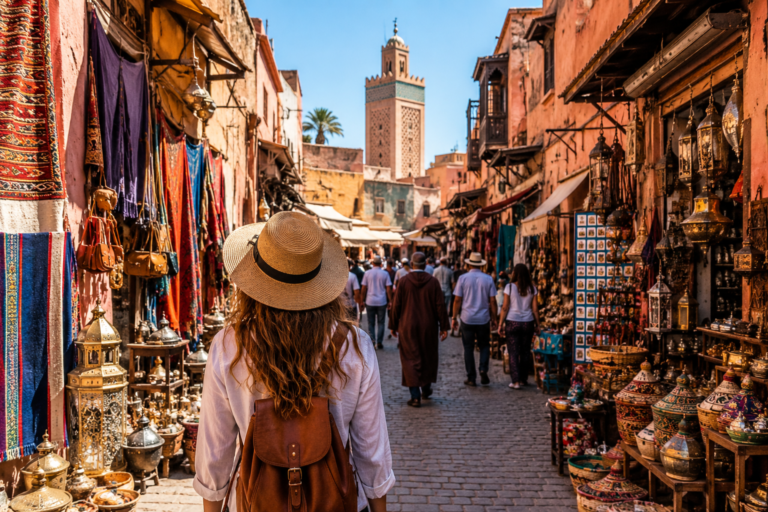
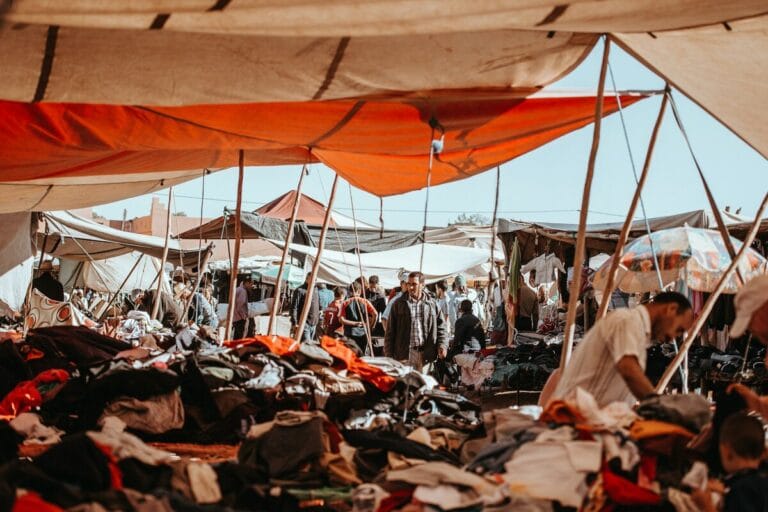
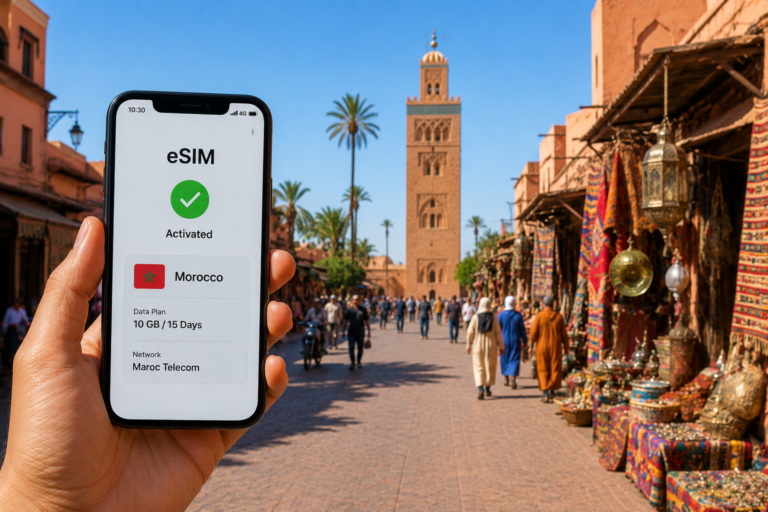
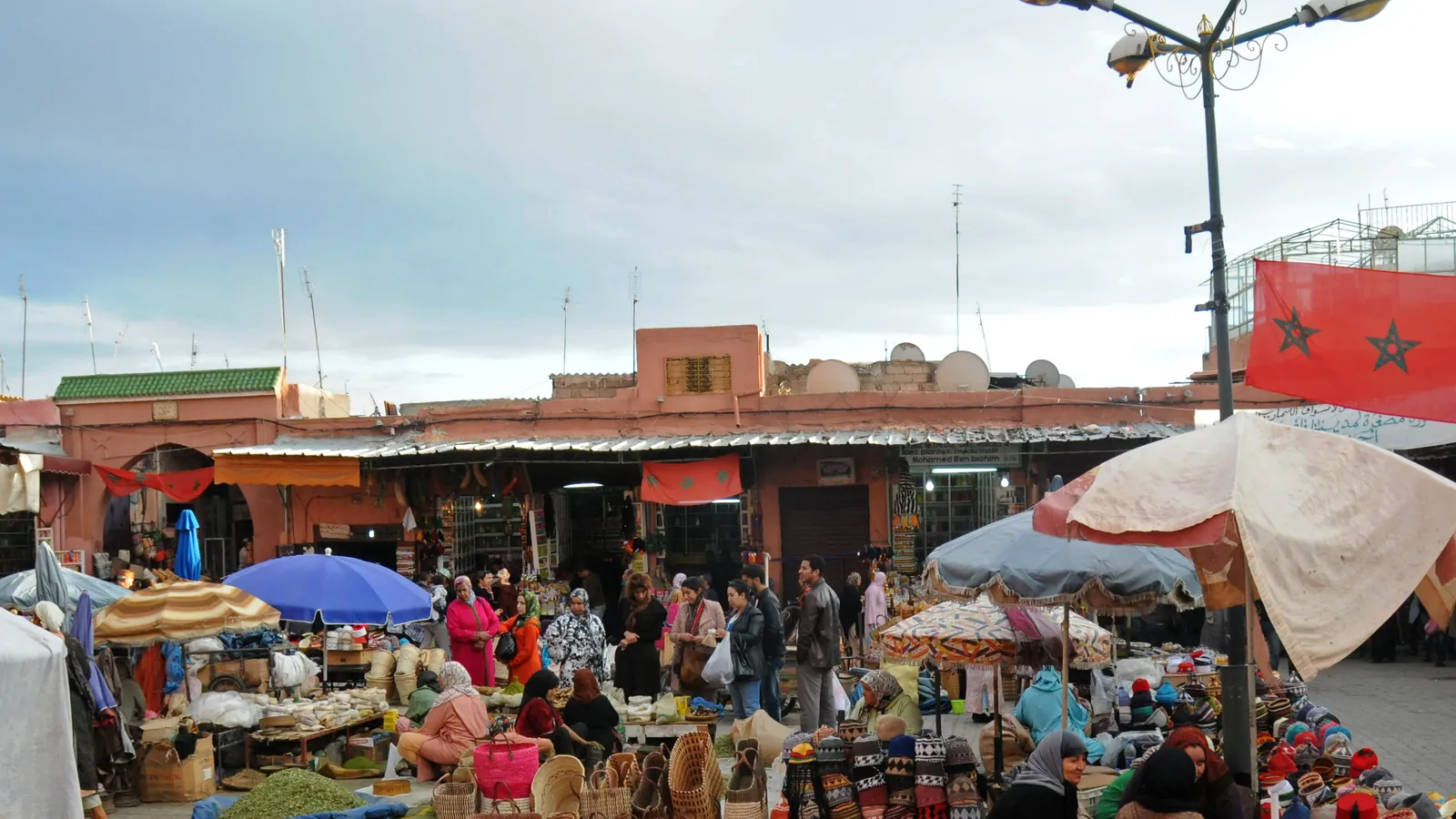
Visa and Mastercard are widely accepted in hotels, larger restaurants, supermarkets and chain shops. American Express is rarely accepted. Cash is still essential in the medinas: souk stalls, petit taxis, street food, small cafés, hammams and tips are almost always cash. Some riads add a surcharge for card payments, so ask when you book. Mobile data helps you find ATMs and pay online; see the best eSIM for Morocco.
How much cash do you need per day in Morocco?
For a city day with accommodation already paid, MAD 300–600 (US$31–62) per person covers meals in local restaurants, a couple of petit taxi rides, entrance fees and small purchases. Budget travellers eating street food can spend less; shopping in the souks or hiring guides adds more. For a full budget including hotels and transport, see is Morocco expensive to visit.
Tipping in Morocco
Tipping is customary and part of many workers’ income. Common amounts are around 10% in sit-down restaurants, a few dirhams for café service, MAD 10–20 for porters and people who help with directions or luggage, and MAD 100–200 per day for a full-day guide. Keep a stock of 10 and 20 dirham coins and notes for this.
Money scams to avoid in Morocco
- Street money changers: risk of fake notes and short-changing; use banks and licensed offices only.
- “Helpful” strangers at ATMs: decline help and shield your PIN; use machines attached to banks during opening hours if possible.
- Rial confusion: a price quoted in rials looks twenty times higher; confirm the currency before agreeing.
- Taxi meters: insist on the meter in petit taxis or agree the fare before getting in.
For wider safety advice, see is Morocco safe to visit.
For more routes, costs and practical planning, explore all our Morocco travel guides.
FAQ
What is the currency of Morocco?
The Moroccan dirham (MAD). It is a closed currency, so you normally get it after arriving in Morocco.
How much is $100 in Moroccan dirhams?
About MAD 975 at the mid-market rate on November 10, 2026, before ATM or exchange fees. €100 was about MAD 1,094.
Is it better to exchange money or use ATMs in Morocco?
Both work. ATMs are convenient but charge a fixed fee; city exchange offices often charge no commission if you bring euros, dollars or pounds. Avoid airport exchange counters for large amounts.
How much cash can I take out of Morocco?
No more than MAD 2,000 in dirham banknotes. Change the rest back before you leave, with your exchange or ATM receipts.
Can I pay by card in the Marrakech souks?
Rarely. Some larger shops accept cards, but most stalls are cash-only, and paying cash also helps when bargaining.
Rates, fees and rules checked on November 10, 2026.