The currency of Thailand is the Thai baht (THB, symbol ฿), divided into 100 satang. On 12 November 2026, US$1 was worth about 33.8 baht, so 1 baht is roughly 3 US cents and 1,000 baht about $30. Cash is still essential for street food, markets, small shops and local transport. Cards work in hotels, malls, chains and 7-Eleven. Foreign-card ATM fees have risen to about 250 baht per withdrawal for Visa cards and up to 350 baht for Mastercard at some banks, so withdraw larger amounts less often and always choose to be charged in baht.
Thailand currency at a glance
| Currency | Thai baht |
| Code and symbol | THB, ฿ |
| Subunit | 100 satang = 1 baht |
| Banknotes | 20, 50, 100, 500 and 1,000 baht |
| Coins | 1, 2, 5 and 10 baht (25 and 50 satang are rarely used) |
| Exchange rate | About 33.8 baht = US$1 (12 November 2026) |
| Foreign-card ATM fee | Usually 250 baht (Visa), up to 350 baht (Mastercard) at some banks; some machines still show 220 baht |
| Best place to exchange cash | SuperRich and other licensed exchange booths in the city |
| US dollars accepted? | No, not for everyday purchases |
How much is $1 in Thai baht?
At the mid-market rate of about 33.8 baht per US dollar (12 November 2026), $1 is about 34 baht. You will get slightly less at exchange booths and ATMs, because of their margins and fees. Use this table as a quick reference and check a live converter before you change money.
| US dollars | Thai baht (approx.) | Thai baht | US dollars (approx.) |
|---|---|---|---|
| $1 | 34 THB | 20 THB | $0.60 |
| $10 | 338 THB | 100 THB | $2.96 |
| $20 | 676 THB | 500 THB | $14.80 |
| $50 | 1,689 THB | 1,000 THB | $29.60 |
| $100 | 3,378 THB | 5,000 THB | $148 |
| $500 | 16,890 THB | 20,000 THB | $592 |
Thai baht banknotes and coins
Thai banknotes come in five values, each with its own colour: 20 baht (green), 50 baht (blue), 100 baht (red), 500 baht (purple) and 1,000 baht (brown). All show the King of Thailand, and several older series remain legal tender, so you may receive notes with different designs. Treat banknotes with respect: they carry the image of the monarch, and stepping on or defacing them is considered highly offensive.
ATMs often dispense 1,000-baht notes, which street vendors, motorbike taxis and small shops may struggle to change. Break them at 7-Eleven, supermarkets, malls or your hotel, and keep a supply of 20- and 100-baht notes for everyday spending.
What is the value of Thai baht coins?
The coins you will use are 1, 2, 5 and 10 baht. The 10-baht coin is the most valuable, worth about 30 US cents, and has a gold-coloured centre with a silver ring. The 1- and 2-baht coins are easy to confuse, as they are a similar size; the newer 2-baht coin is gold-coloured. Coins of 25 and 50 satang (a quarter and half a baht) still exist but are rarely needed, except at some supermarkets. Coins are handy for vending machines, public toilets, temple donations and small purchases.
Is 1,000 baht a lot of money in Thailand?
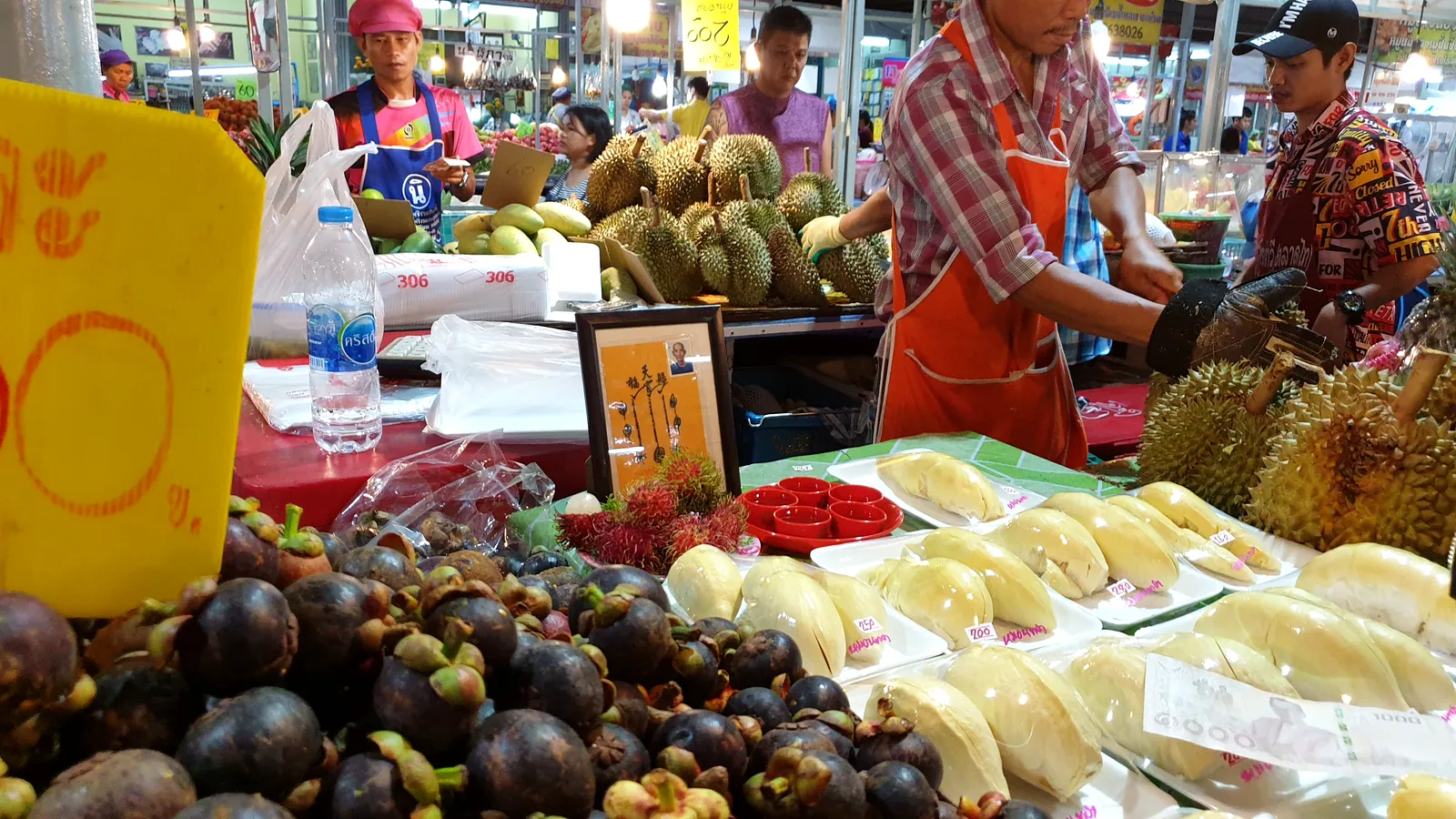
For a visitor, 1,000 baht (about $30) is a useful amount: it covers a day of street food and local transport for a budget traveller, but not much more. For many Thais, it is more than two days’ pay at the minimum daily wage. Typical prices give a sense of its value:
- A street-food dish such as pad thai or a curry with rice: about 50–100 baht
- A bottle of water at 7-Eleven: about 10–15 baht
- A one-hour Thai massage in a simple shop: about 300–400 baht
- A Bangkok metro or BTS ride: about 17–65 baht
- A budget guesthouse room: from about 600–1,000 baht, much more in central Bangkok and the islands
For full daily budgets, see how much a trip to Thailand costs.
Is Thailand a cash-based country?
Partly. Thais pay for almost everything by scanning QR codes with their banking apps, but most tourists cannot use that system (see below), so as a visitor you will rely on cash more than locals do. Plan to pay cash at street stalls, markets, small restaurants, songthaews, tuk-tuks, motorbike taxis, ferries, temples and many massage shops. Cards and mobile wallets work well in hotels, malls, department stores, chain restaurants, convenience stores and on Grab.
ATMs in Thailand: fees and withdrawal limits
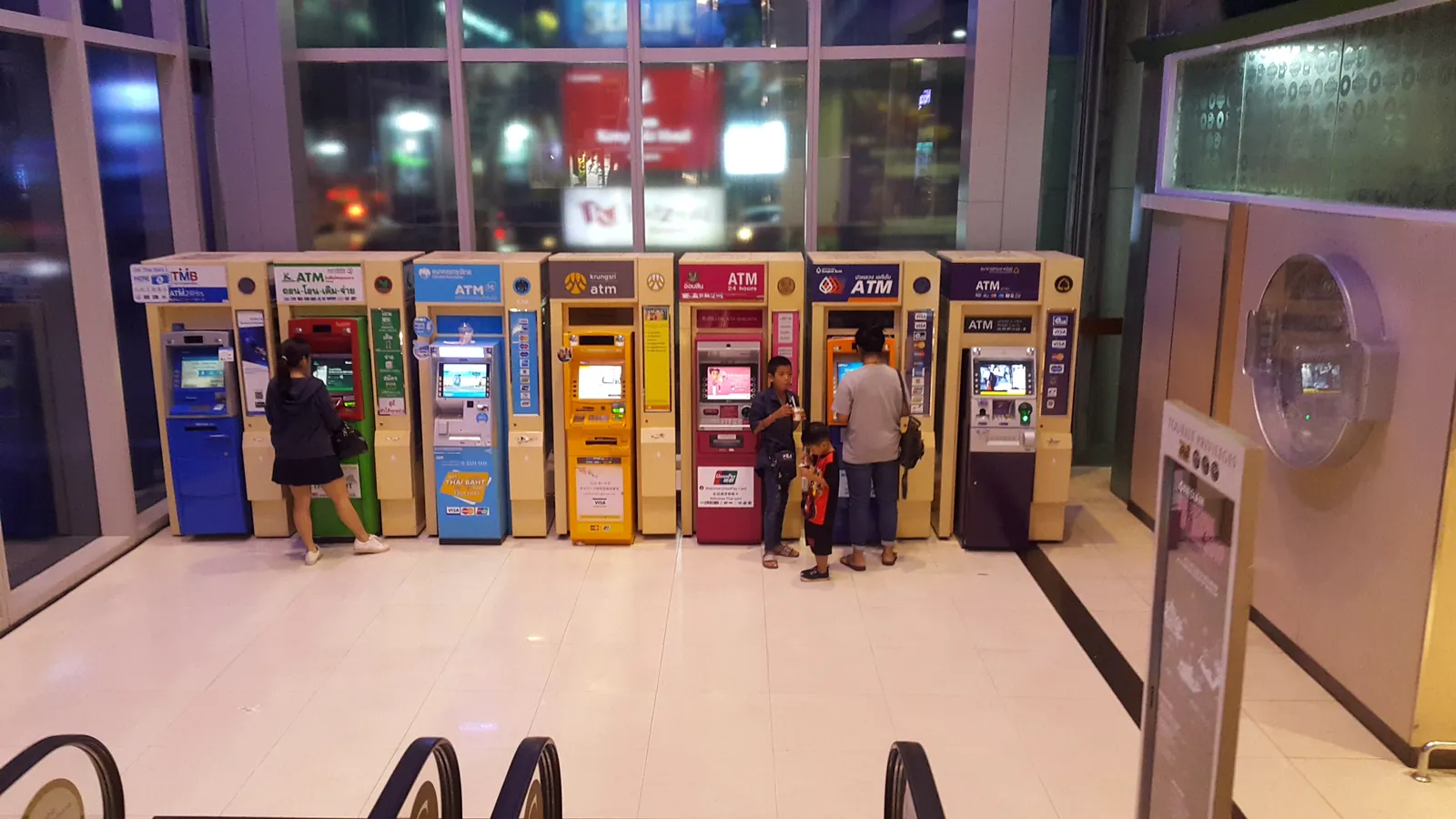
ATMs are everywhere in cities and tourist areas, but Thai banks charge foreign cards a flat fee on every withdrawal. The long-standing 220-baht fee has been rising: Siam Commercial Bank charges 250 baht for Visa, UnionPay and JCB cards from 1 September 2026, and Krungsri raised its Mastercard fee to 350 baht in March 2026. Other banks and individual machines vary, so the fee shown on the screen before you confirm is the one that counts. Your own bank may add its fees on top.
- Withdraw larger amounts. Most machines allow 20,000–30,000 baht per withdrawal. A 250-baht fee is 5% of a 5,000-baht withdrawal but only about 1.25% of 20,000 baht.
- Always choose baht. If the ATM offers to charge you in your home currency, decline. This “dynamic currency conversion” uses a poor exchange rate.
- Use bank-attached machines in malls or at branches, where staff can help if a card is swallowed.
- Carry two cards on different networks, kept separately.
Our detailed guide to ATM fees in Thailand compares banks and travel cards.
Where is the best place to exchange money in Thailand?
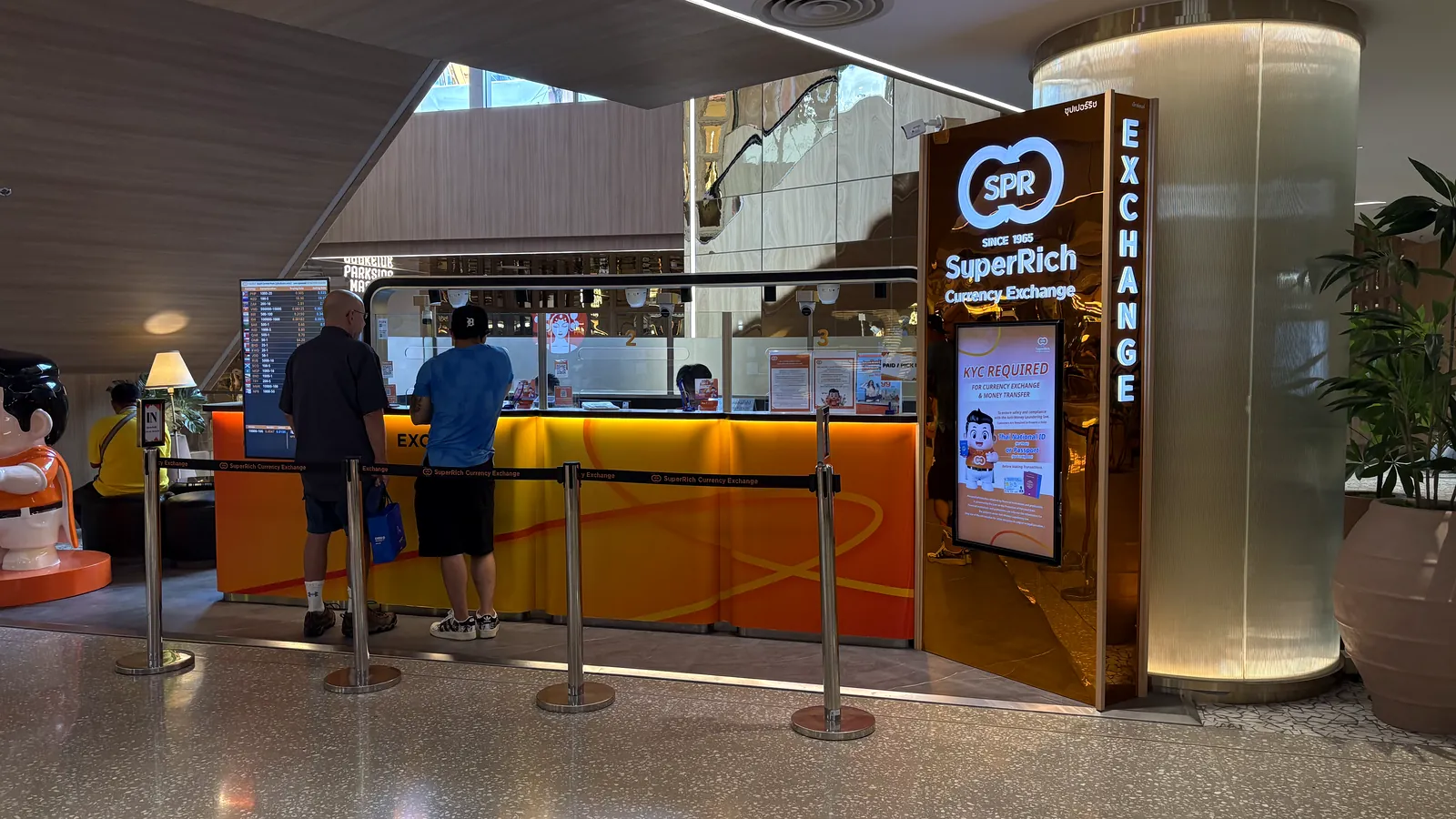
If you bring cash, licensed exchange booths in the city usually give the best rates, often better than the effective rate you get from ATMs once fees are included. SuperRich Thailand (green) and SuperRich 1965 (orange) are the best-known names in Bangkok, with branches in malls and around the city; other licensed booths in tourist areas can be competitive too. Compare the “buy” rate on the board and ask for a receipt.
- Bring your passport. It is required to exchange money.
- Bring large, clean notes. US$100 and €100 notes in good condition get the best rate; small, old, torn or marked notes get a lower rate or may be refused.
- Airports: counters in the arrivals hall usually offer poor rates. At Suvarnabhumi, the SuperRich booth on the basement level (B floor) near the Airport Rail Link is known for rates close to those in the city. Otherwise, change only what you need for the first day.
- Avoid hotels for exchange; their rates are usually the worst.
Should you get Thai baht before you travel?
Usually not. Exchange rates for baht at home are often poor, and you can withdraw cash or exchange money as soon as you land. If it reassures you, buy a small amount, enough for a taxi and your first meal, or withdraw cash from an ATM at the airport. Bring any larger amounts as US dollars, euros or pounds and exchange them in the city.
Can you use credit cards in Thailand?
Yes, in hotels, malls, department stores, larger restaurants, 7-Eleven and other chains, and for apps such as Grab. Visa and Mastercard are the most widely accepted; American Express is less common. Contactless payments, including Apple Pay and Google Pay, work at many chains. Some smaller businesses, such as tour agencies and guesthouses, add a surcharge of around 3% for cards. As at ATMs, always choose to pay in baht rather than your home currency.
Can tourists use QR payments and PromptPay?
Not easily. PromptPay, the QR system Thais use everywhere, requires a Thai bank account, and opening one generally needs a long-stay visa or work permit. Some foreign wallets can pay Thai QR codes: Alipay and WeChat Pay users from supported countries, and a few apps linked to foreign cards, but coverage and conditions vary by app and by country. Wise and Revolut cannot scan Thai merchant QR codes. For most tourists, the practical mix is cash plus a card, with QR as a bonus if your wallet supports it.
Can you use US dollars in Thailand?
No, not for everyday spending. Prices are in baht, and shops, restaurants and taxis expect baht. A few hotels, dive shops and tour operators may quote prices in dollars or euros, but you will normally pay in baht or by card. This is different from neighbouring Cambodia, where US dollars are widely used, and Laos, where Thai baht is sometimes accepted near the border.
How much cash can you bring into Thailand?
- Foreign currency: you must declare cash worth more than US$20,000 (or the equivalent) when you arrive or leave.
- Thai baht leaving Thailand: you can take up to 50,000 baht out without permission; higher limits apply when travelling to neighbouring countries.
- Proof of funds: visa-exempt and tourist-visa visitors can be asked to show 20,000 baht per person (40,000 per family), or the equivalent, on arrival. Checks are at the officer’s discretion and most travellers are not asked, but carrying a credit card, bank statement or some cash avoids problems.
Penalties for undeclared cash are severe, so declare if you are over the limit. Check the latest rules with the Thai embassy before you travel.
Do you tip in Thailand?
Tipping is appreciated but not expected. Check whether a 10% service charge is already on the bill in restaurants. Rounding up a taxi fare is common, and small cash tips (20–100 baht) are customary for massage therapists, hotel porters, guides and drivers. Keep small notes and coins for this.
How to get a VAT refund in Thailand
Thailand charges 7% VAT, and tourists leaving by air can claim it back on goods bought in shops displaying the “VAT Refund for Tourists” sign. You must spend at least 2,000 baht (including VAT) in one shop on one day, ask for the P.P.10 form and tax invoice with your passport, and take the goods out of Thailand within 60 days. If your total purchases are 20,000 baht or more, customs at the airport must inspect them before check-in. Fees are deducted from the refund.
Money safety tips for Thailand
- Count your change, especially when paying with large notes, and keep 1,000-baht notes separate from small notes.
- Cover the keypad at ATMs and use machines in busy, well-lit places.
- Agree on tuk-tuk and taxi prices in advance or insist on the meter.
- Split cash and cards between your wallet and hotel safe.
- Get a local eSIM so you can check your banking app and freeze a card if needed; see the best eSIM for Thailand.
Planning the rest of your trip? See our Thailand itinerary, the best time to visit Thailand and the best areas to stay in Bangkok.
Compare hotels in Bangkok on Booking.com
FAQ
What currency is used in Thailand?
The Thai baht (THB). It is the only currency accepted for everyday purchases throughout the country.
What is the symbol for Thai baht?
The symbol is ฿, and the currency code is THB. In Thailand, prices are often written simply as a number followed by “baht” or ฿.
Does Thailand use euros?
No. Euros are easy to exchange at booths in tourist areas, but you cannot use them to pay for everyday purchases.
How much cash should I carry per day in Thailand?
For a budget traveller, 1,000–1,500 baht a day covers food, local transport and small purchases; pay for hotels and bigger costs by card where you can. Carry only what you need for the day and leave the rest in your hotel safe.