The best time to visit Bali is during the dry season, from about April to October. May, June and September are the sweet spot: sunny, less humid and quieter than the peak months of July and August. The wet season runs from about November to March, with January the wettest month, averaging around 350 mm of rain in Denpasar, mostly in heavy afternoon or evening downpours. Bali is warm all year, with average temperatures of about 26–28°C, so there is no bad month for heat, only for rain and crowds. The busiest periods are July–August and Christmas–New Year.
Bali weather by month
| Month | Average temperature | Rain (Denpasar) | Verdict |
|---|---|---|---|
| January | 27.9°C | 351 mm | Wettest month |
| February | 28.0°C | 290 mm | Wet, quiet, low prices |
| March | 28.0°C | 231 mm | Wet season ending; Nyepi |
| April | 28.1°C | 107 mm | Good; dry season starts |
| May | 27.8°C | 95 mm | Excellent |
| June | 27.2°C | 68 mm | Excellent |
| July | 26.5°C | 28 mm | Driest, but peak crowds |
| August | 26.3°C | 36 mm | Dry, peak crowds |
| September | 26.8°C | 59 mm | Excellent, fewer crowds |
| October | 27.6°C | 64 mm | Good, shoulder season |
| November | 28.2°C | 131 mm | Rains begin |
| December | 28.0°C | 327 mm | Wet, busy over the holidays |
What is the best month to go to Bali?
May, June and September are the best all-round months. Rainfall is low, the sea is usually calm for boat trips to Nusa Penida and the Gili Islands, and hotels are cheaper and less crowded than in July and August. July is the driest month, but it coincides with European summer holidays and Australian school holidays, so prices and traffic peak. April and October are good shoulder months, with occasional showers.
What is the rainy season in Bali?
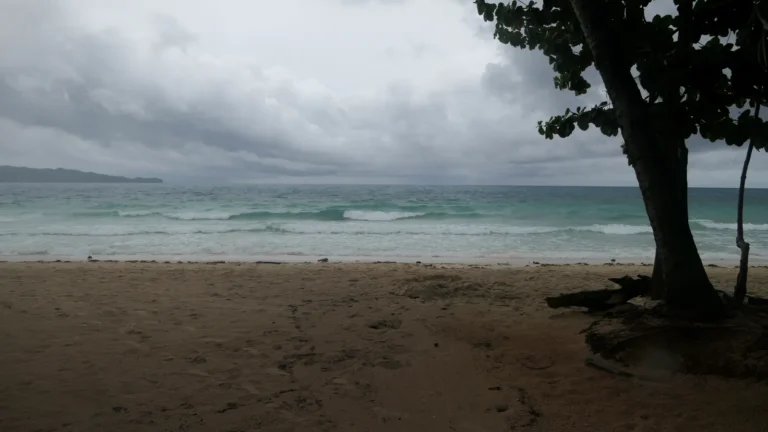
The wet season runs from about November to March, with the heaviest rain from December to February. Rain usually comes as short, intense tropical downpours, often in the afternoon or evening, with sunny spells in between, rather than all-day rain. Humidity is high, some roads flood, the sea can be rough for boat crossings, and rubbish washes up on some west-coast beaches. The landscape is at its greenest, and prices are lower outside Christmas and New Year.
Is it worth going to Bali in the wet season?
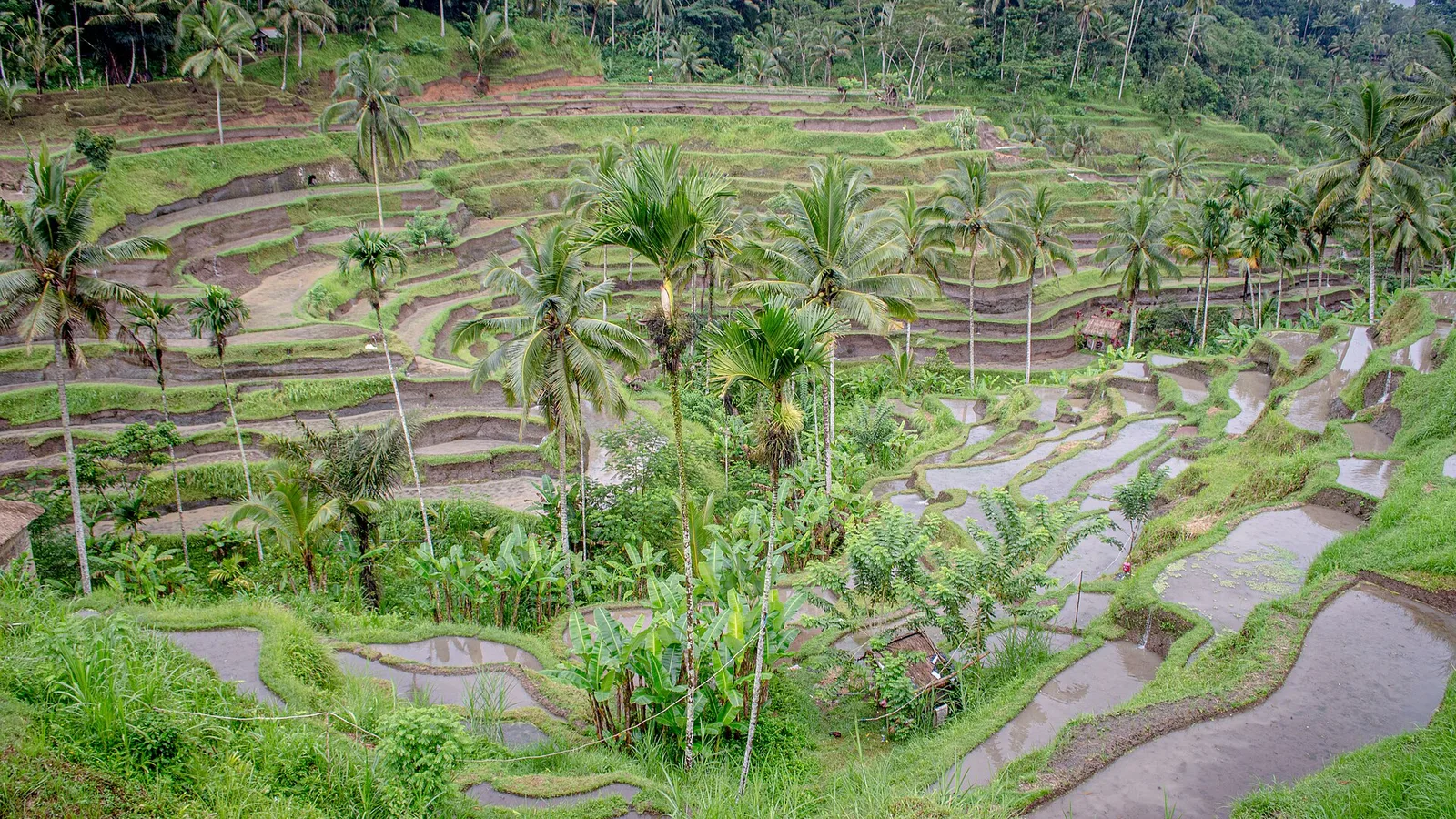
Yes, if you are flexible. You’ll find lower prices, fewer tourists and lush rice terraces, and most days still have several hours of sunshine. Plan beach and boat days for the mornings, base yourself in Ubud for culture, spas and food, and allow buffer days for trips to Nusa Penida, the Gili Islands or Komodo, which can be cancelled in rough seas. See Bali to the Gili Islands and Bali to Komodo.
What happens in Bali during Nyepi?
Nyepi, the Balinese Day of Silence, marks the Hindu New Year. In 2027 it falls on Monday 8 March. For 24 hours from 6:00, the whole island shuts down: the airport closes, there is no traffic, shops and restaurants close, lights are kept low and visitors must stay in their hotels. The night before, villages parade giant ogoh-ogoh effigies, one of Bali’s most spectacular festivals. If you are in Bali for Nyepi, plan to spend the day at your hotel. In 2027, the Eid al-Fitr holiday follows on 10–11 March, so expect busy domestic travel that week.
Other festivals: Galungan and Kuningan
Galungan celebrates the victory of good over evil, and Kuningan ends the festival ten days later. Streets are lined with tall bamboo penjor decorations and temples are busy with ceremonies. They follow a 210-day calendar, so they happen twice a year: in 2027, Galungan falls on 13 January and 11 August, with Kuningan on 23 January and 21 August.
When is Bali the least crowded?
From late January to March, apart from Chinese New Year, and in the shoulder months of May, June, September and October outside Australian school holidays. In 2027, school holidays in New South Wales run from 12 to 23 April, 5 to 16 July and 27 September to 8 October, plus the summer break until 27 January.
Best time to visit Bali for surfing
The dry season, roughly April to October, brings the best waves to the west and south coasts, including Uluwatu, Bingin and Canggu. During the wet season, offshore winds favour the east coast, around Sanur and Keramas.
Is December a good time to go to Bali?
December is wet, with over 300 mm of rain on average, and the days around Christmas and New Year are among the busiest and most expensive of the year. It’s still warm and many days have sunny mornings, but book early and expect traffic.
Best time for Nusa Penida and Komodo
Fast-boat crossings to Nusa Penida and the Gili Islands are calmest in the dry season. For Komodo, the dry season from about April to November is best for boat trips; divers looking for manta rays often prefer the wetter months of December to February, when sea conditions can be rougher.
Before you go, read is Bali safe, our Indonesia currency guide, Bali airport to Ubud and how much a trip to Indonesia costs.
Compare hotels in Bali on Booking.com
FAQ
What is the worst month to visit Bali?
January is the wettest month. For crowds and prices, late July, August and the Christmas–New Year period are the hardest times.
Is Bali hot all year?
Yes. Average temperatures stay around 26–28°C on the coast; the highlands are cooler at night.
When is the best time to climb Mount Batur?
The dry season gives the best chance of a clear sunrise. Treks can be cancelled in bad weather or during ceremonies.
How many days do you need in Bali?
Seven to ten days lets you combine Ubud, a beach area such as Uluwatu or Sanur, and a trip to Nusa Penida or the Gili Islands.